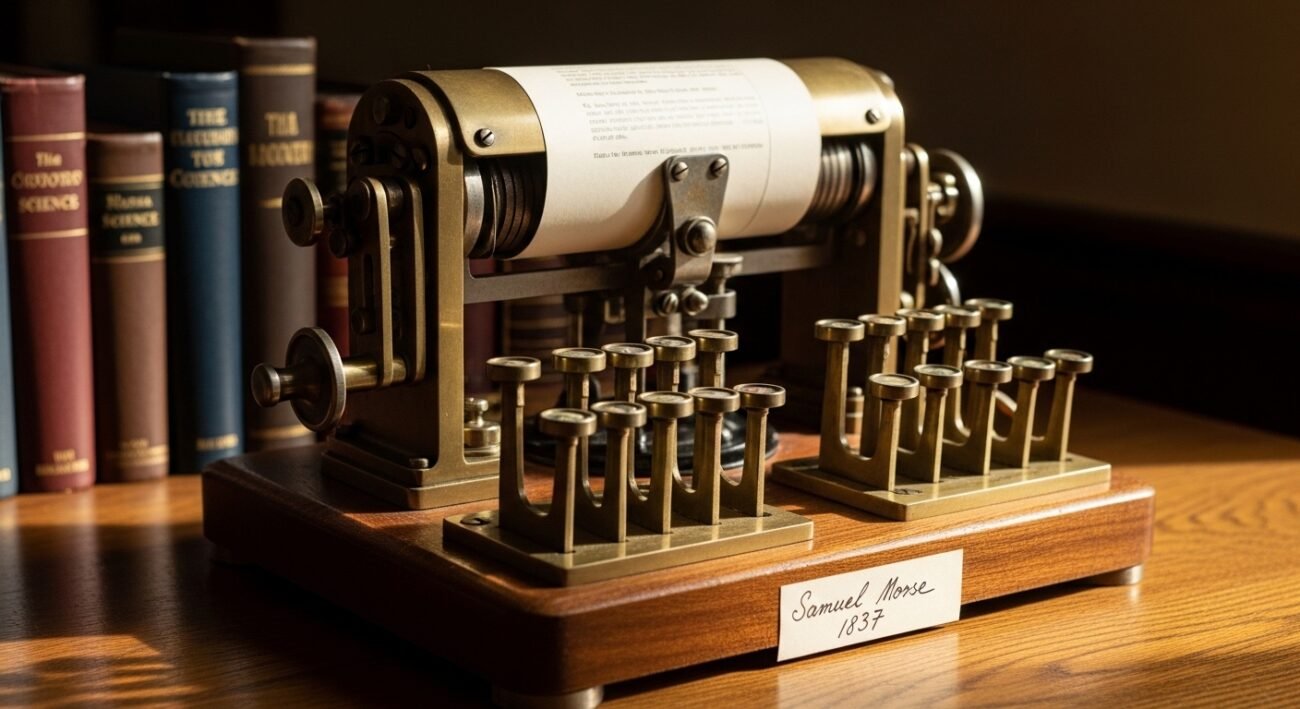
It can be awkward to imagine that once it would take days or even weeks to send a message to the other end of the country. There was a gadget in place that transformed everything without a buzz on our phones as emails flew through our mailboxes within seconds. The telegraph might not be so complicated today, but it appears to have been a very strong tool that influenced the manner in which individuals relate. Perhaps it was the foundation of most of the communication tools we use today. Although it does not seem to click and hum where busy offices once existed, its legacy seems to linger in modern technology in easily discernible ways.
The birth of instant communication

At the time of the appearance of the telegraph, it must have seemed revolutionary. Messages that were once able to travel as slowly as a horse or ship could now travel through wires in minutes. Such an alteration might have transformed the perception of distance and time by people.
Morse code as a digital ancestor

Morse code appears to be quite up-to-date when you consider it. The possibility of using dots and dashes to depict letters can be one of the earliest examples of a binary-like communication. To some extent, it perhaps foreshadowed the digital language that computers communicate with us currently.
Connecting expanding nations

With the increase in the size of countries, particularly those such as the United States, the telegraph could have served to connect faraway areas. The news, decisions of the government, and individual updates might become faster, and it may establish better national identification.
Transforming news and journalism

The Telegraph seems to have transformed journalism. Breaking news could be sent fast by reporters, which may have altered the mode of operation of newspapers. Probably, this pace prompted earlier reporting and changed the expectations of the population.
Supporting business and trade

Telegraph networks may have helped businesses significantly. The transmission of prices, contracts, and updates might be fast, and this might potentially lead to a decrease in uncertainty. It could have contributed to the more coordinated markets even over long distances.
Laying the groundwork for the telephone

The telegraph may possibly have introduced the subsequent inventions, such as the telephone. The concept of sending messages using wires may have inspired more experimentation, which resulted in technologies giving the ability to transfer real voices.
Inspiring global connectivity

Telegraph technology appears to have led to the laying of undersea cables (including early transatlantic lines). Such cables can have linked continents in ways that used to seem impractical and made the world seem smaller.
Shaping communication etiquette

Since telegraph messages used to be billed by length, it is probable that people learned to be short. Such brevity may be a familiar feeling nowadays, particularly in written texts and social media posts that feature short messages.
Strengthening railway networks

Telegraph lines seem to have been a crucial source of the railway systems. Real-time updates might have made it easier to coordinate train schedules and prevent collisions and would have enhanced safety and efficiency.
A step toward the internet

When it comes to comparing the telegraph to the internet, this may appear to be a far-fetched statement, but nonetheless, it might be considered as the predecessor of the internet. They both include the transfer of coded information over networks and may have the same underlying concept.
Reminder of human technological evolution
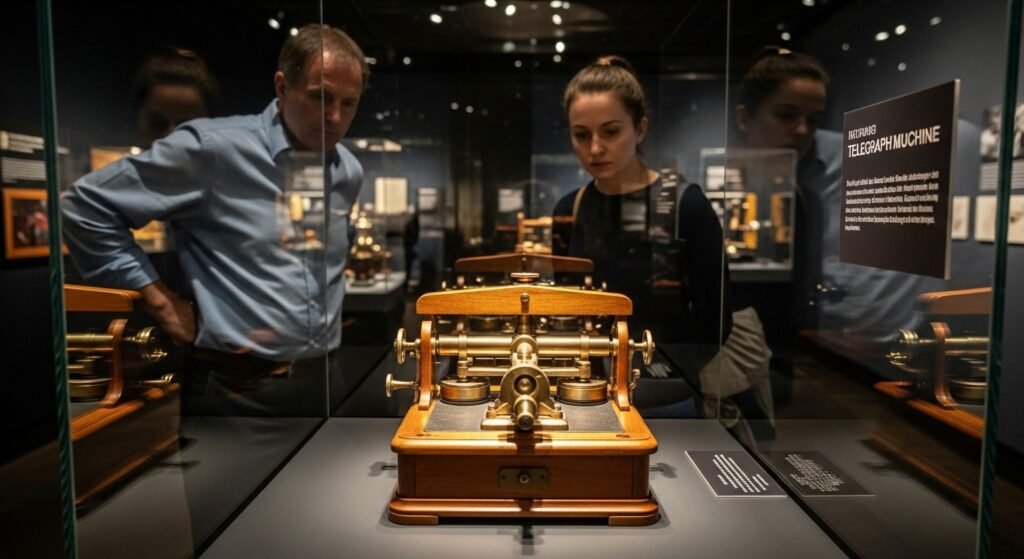
A retrospective of the telegraph can provide some insight into the extent to which communication has advanced. It appears to make us recall the fact that the modern enhanced gadgets probably exist upon the strata of the previous innovation, where each innovation silently improved the one before it.
