
The jacket with double breasts plays a long role in the formal dress, but the design changes in the present-day make the tailoring a day-to-day choice. Designers are preoccupied with smoother lines, lighter materials, and stretchy shapes. These updates facilitate casual wear in the workplace, social, and casual lifestyle. This paper re-examines the structural decisions, fit logic, and styling associated with the current day double breasted jackets.
The Return of Structured Tailoring
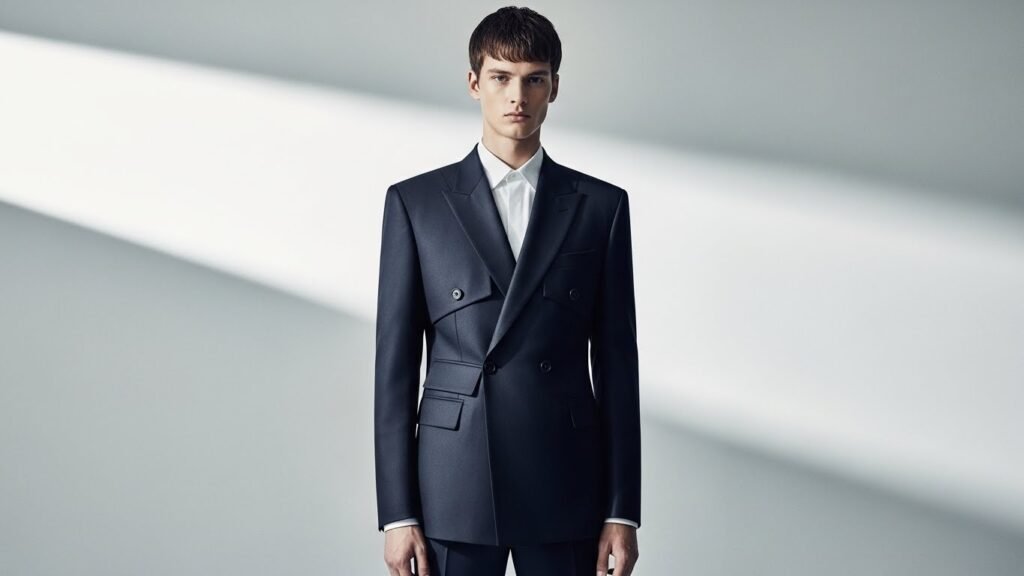
Double breasted jackets rely on overlapping fronts and parallel button rows. This structure creates a firm visual line across the torso. Contemporary versions reduce padding and narrow shoulders. The result supports posture while avoiding stiffness. This balance suits office wear and evening settings without visual weight.
Fabric Choices Shape Wearability
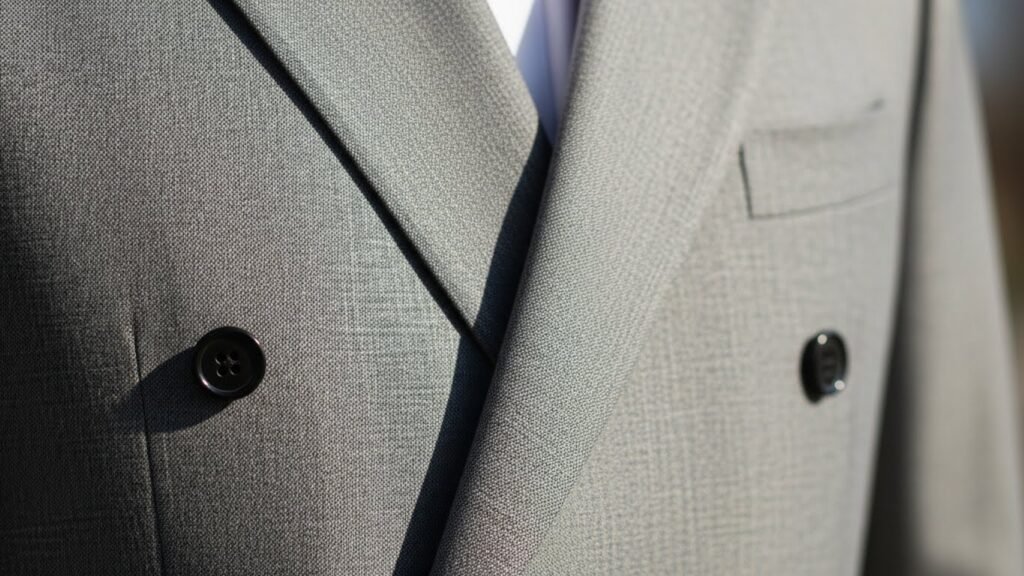
Fabric selection defines comfort and movement. Wool blends dominate due to breathability and crease control. Linen blends appear in warm climates due to airflow. Stretch fibers support daily wear. Lightweight construction lowers fatigue during long use, which supports extended office hours and travel.
Fit Rules Drive Visual Balance
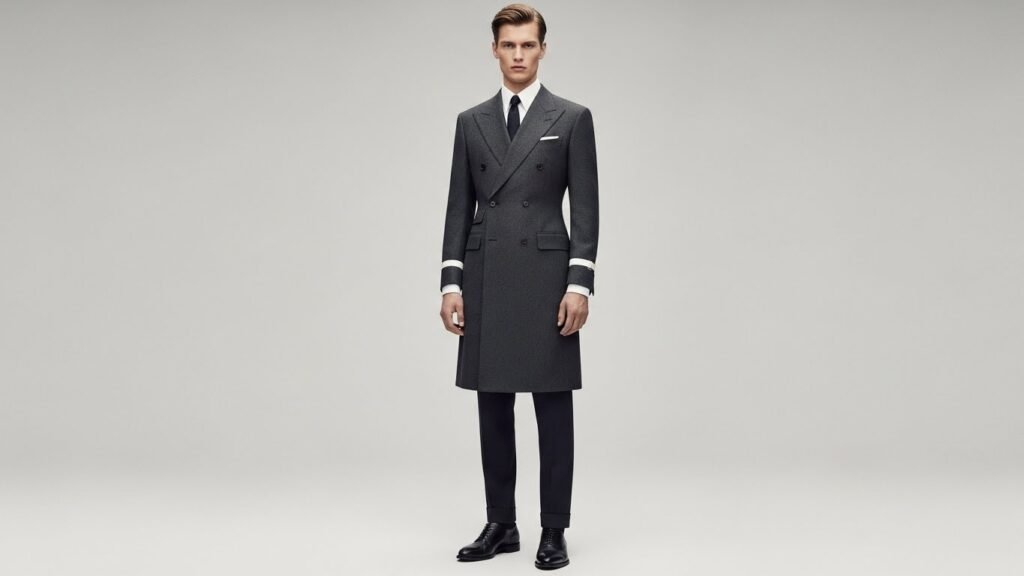
Fit accuracy matters more within double breasted design. A clean waist suppression prevents bulk at the front. Jacket length often ends mid seat for proportion control. Sleeve length aligns with wrist bone exposure. These measurements support sharp appearance without excess tailoring complexity.
Button Stance Alters Formal Tone
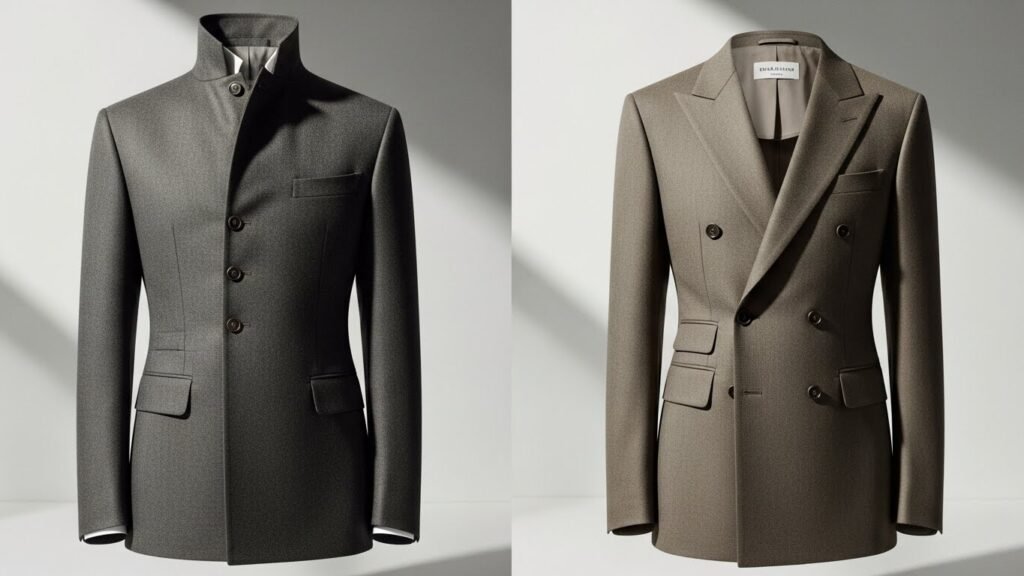
Button placement controls formality. A higher stance signals traditional business wear. A lower stance leans toward casual tailoring. Six on two layouts remain common due to visual symmetry. Four button layouts offer relaxed presence for informal settings.
Lapels Define Character
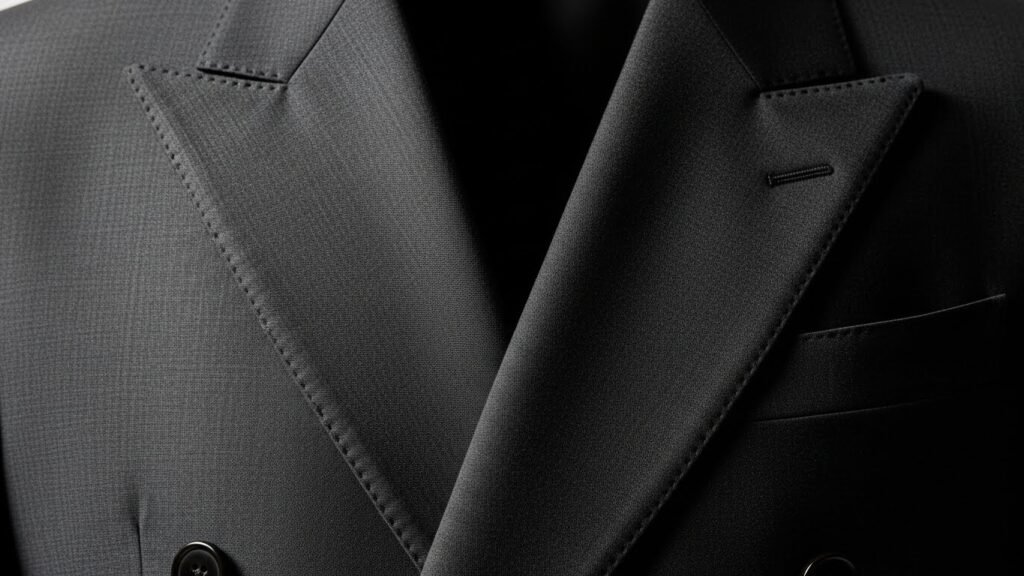
Peak lapels remain standard for double breasted jackets. Current designs narrow lapel width to match modern silhouettes. Sharp lapel points draw attention upward, which enhances frame presence. This detail supports formal coordination with minimal accessory reliance.
Color Selection Expands Versatility
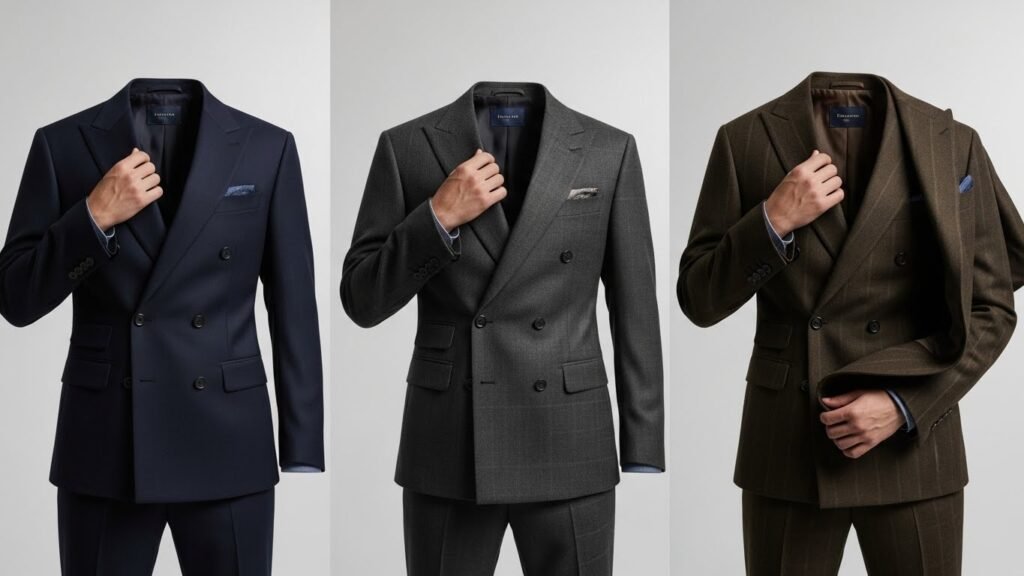
Neutral shades dominate due to adaptability. Navy and charcoal serve professional settings. Earth tones suit casual coordination. Pattern use remains limited, with subtle checks and textures preferred. This restraint ensures long term relevance across seasons.
Styling with Shirts and Knitwear
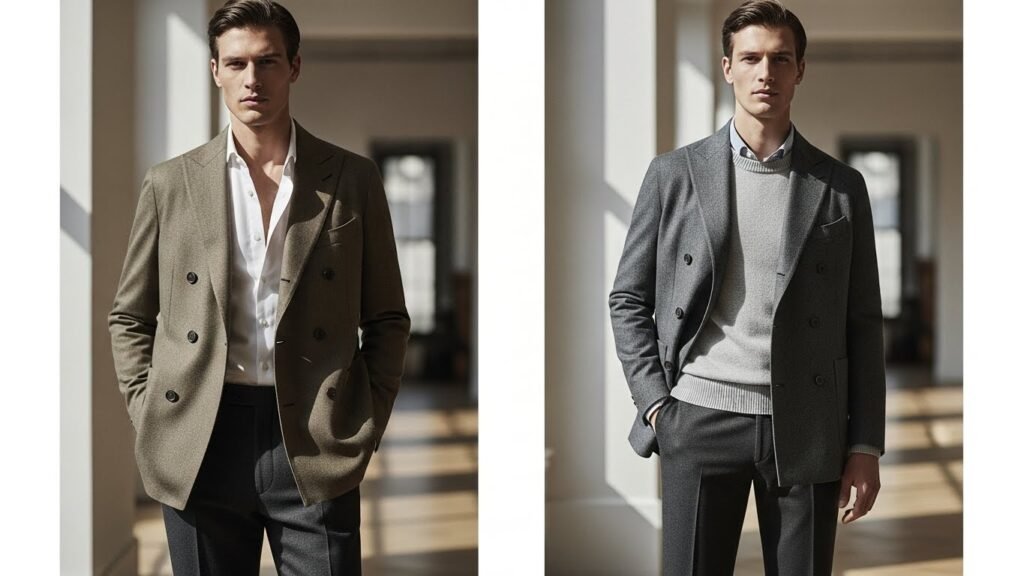
Structured jackets pair with crisp shirts for formal use. Fine gauge knitwear works for relaxed styling. Crew neck and polo knits align well due to clean collar lines. This approach broadens wear scenarios without altering jacket structure.
Trousers Complete the Silhouette
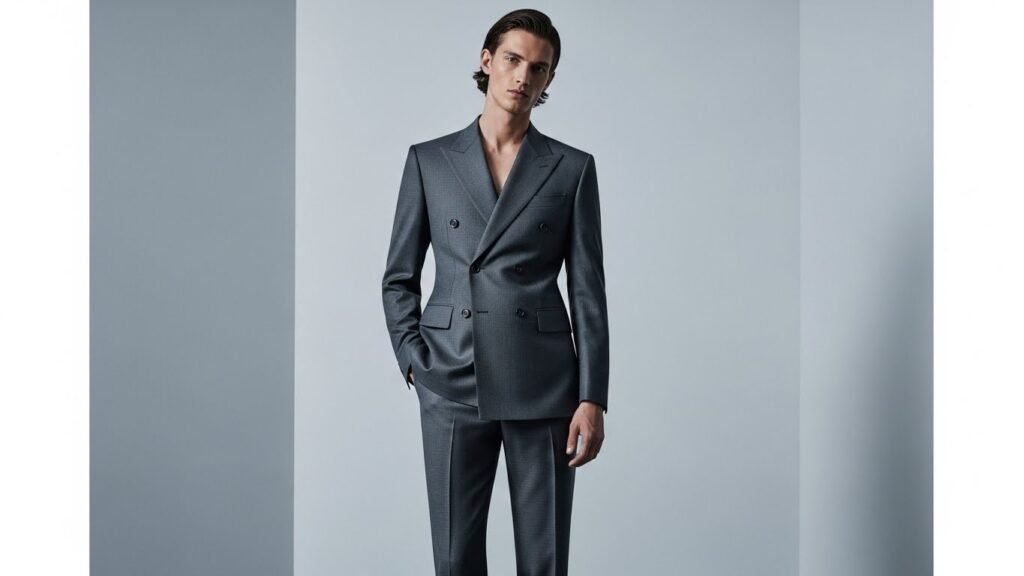
Flat front trousers align best with double breasted jackets. High rise trousers enhance proportion by extending leg line. Fabric consistency between jacket and trousers supports cohesion. Contrast works within casual outfits when color harmony remains controlled.
Footwear Supports Style Intent
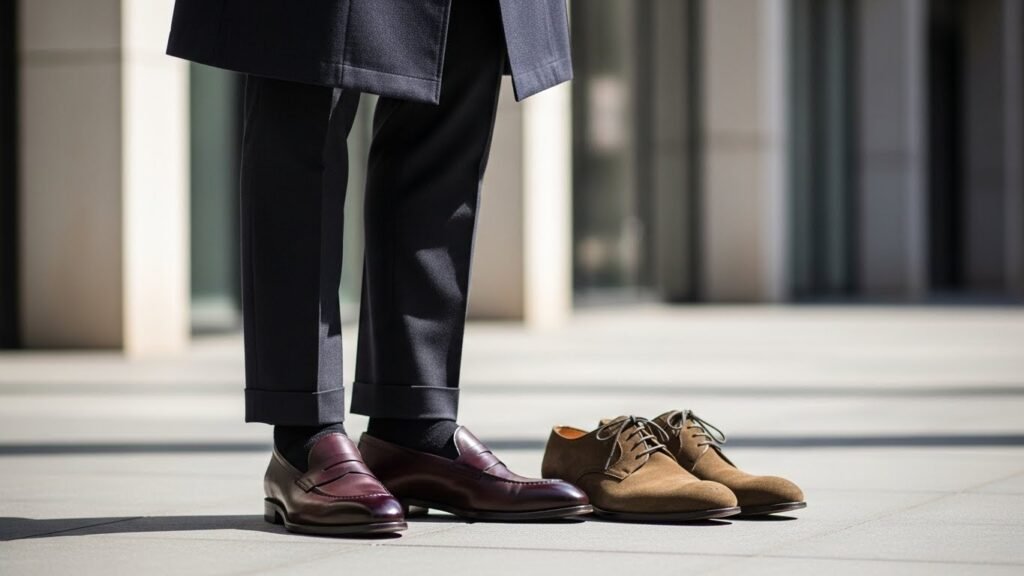
Footwear choice influences overall tone. Leather loafers and oxfords suit business settings. Suede footwear supports relaxed styling. Clean profiles work best due to jacket structure. Bulky footwear disrupts balance and reduces refinement.
Care and Longevity Considerations
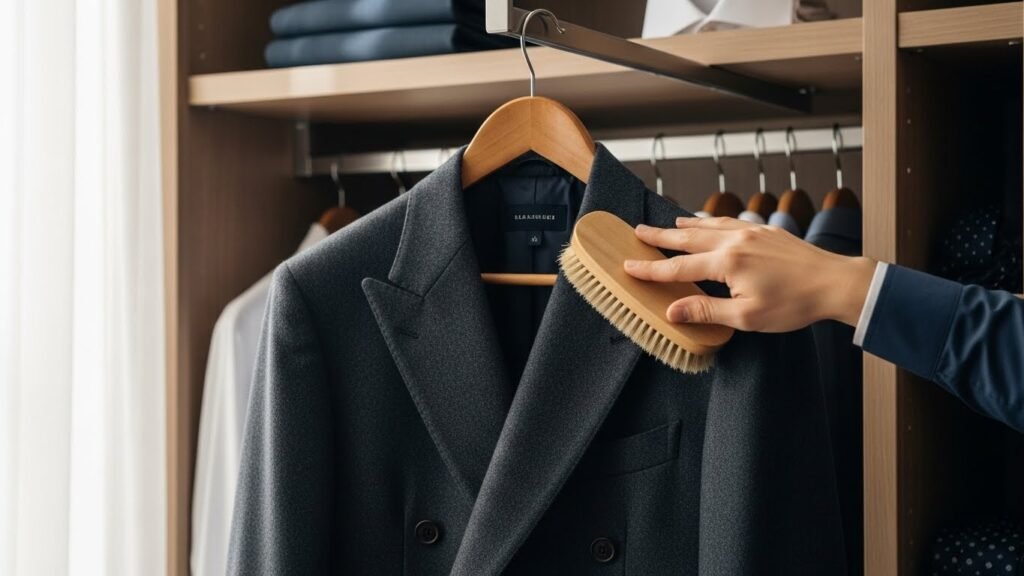
Proper care extends garment life. Brushing after wear preserves fabric surface. Rotation between jackets reduces stress on seams. Dry cleaning frequency remains limited to preserve fiber integrity. These practices protect structure and maintain appearance across years.
