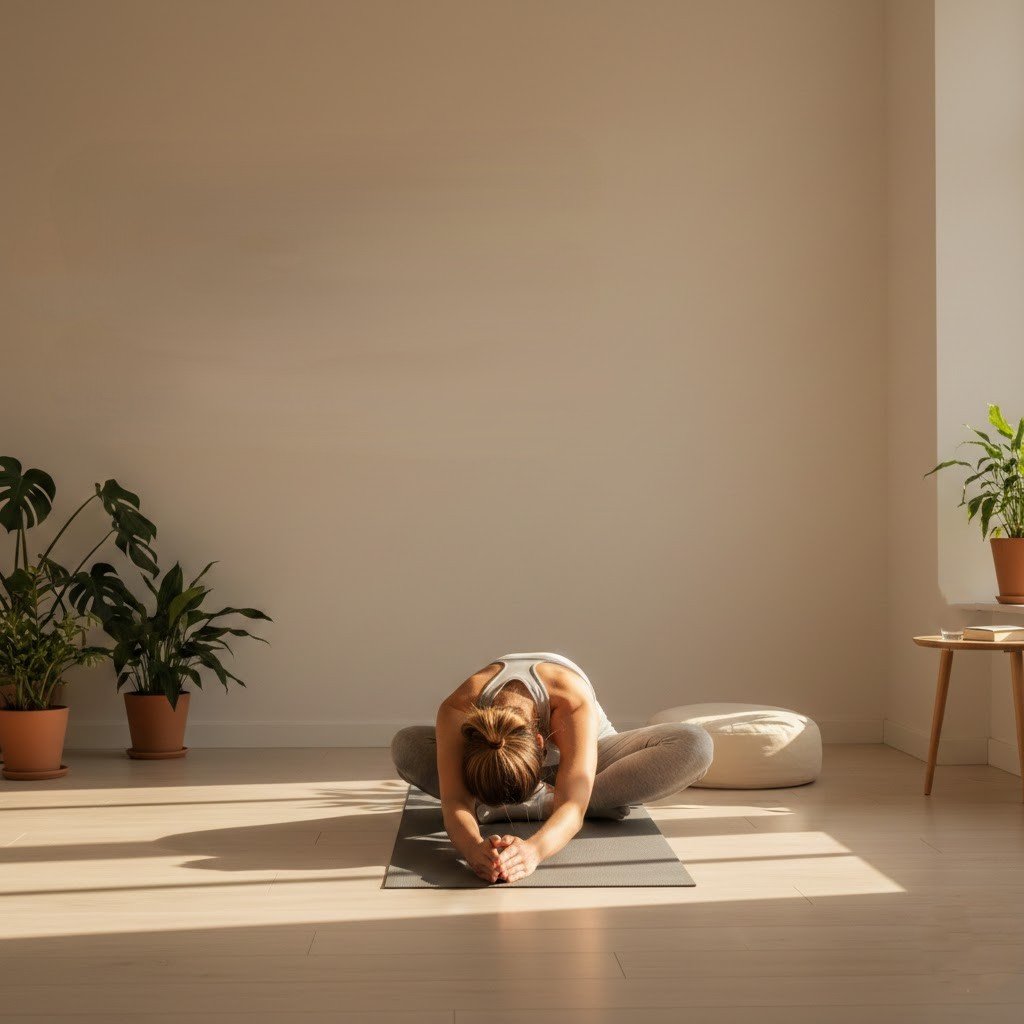
Some of the reasons why many adults do not take up flexibility work include lack of time, high cost, or full studio. Home based routine that consists of a short mat based routine eliminates those obstacles. Focused 30 minutes aids the range of a joint, muscle length, and posture when done intentionally. This practice is appropriate in workdays, travelling days, and rest days. It is better to be consistent than intense. An empty room, a cushion, and a beautiful simplicity make it possible to achieve quantifiable outcomes.
Why a mat based routine works
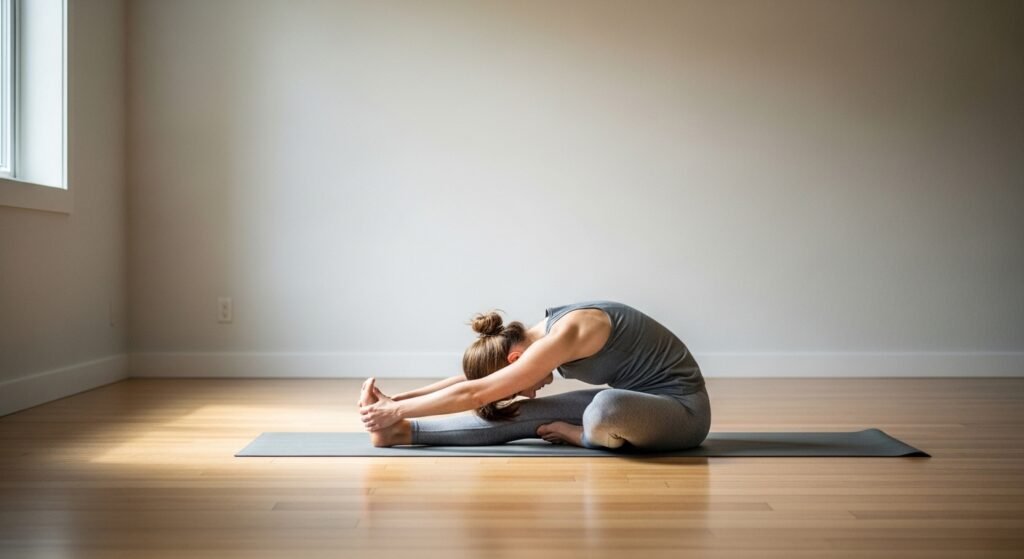
A mat routine limits distractions and supports floor based movement. Floor contact improves body awareness and reduces balance demands. Research from sports medicine journals links slow controlled stretching with improved joint range after four to six weeks. Home routines remove commute time, which improves adherence across busy schedules.
How thirty minutes fits real schedules
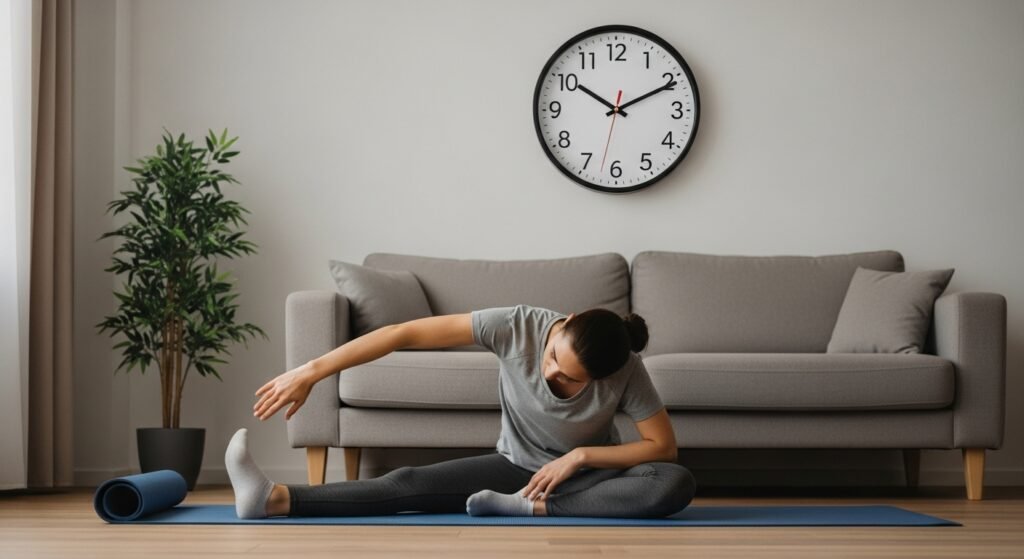
Thirty minutes is appropriate during a work break before and after work and between tasks. Mini sessions enhance two completion rates and decrease mental resistance. The habit formation study results indicate increased compliance with less than forty minute sessions. Five days a week practice is better than infrequent but long sessions regarding the improvement of flexibility.
Breathing sets the foundation
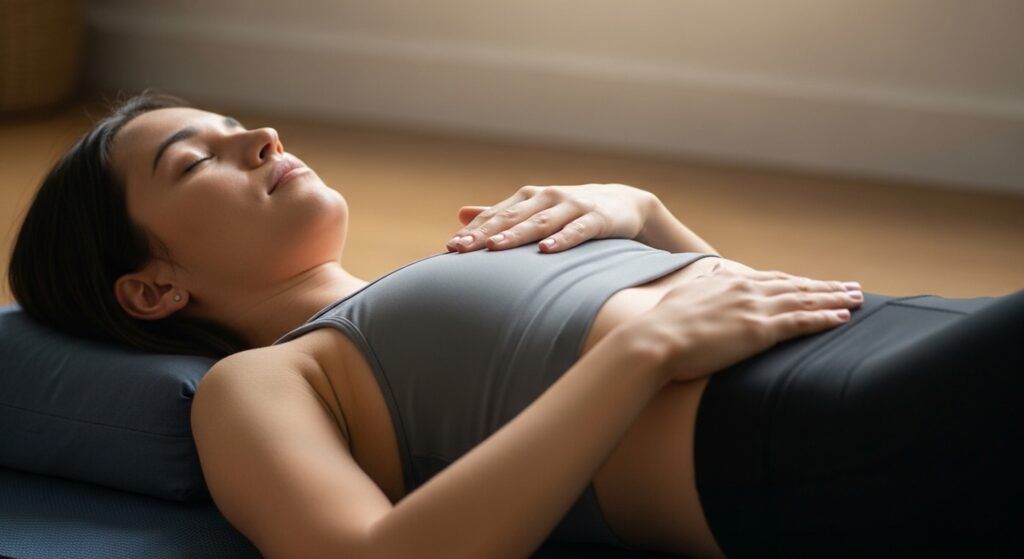
Breathing drives relaxation and muscle release. Nasal breathing with slow exhales lowers nervous system arousal. A two minute breathing phase at the start improves stretch tolerance during later positions. Physiotherapy studies associate controlled breathing with reduced protective muscle tension during static holds.
Warm up without equipment
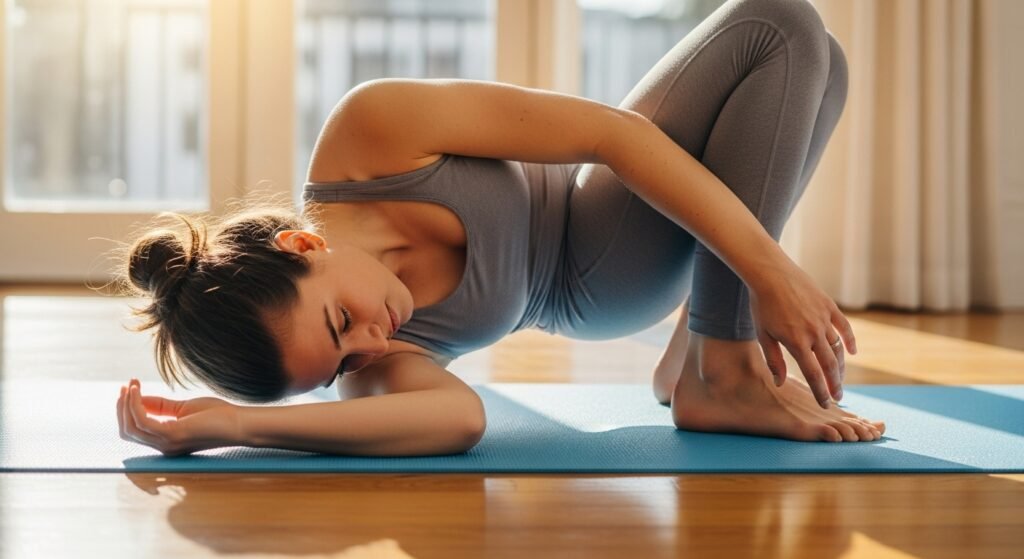
A warm up prepares joints and tissues. Gentle spinal rolls, hip circles, and shoulder arcs raise local temperature. Five minutes of low effort movement increases tissue elasticity. Warm tissues respond better to stretch exposure and reduce post session soreness reported by beginners.
Focus on hips and hamstrings
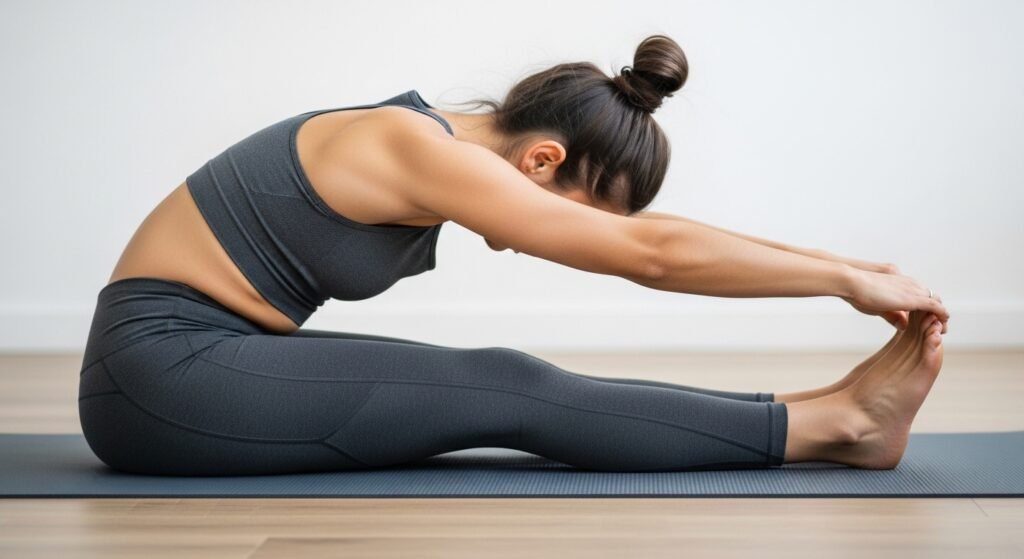
Hips and hamstrings limit daily movement for many adults. Prolonged sitting shortens posterior chain tissues. Mat based folds and hip openers target these areas safely. Holding each position for thirty to forty seconds supports length adaptation when performed with calm breathing and stable alignment.
Spine mobility supports daily tasks
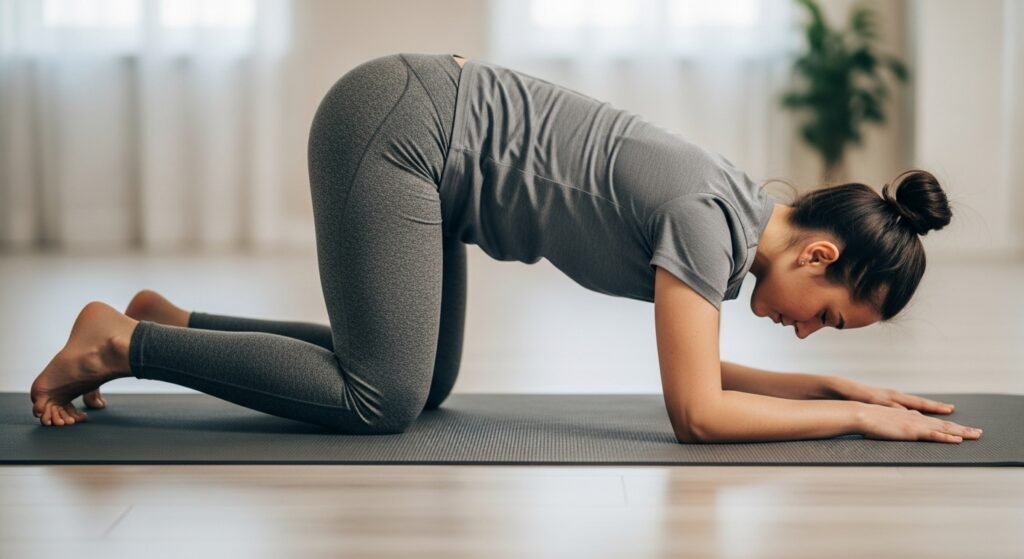
Spinal movement supports bending, reaching, and rotation. Controlled flexion and extension on a mat reduce load while improving segment motion. Clinical movement screens link improved spinal mobility with reduced stiffness reports. Slow repetitions improve awareness and coordination without external strain.
Shoulders benefit from floor support
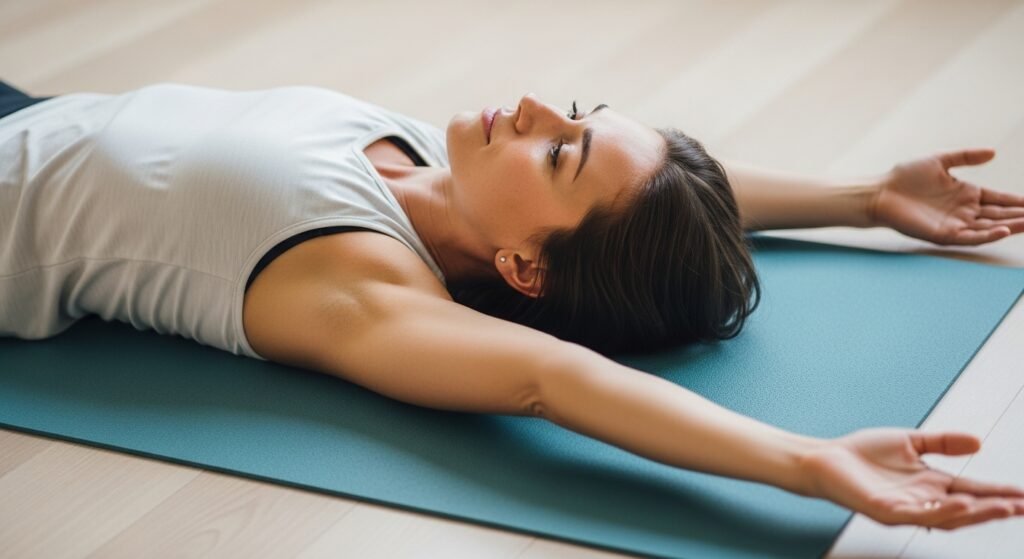
Shoulder stiffness affects desk workers and drivers. Floor supported arm sweeps and chest openers reduce compensatory patterns. The mat provides feedback for scapular movement. Studies on shoulder mobility show improved range after consistent low load stretching paired with controlled breathing.
Hold times and rest periods
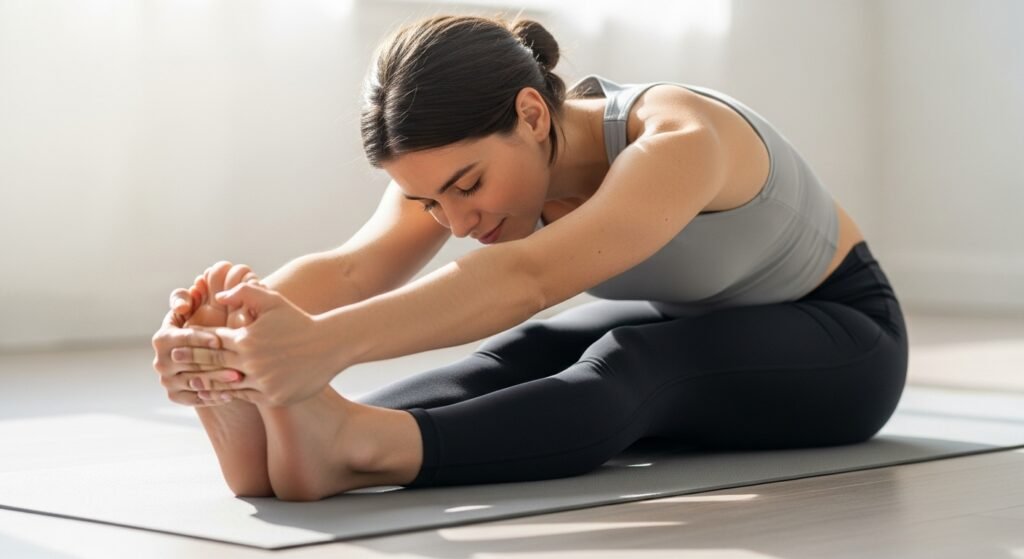
Hold duration matters more than force. Thirty to sixty second holds allow tissues to adapt without strain. Short rest periods maintain warmth and focus. Research on flexibility training supports moderate holds repeated across sets rather than aggressive single efforts.
Progression without complexity
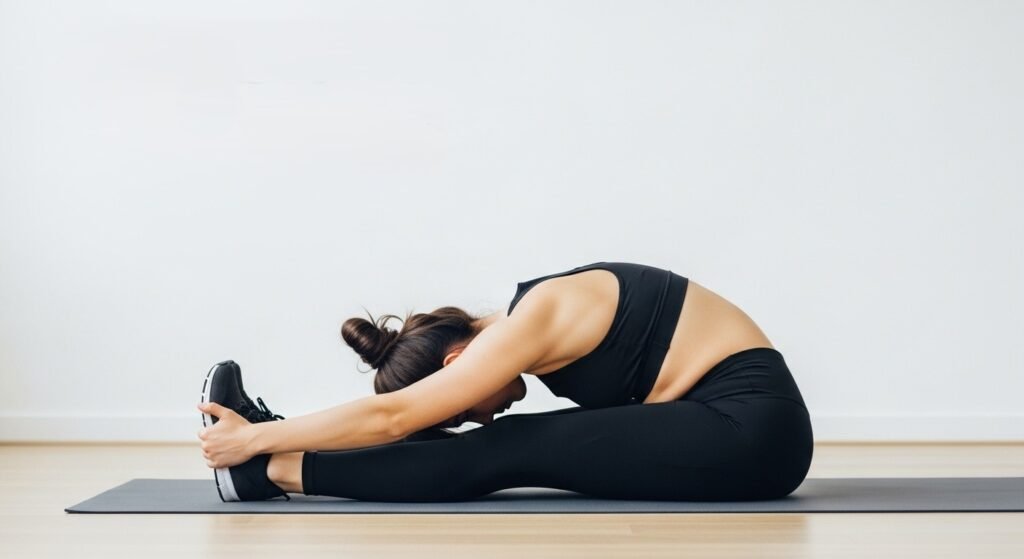
Progression relies on depth control and breath quality. Increased range follows improved relaxation rather than force. Tracking reach distance or comfort scores across weeks shows progress. Simple routines reduce cognitive load and support long term adherence across varied fitness levels.
Making flexibility a habit
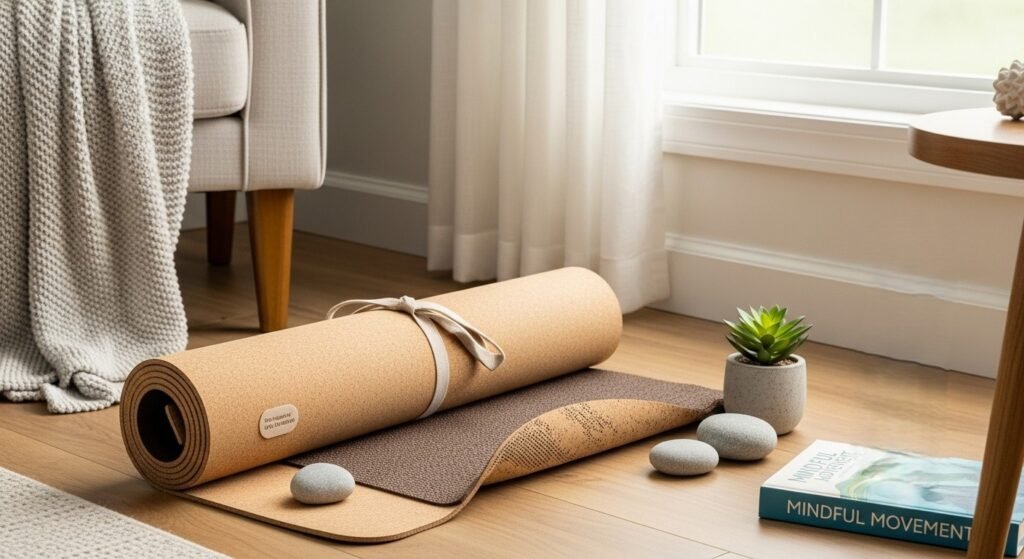
Habit formation depends on cues and consistency. A fixed time and location improve follow through. Keeping the mat visible increases session starts. Behavioral research shows environmental cues outperform motivation alone. Thirty minute sessions align with realistic routines and support sustained flexibility work.
