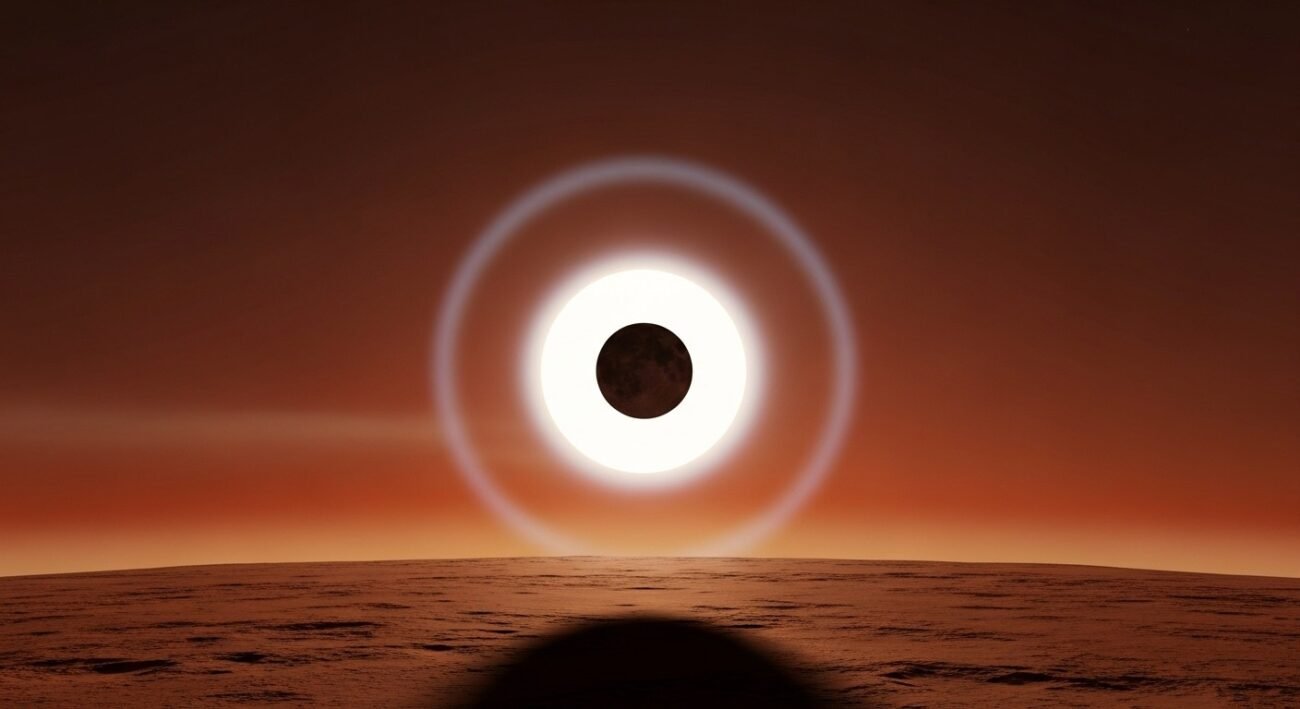
Solar eclipses take place above the earth. This is a similar incidence that Mars goes through as a single small moon passes over the Sun, as seen on its surface. The attention of these events is caused by short span and acute shadows. The rover cameras have captured such moments in space missions. The observations facilitate the orbital research and enhance knowledge of Mars day cycles. Precise timing and repeat measurements are crucial in helping the research teams to derive value in each event.
How solar eclipses form on Mars
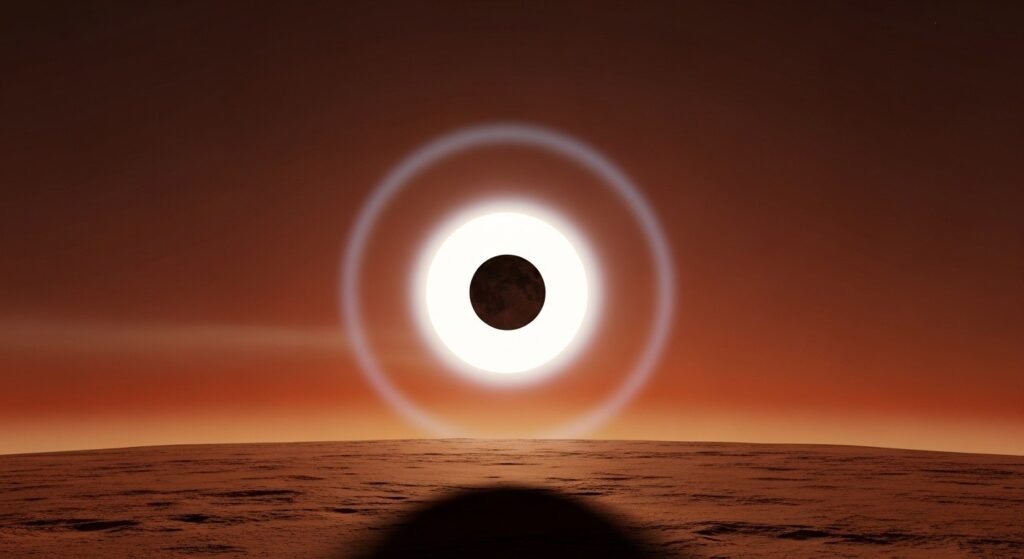
A solar eclipse on Mars occurs when Phobos or Deimos moves across the Sun from a surface location. Phobos causes most recorded events due to a low orbit and fast motion. Deimos produces smaller and rarer effects. Both moons lack size needed for full darkness.
Why Phobos plays the main role
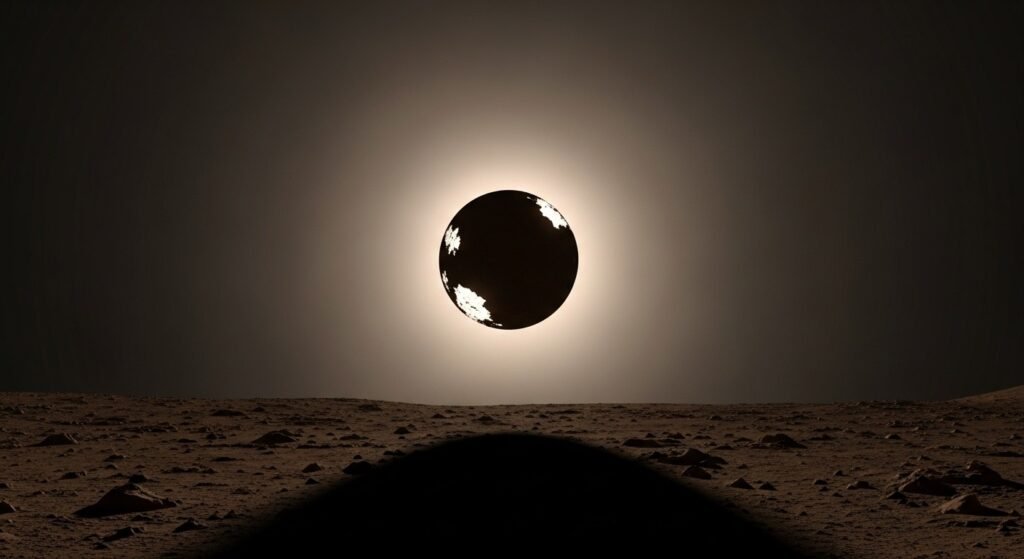
Phobos revolves around Mars some 6,000 kilometers high in the air. Each complete rotation takes approximately 7 hours and 39 minutes. This velocity develops regular crossings across the Sun. The moon is so big in the sky of Mars that it blocks a portion of the sunlight during its alignment.
How Mars eclipses differ from Earth eclipses
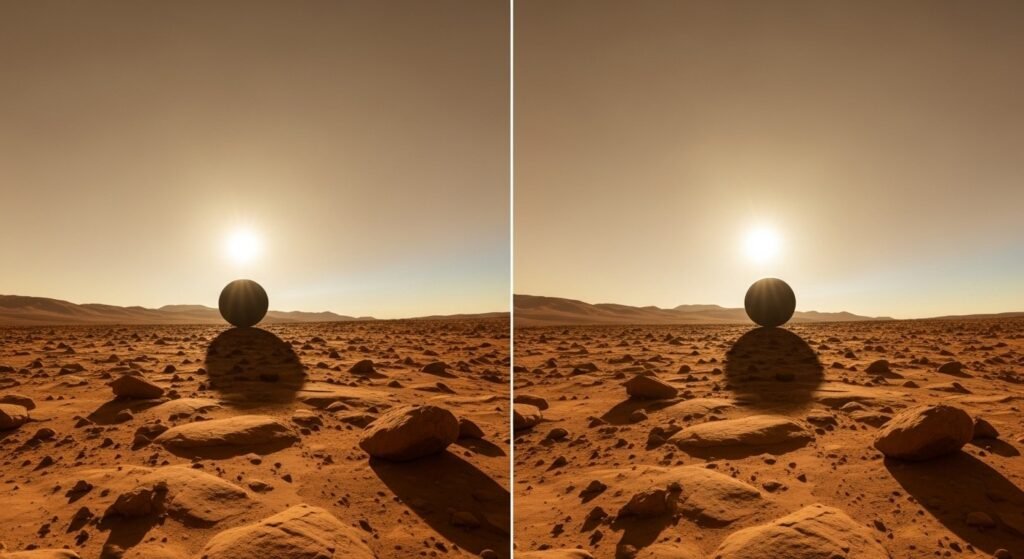
Earth experiences total and partial eclipses with long shadow paths. Mars experiences brief and partial events only. Phobos lacks size to cover the full solar disk. Typical events last under 30 seconds. Shadows appear as fast moving bands across terrain rather than long lasting darkness.
What rovers record during eclipses
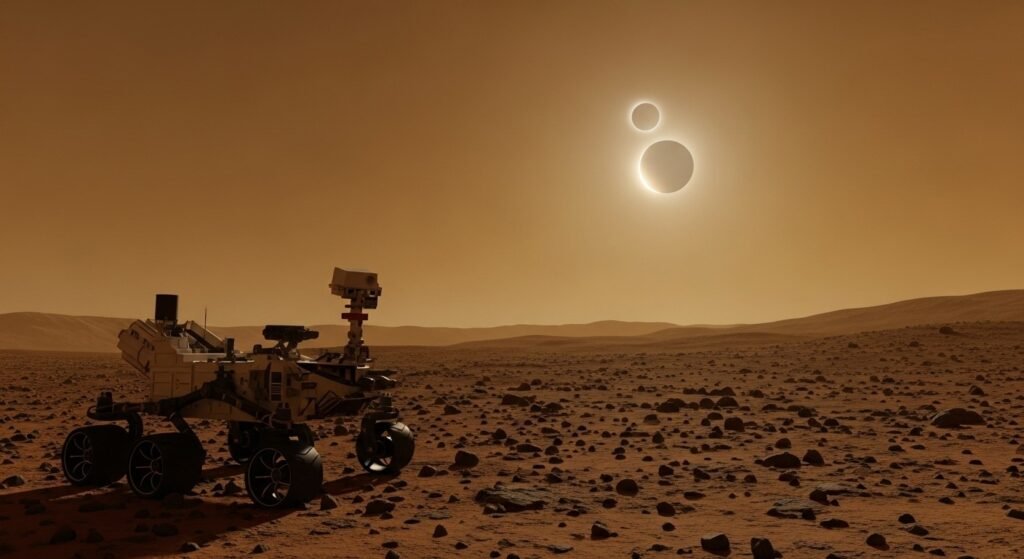
Rovers such as Curiosity and Perseverance use mast cameras to record eclipses. Images capture changes in light and shadow. Time stamped frames allow orbital calculations. Engineers also check camera response to rapid light shifts. Each recording serves both science and system validation goals.
Scientific value of eclipse timing
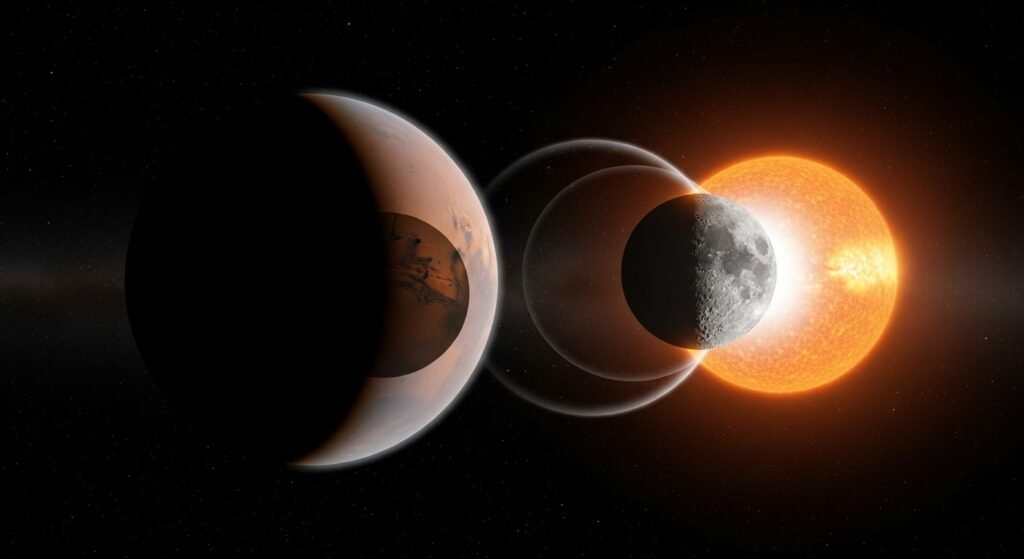
Eclipse timing helps refine orbital decay estimates for Phobos. Data shows Phobos slowly moving closer to Mars at about 1.8 centimeters per year. Repeated eclipse measurements confirm models. These results support predictions of long term moon behavior and surface impact timelines.
Impact on solar power systems
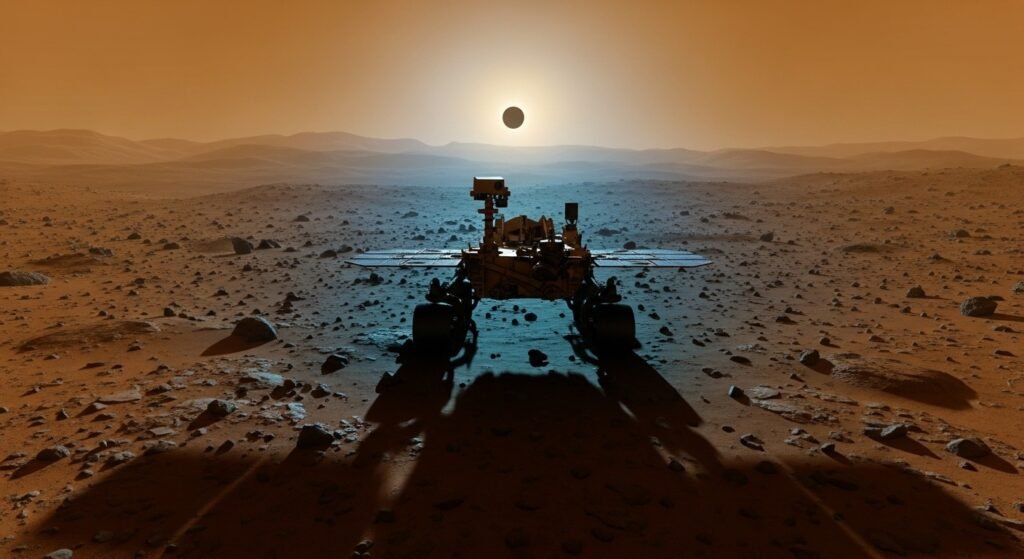
Solar eclipses cause brief drops in power generation for solar driven assets. Mission planners account for these losses during activity schedules. Power dips remain minor due to short duration. Testing during eclipses improves understanding of energy margins under sudden light changes.
Atmospheric insights from shadow behavior
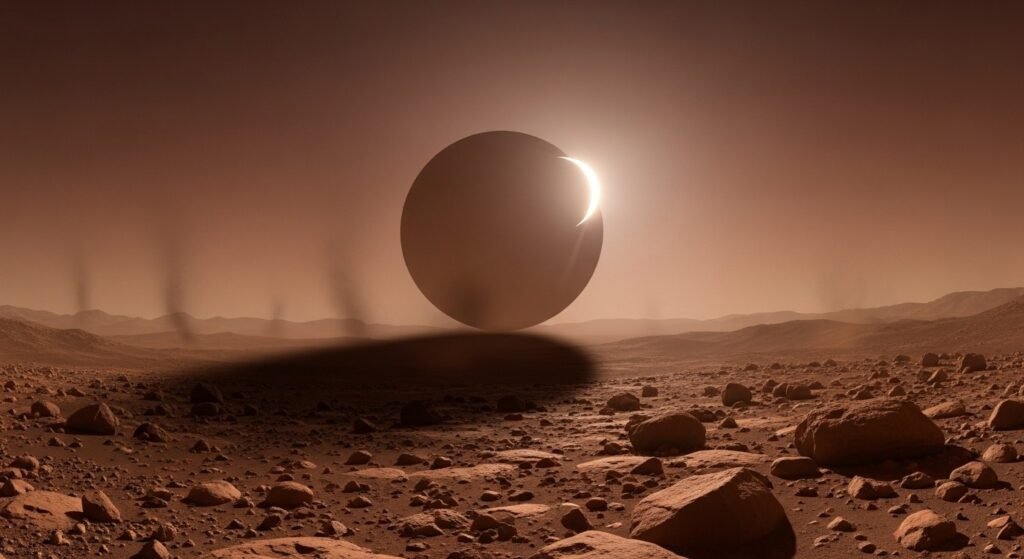
Shadow edges during eclipses reveal dust levels in the Martian atmosphere. Diffused shadows indicate airborne particles. Sharp edges suggest clearer air. Scientists compare eclipse images with weather data. Results assist in tracking seasonal dust variation near rover sites.
Frequency of Martian solar eclipses
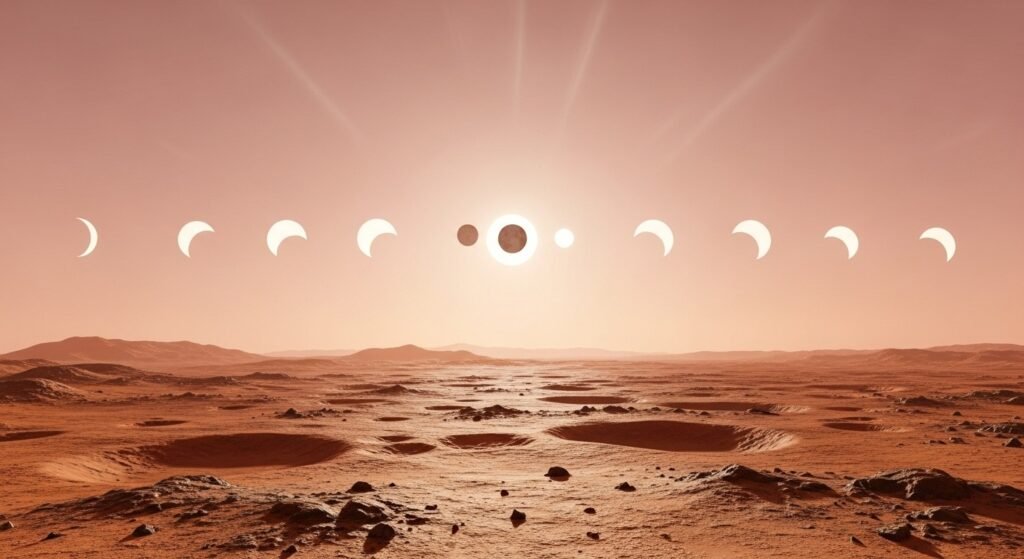
Phobos produces several eclipses per Martian year at many locations. Frequency depends on latitude and season. Some regions experience clusters within short periods. Deimos events occur less often due to higher orbit and smaller apparent size.
Challenges in observing eclipses
Precise prediction remains required due to short duration. Rover orientation and camera readiness affect success. Dust on lenses reduces clarity. Communication delays prevent real time adjustments. Teams rely on preplanned sequences and accurate orbital models.
Why these eclipses matter for future missions
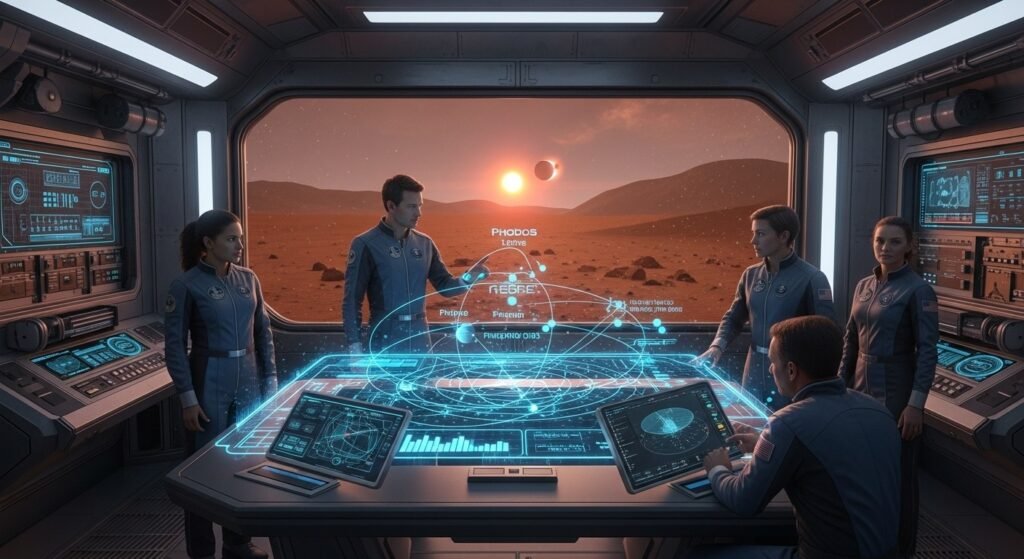
Solar eclipses support navigation calibration and orbital science. Data strengthens confidence in moon motion models. Future human missions benefit from refined timing predictions. Continued monitoring offers low risk science with high data return during routine rover operations.
