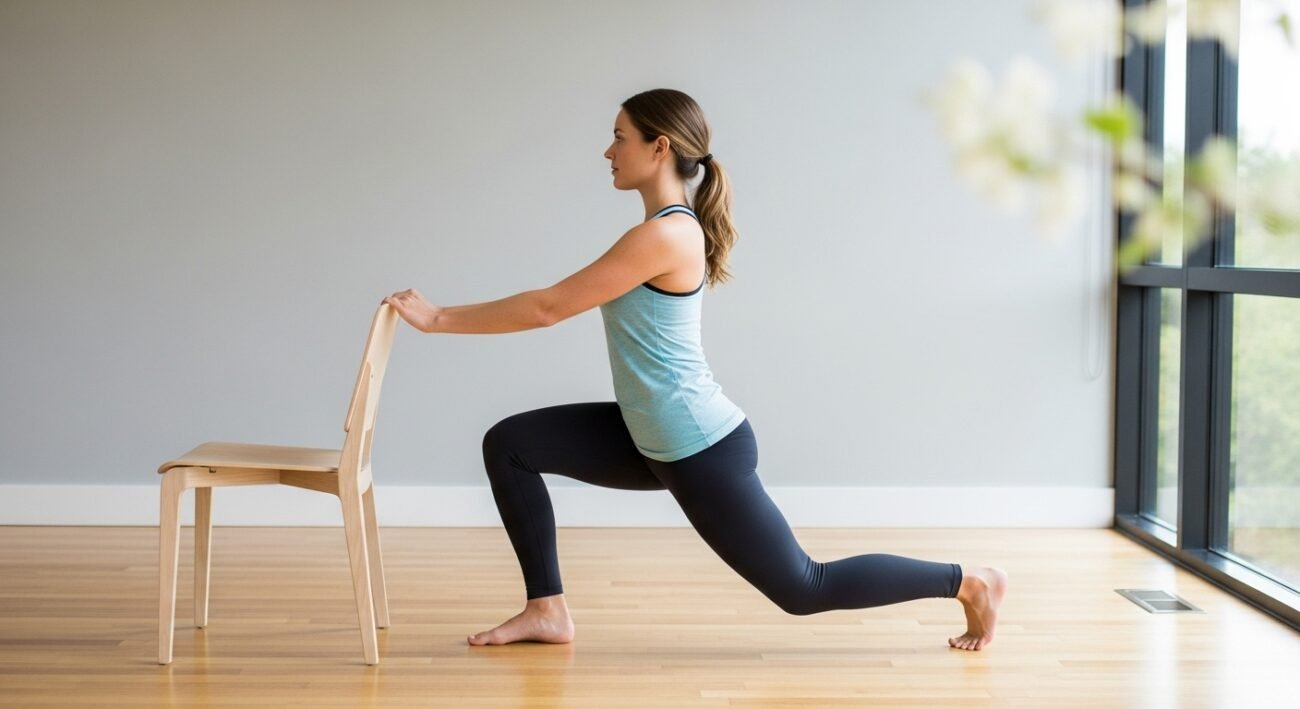
Daily sitting, long drives, and limited movement place steady stress on the lower back and hamstrings. A single controlled stretch offers fast comfort when performed with care and consistency. This article explains one effective pose used in mobility training and basic yoga practice. The focus stays on body position, breathing, and timing. Each section gives direct guidance so readers understand setup, execution, and safety without extra theory or filler.
The pose explained
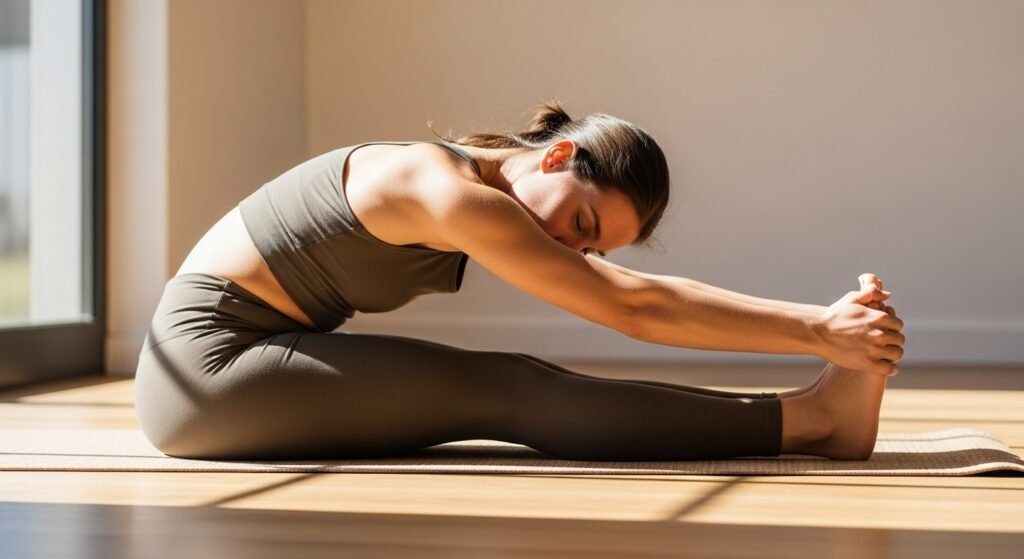
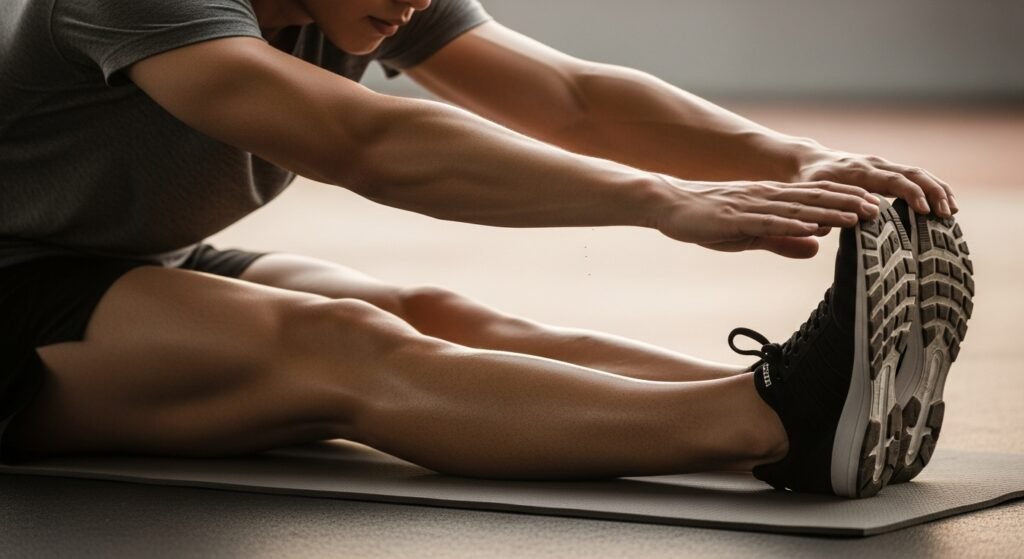
The pose used for this routine is the seated forward bend. The movement places both legs straight while the upper body folds from the hips. Physical therapists often recommend this stretch for posterior chain tension. The shape stays simple and repeatable across fitness levels.
Why the back responds fast
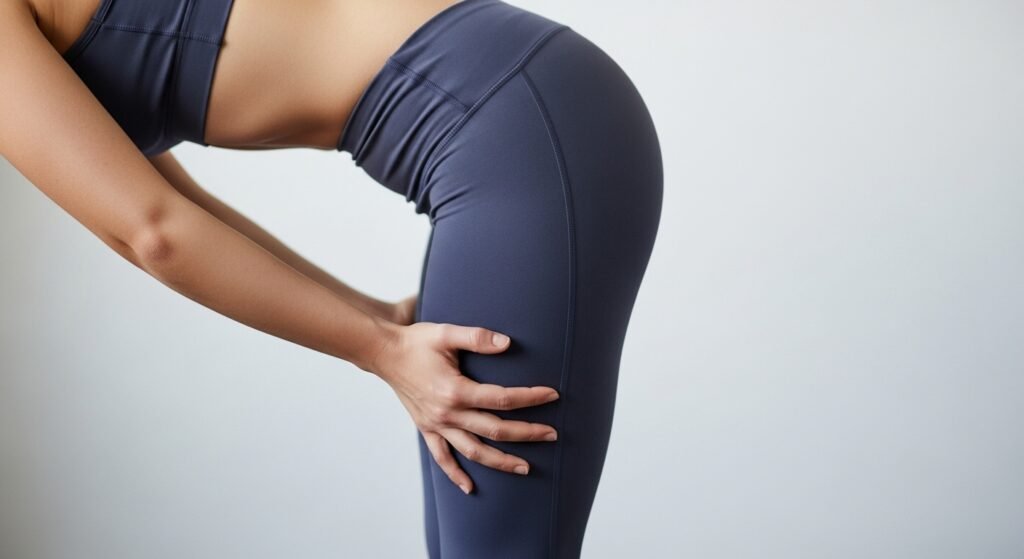
Forward folding lengthens muscles along the spine. Gentle traction reduces compression from prolonged sitting. Studies on flexibility training show slow spinal flexion improves perceived comfort after short sessions. The nervous system also relaxes during steady breathing in this position.
Why hamstrings release tension
Hamstrings shorten during desk work and driving. The seated forward bend places sustained length through both muscles. Research in sports medicine links static holds of thirty to sixty seconds with improved muscle extensibility. This length change supports smoother hip movement.
How to enter the pose safely
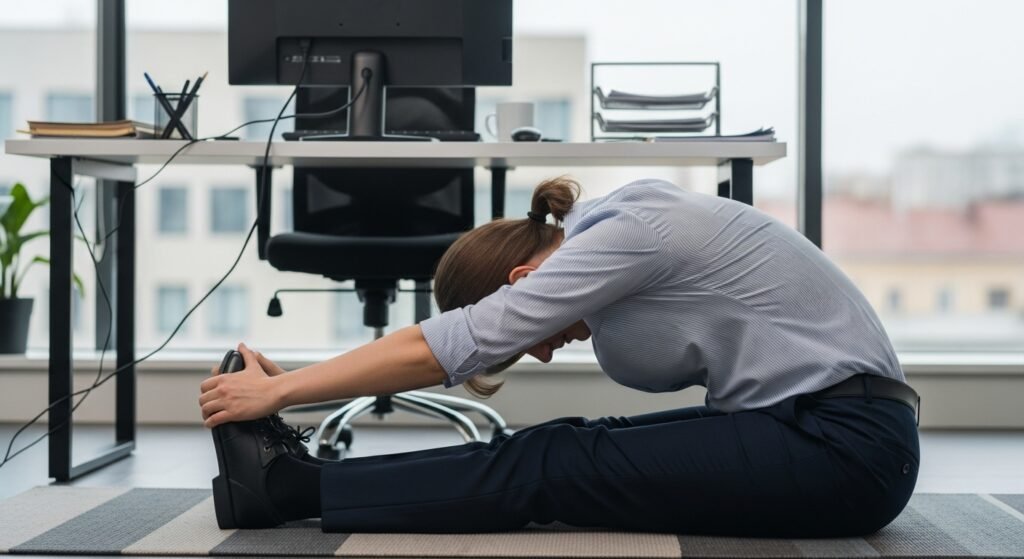
The practitioner sits erectly with his legs stretched and feet not in tension. Thighs are touched by hands in the first position. The abdomen bends ahead of the spine as opposed to the hips. The movement remains slow to avoid pressure and be in control.
Breathing pattern during the hold

Breathing remains steady and nasal. Each inhale supports posture while each exhale supports depth. Slow breathing reduces protective muscle tightening. Clinical relaxation studies link controlled breathing with reduced muscle guarding during static stretching.
Ideal hold duration
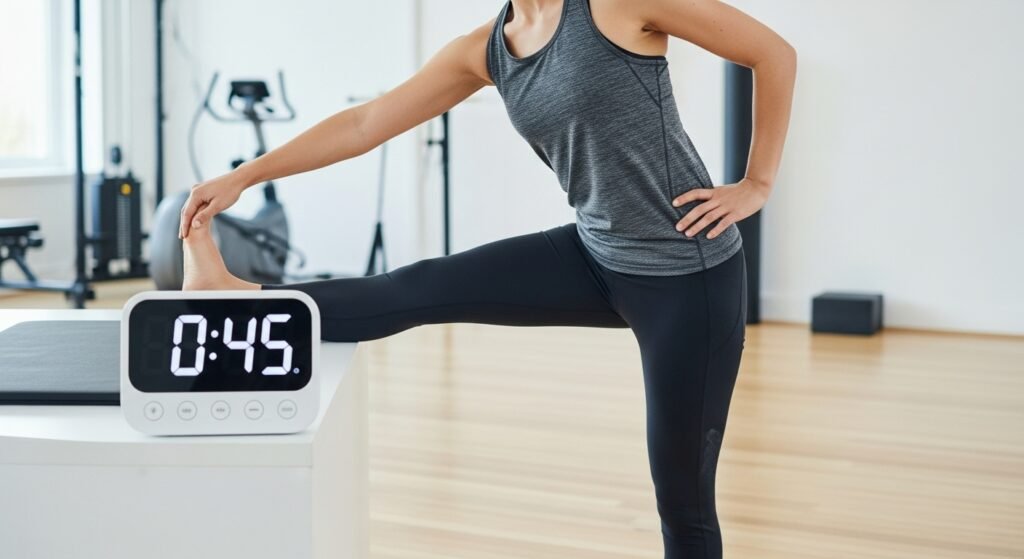
A hold between thirty and sixty seconds supports muscle adaptation. Shorter holds limit effect while longer holds increase fatigue risk. Flexibility research shows consistent moderate duration produces better results than aggressive timing. One or two rounds per session meet basic needs.
When relief appears
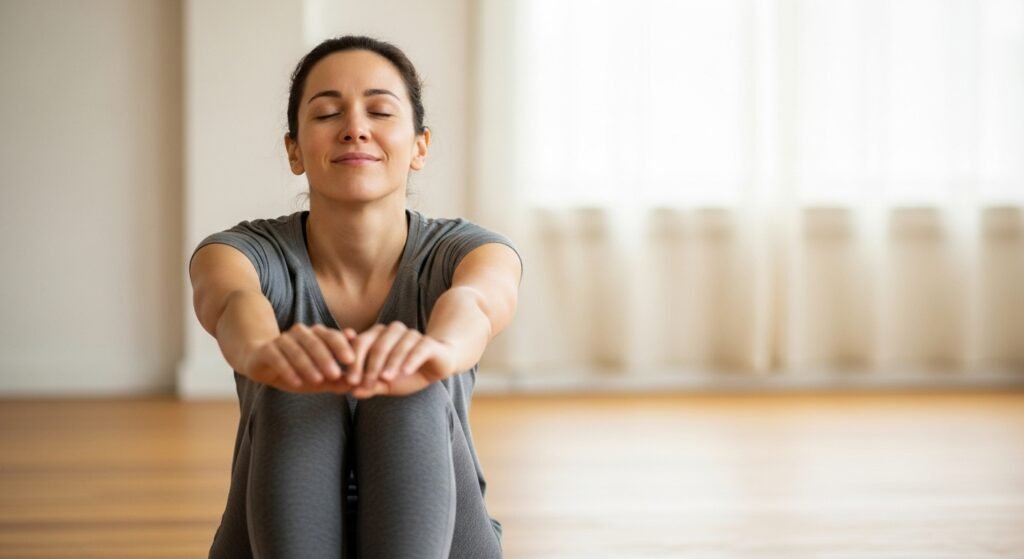
Many people report reduced tightness within the first hold. Sensory feedback from lengthened tissue signals safety to the nervous system. This response explains the fast comfort often noticed after the stretch. Repetition across days strengthens this response.
Who benefits most
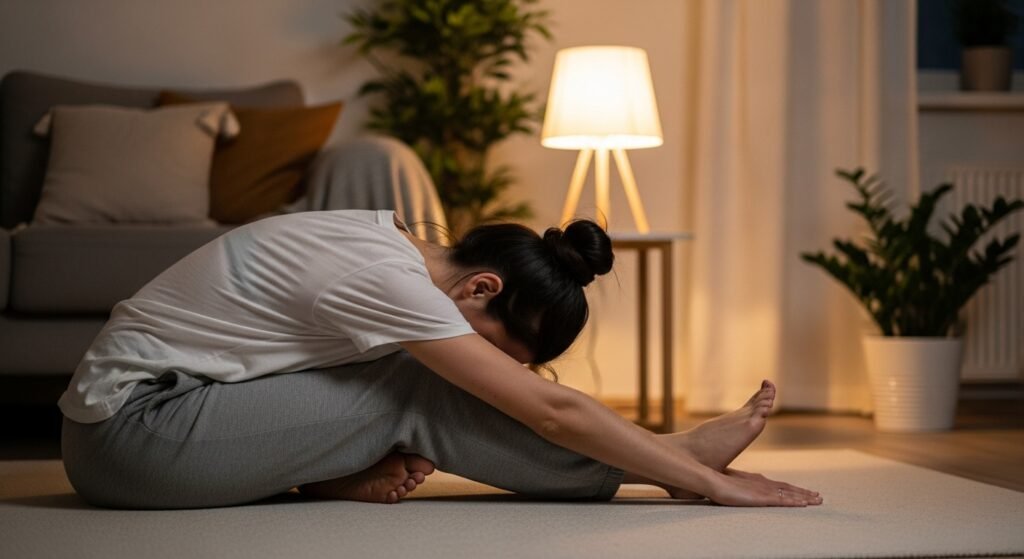
Office workers, drivers, and recreational athletes often experience posterior chain tightness. This pose fits warm ups, cool downs, or evening routines. Minimal space requirements support daily use across home and workplace settings.
How often to practice
Flexibility that is maintained is supported by daily practice. Three-five sessions per week also demonstrate some improvement. It is better to be consistent rather than intense. Through brief workouts with proper formats are better than the occasional long workouts when it comes to the flexibility.
