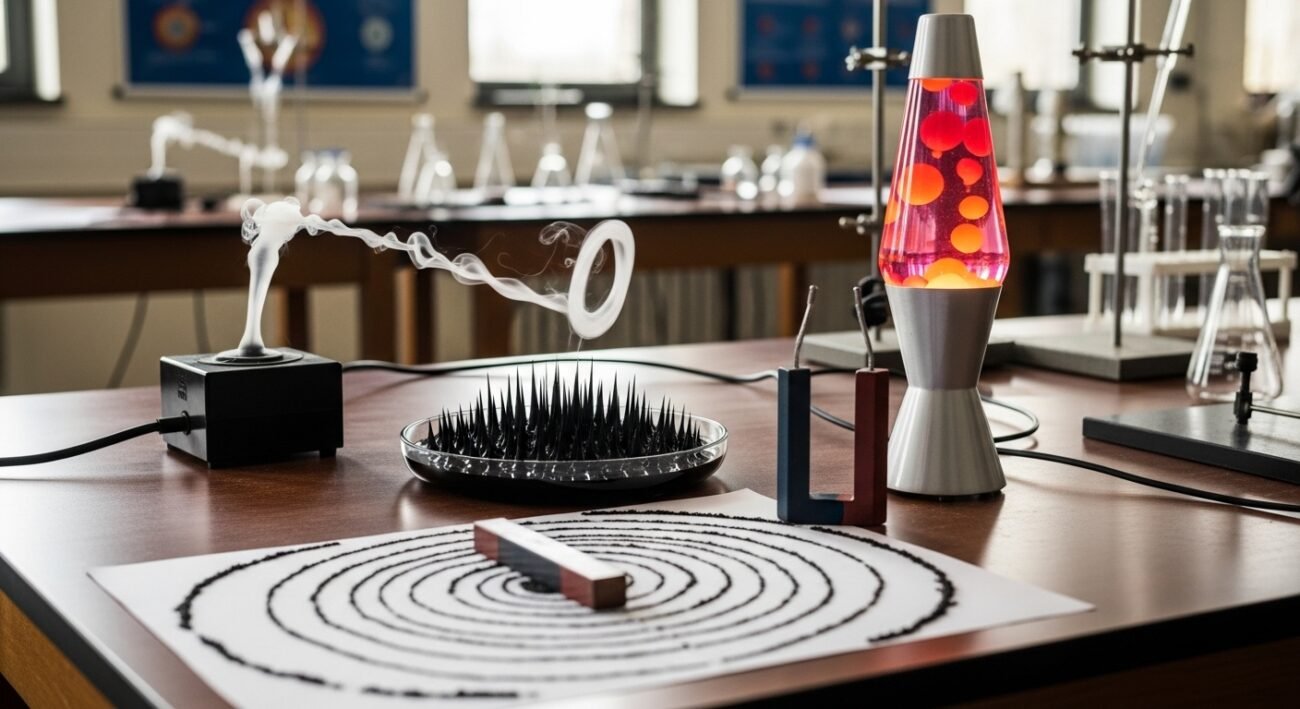
Science becomes far more engaging when ideas move from theory to visible action. Simple demonstrations can reveal complex principles such as fluid motion, magnetic forces, and temperature-dependent changes in materials. These experiments allow observers to watch patterns form, forces interact, and materials behave in unexpected ways. Many of these demonstrations use everyday objects, yet they explain key concepts studied in physics and chemistry. Watching them in action helps make scientific ideas clearer and easier to remember. The following experiments highlight interesting phenomena including fluid dynamics, magnetic behavior, and the effect of heat on metals. Each one shows how scientific principles influence the world around us.
Floating Ping-Pong Ball
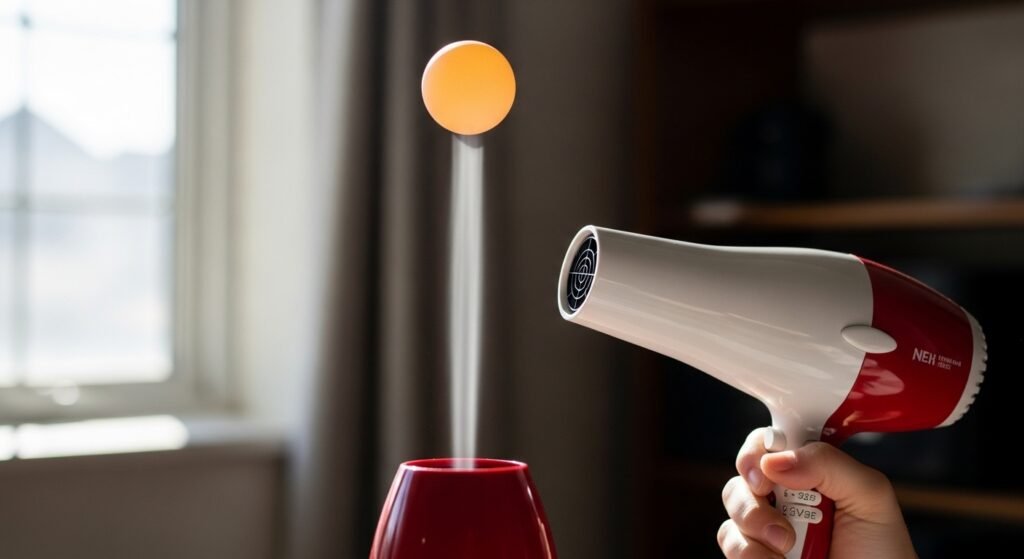
A ping-pong ball can float in a stream of air from a hair dryer. The fast-moving air creates lower pressure around the ball. Air pressure beneath keeps it balanced. This simple demonstration clearly illustrates fluid dynamics and the Bernoulli principle.
Vortex Ring Cannon
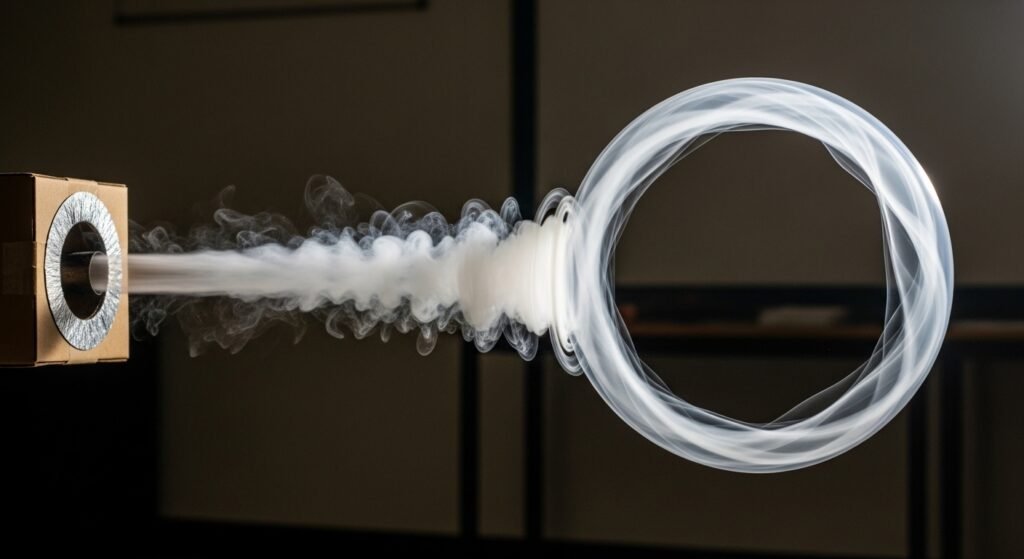
A vortex cannon pushes rings of air across a room. When smoke is added, the circular pattern becomes visible. The ring maintains its shape as it moves forward. This experiment demonstrates how rotating fluids create stable structures in motion.
Magnetic Field Visualization with Iron Filings
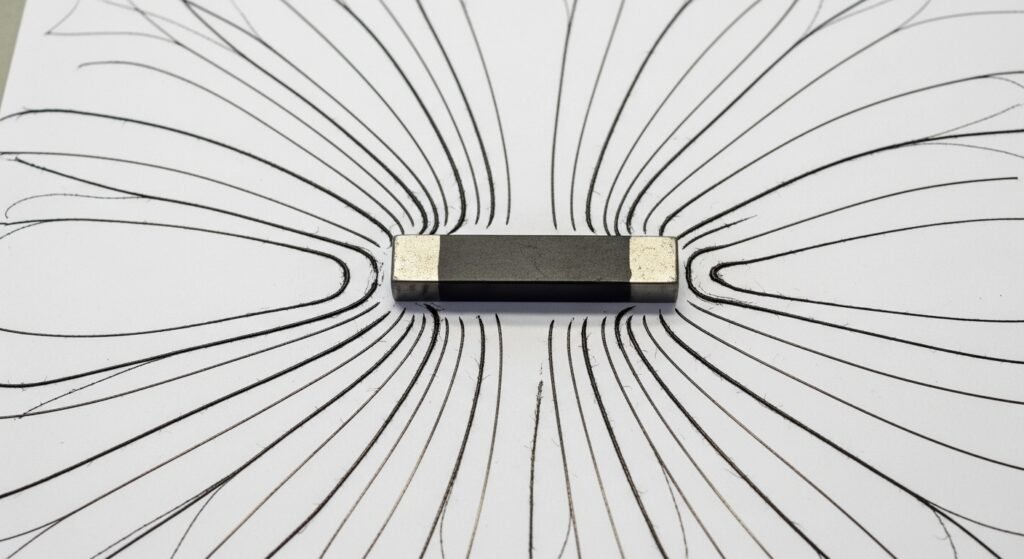
Sprinkling iron filings around a magnet reveals the invisible magnetic field. The filings align themselves in curved patterns. These lines represent the direction of magnetic forces. The experiment visually explains how magnetism influences nearby materials.
Ferrofluid Dancing in Magnetic Fields
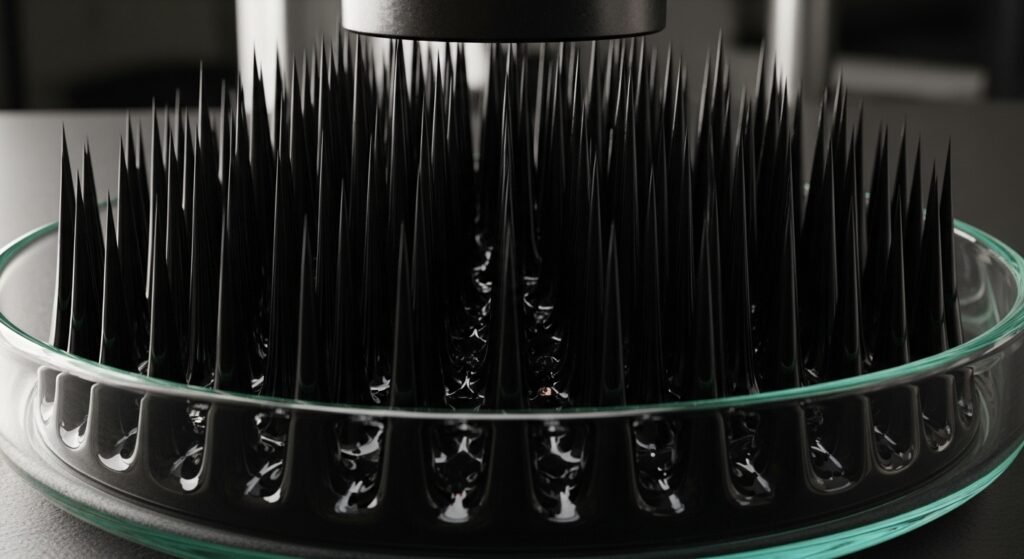
Ferrofluid contains tiny magnetic particles suspended in liquid. When placed near a magnet, sharp spikes form on the surface. The spikes shift with magnetic movement. This demonstration reveals the interaction between magnetic forces and fluid behavior.
Curie Temperature Magnet Experiment
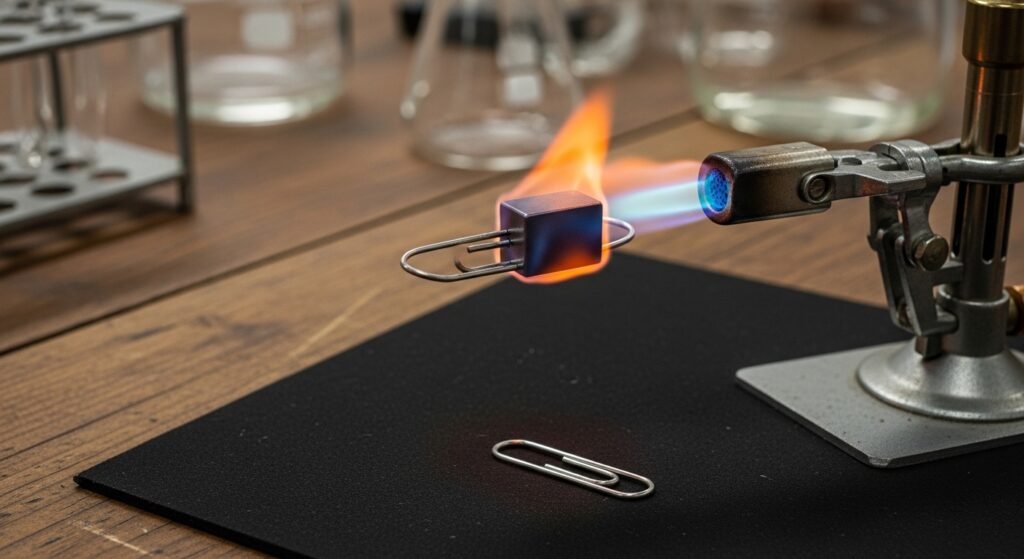
Heating a small magnet can weaken its magnetic properties. At a specific temperature called the Curie point, magnetism disappears temporarily. Once cooled, the magnetic effect returns. This experiment demonstrates how heat influences atomic alignment in materials.
Lava Lamp Fluid Motion
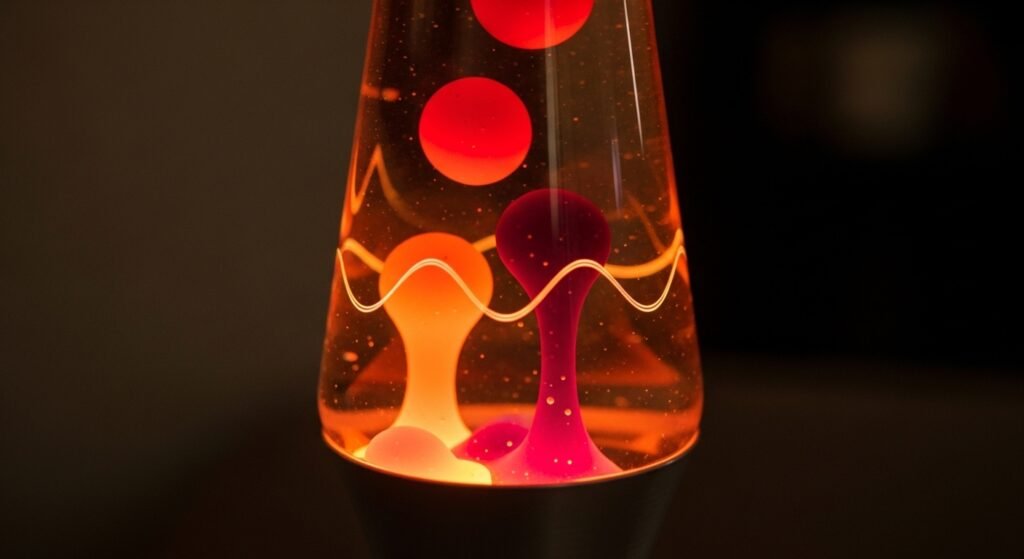
A lava lamp uses heat to move colored wax through liquid. As the wax warms, it becomes less dense and rises. When it cools, it sinks again. This cycle shows how temperature changes affect fluid density and motion.
Magnetic Levitation Demonstration

Magnets can sometimes lift lightweight objects without contact. When arranged correctly, opposing magnetic forces balance gravity. The object floats between them. This demonstration highlights how magnetic fields can create stable equilibrium in controlled conditions.
Water Surface Tension Experiment
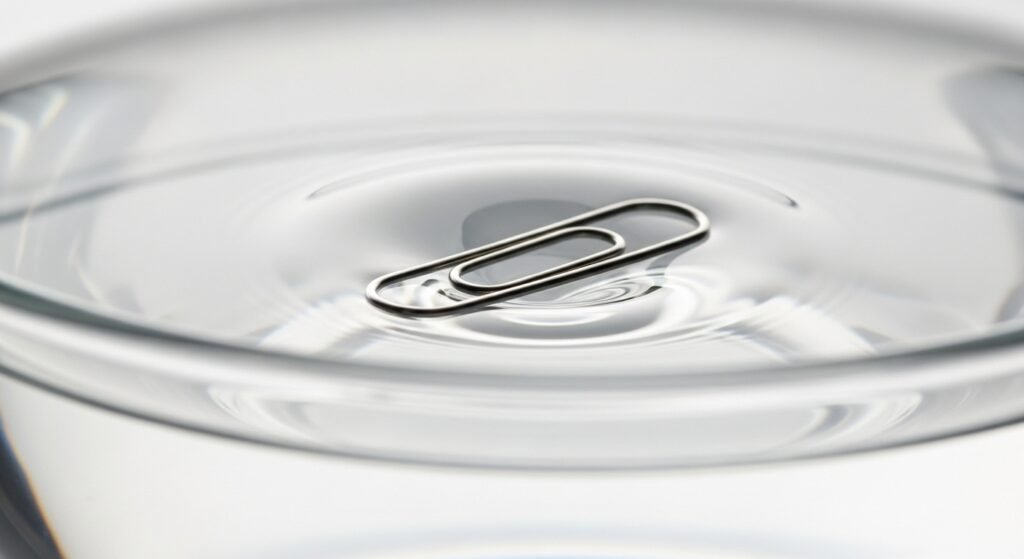
Carefully placing a metal paper clip on still water can make it float. The water surface forms a thin tension layer that supports the object. This experiment shows how molecular attraction creates surface tension in liquids.
Convection Currents in Colored Water
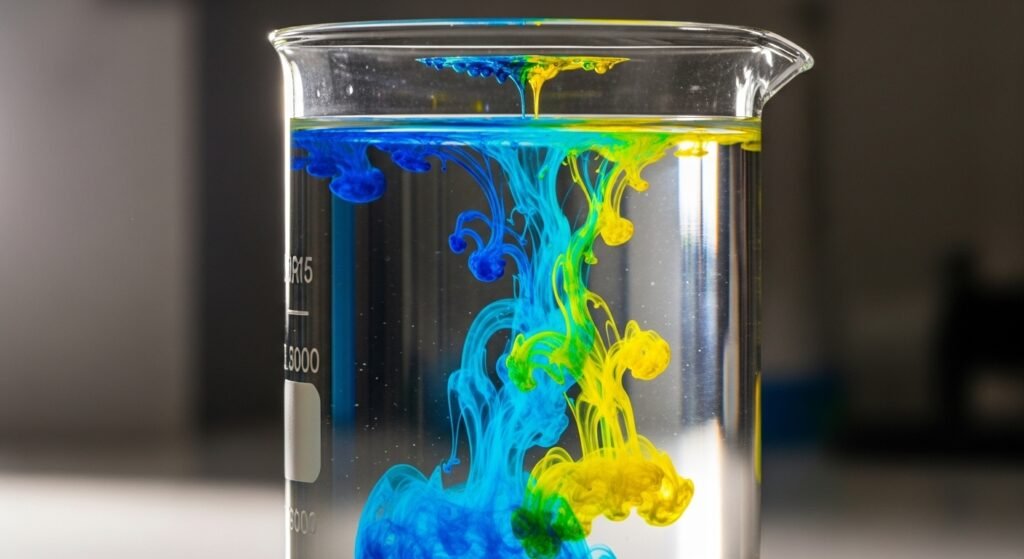
Adding food coloring to warm water can reveal convection currents. As warm water rises and cooler water sinks, visible circulation appears. This movement demonstrates how heat transfer drives fluid motion in liquids and gases.
Magnet and Copper Pipe Drop Test
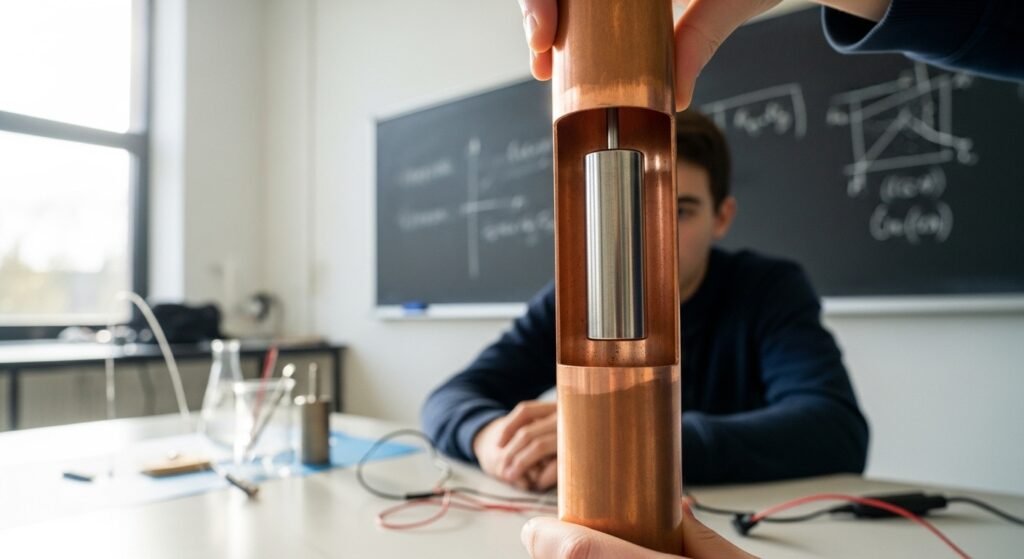
Dropping a magnet through a copper pipe produces a surprising effect. Instead of falling quickly, the magnet slows dramatically. The motion creates electric currents in the metal. These currents generate magnetic resistance that reduces the falling speed.
Non-Newtonian Fluid Demonstration

Mixing cornstarch with water creates a non-Newtonian fluid. When pressed quickly, the mixture feels solid. When touched gently, it flows like liquid. This unusual behavior demonstrates how some materials respond differently depending on applied force.
