
Exploration usually takes the form of a far-off dream associated with rockets and worlds in the eyes of the public. Another frontier has already been established closer to the everyday life. Human growth has now taken a new step forward in the form of biology, data systems, artificial environments and off planet infrastructure. These changes modify work, health, identity and survival strategies. Research, orbital platform and networked societies are working quietly towards a progress. The subsequent stage of human presence is formed based on capacity and adjustment and not geography.
Digital identity as a parallel frontier

Digital identity now shapes economic access, social standing, and personal security. Online credentials manage banking, employment, and education across borders. A person’s reach extends through verified profiles rather than physical location. Governments and firms invest heavily in digital identity systems due to fraud reduction and service efficiency gains across populations.
Orbital space as a working environment
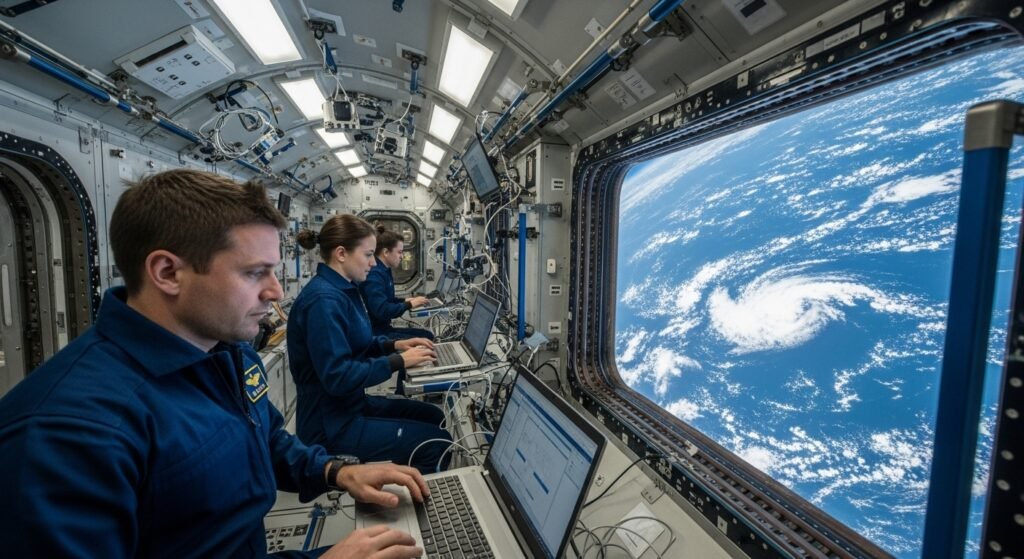
Satellites, research stations and commercial platforms are located on Low Earth orbit. Orbital assets are used by thousands of professionals to facilitate navigation, climate tracking, and communications. The number of experiments documented in the International Space Station is more than three thousand. Space is no longer the prerogative of exploration. Space has come to accommodate regular work pegged on the terrestrial-based economies.
Human biology under controlled evolution

Medical research now edits genes, prints tissue, and extends sensory capacity. Clinical trials using gene therapy treat rare disorders with measurable success rates above fifty percent. These practices reshape health expectations and lifespan planning. Biology becomes adjustable through science rather than fate. Ethical review frameworks attempt to manage long term social impact.
Artificial environments replacing natural limits
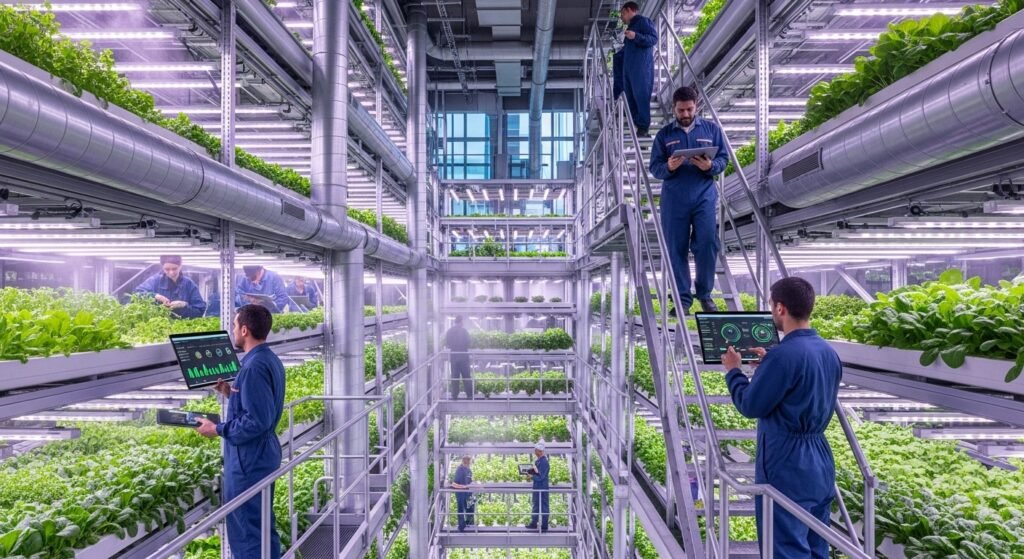
Urban design increasingly relies on artificial climate control and closed systems. Vertical farms produce crops using ninety percent less water than soil agriculture. Desert cities and polar research hubs operate year round. Human survival detaches from local weather and terrain. Engineered environments redefine where long term settlement remains viable.
Economic systems beyond national borders

Digital currencies and decentralized finance platforms support transactions without national intermediaries. Daily transaction volumes reach billions of dollars across global networks. Labor markets respond through remote hiring and contract based contribution. Economic participation depends less on citizenship and more on verified skill and connectivity.
Education without geographic anchors

Learning platforms deliver advanced training to remote regions at scale. Massive open online courses enroll millions across engineering, medicine, and data science fields. Credential value shifts toward demonstrable competence. Physical campuses lose exclusivity. Knowledge distribution accelerates human readiness for emerging technical domains.
Psychological adaptation to constant connectivity

Continuous connection alters attention, memory, and social behavior. Research links prolonged screen exposure to measurable cognitive pattern changes. Humans adapt mental frameworks to process persistent information flow. Psychological resilience becomes a survival skill. Training programs now address digital fatigue and focus management.
Artificial intelligence as a human extension

Machine learning systems assist diagnosis, logistics, and scientific modeling. Accuracy rates in image based medical screening rival specialist performance. Decision support tools extend human capability rather than replace agency. Productivity gains follow structured integration. Governance efforts seek accountability across automated processes.
Resource extraction beyond planetary surfaces

Asteroid mining and lunar resource surveys progress through public private partnerships. Platinum group metal estimates drive economic interest due to terrestrial scarcity. Early missions focus on feasibility rather than profit. Long term supply chains envision off world sourcing to support industrial demand.
Cultural identity across physical boundaries

Communities now form around shared values instead of shared geography. Virtual spaces host rituals, governance models, and economic exchange. Language and tradition evolve through online collaboration. Identity anchors shift from birthplace to participation. Culture adapts to mobility and constant interaction across distances.
