
A short yin yoga session supports joint range and tissue length through still holds and controlled breathing. This format fits limited schedules while delivering measurable effects. Research on passive stretching links longer holds with changes in connective tissue response. A focused plan helps practitioners follow timing, posture order, and rest intervals without confusion or strain.
Preparation and Space Setup

A quiet area with a mat, two blocks, and a folded blanket supports stable positions. Room temperature should feel neutral to limit muscle guarding. Clothing with light stretch allows joint positioning without resistance. A timer set for three to five minutes per posture keeps pacing consistent.
Breath Pattern for Yin Practice
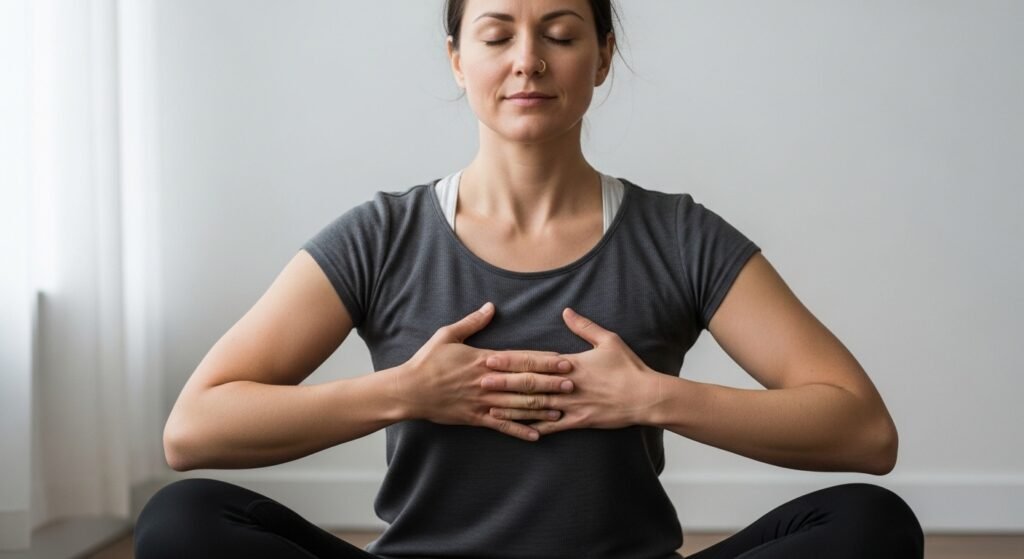
Inhalation is slow and nasal in every position. Exhalation stretches the ribs and inhalation relaxes the facial and jaw muscles. Research on parasympathetic response relates low breathing rate with low tone. After four seconds in and six seconds out helps to maintain the steady rhythm when motionless.
Target Areas and Session Focus
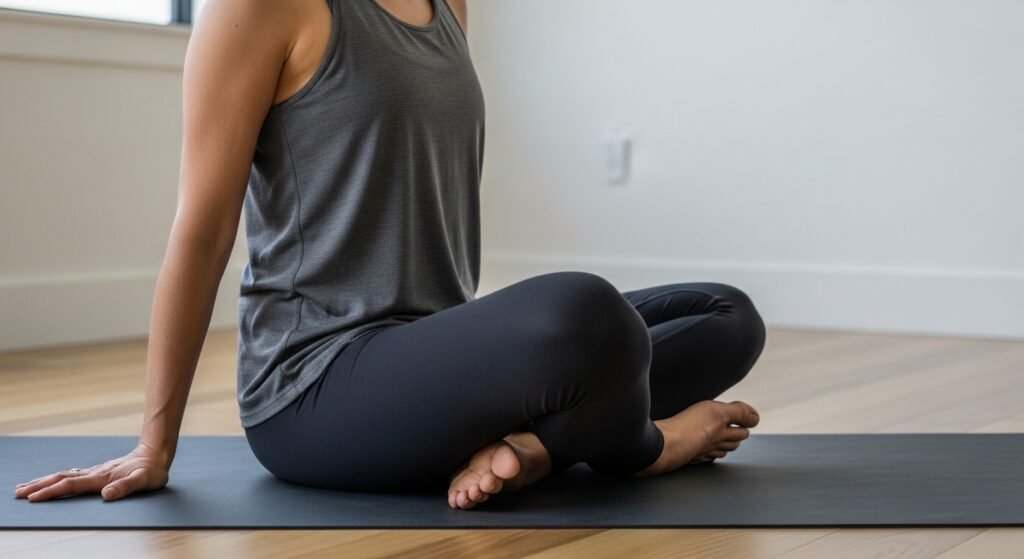
This session prioritizes hips, hamstrings, and lower spine. These regions often experience reduced range from prolonged sitting. Yin positions apply low load over time to non contractile tissues. The approach supports gradual length adaptation without force or rebound movement.
Butterfly Pose Timing
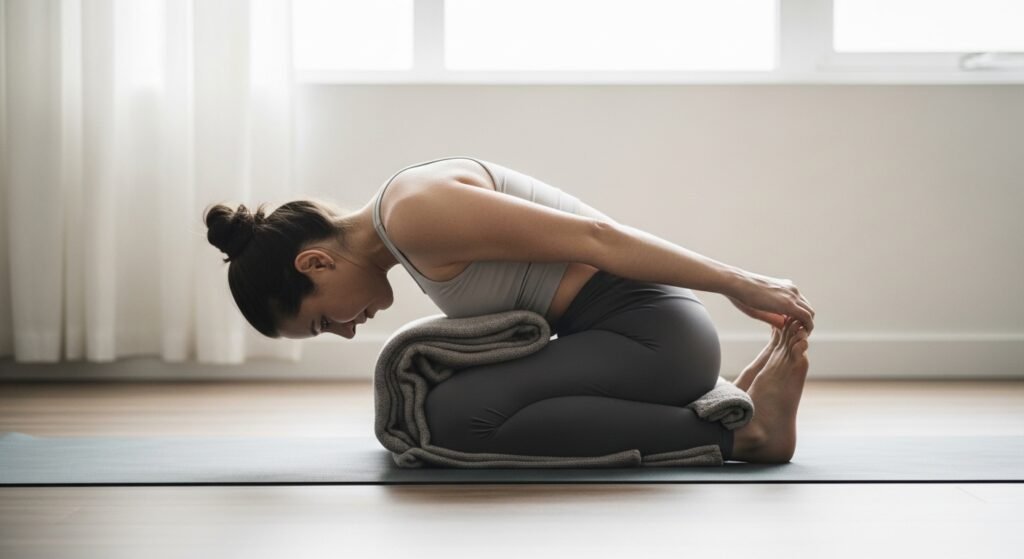
Seated butterfly causes moderate tension in the inner thighs and posterior chain. Feet are bent up, spine is curved, head is thrown back. Three minutes is appropriate to beginners, five minutes to experienced practitioners. Nursing under knees helps to decrease strain and maintain duration.
Dragon Pose Structure
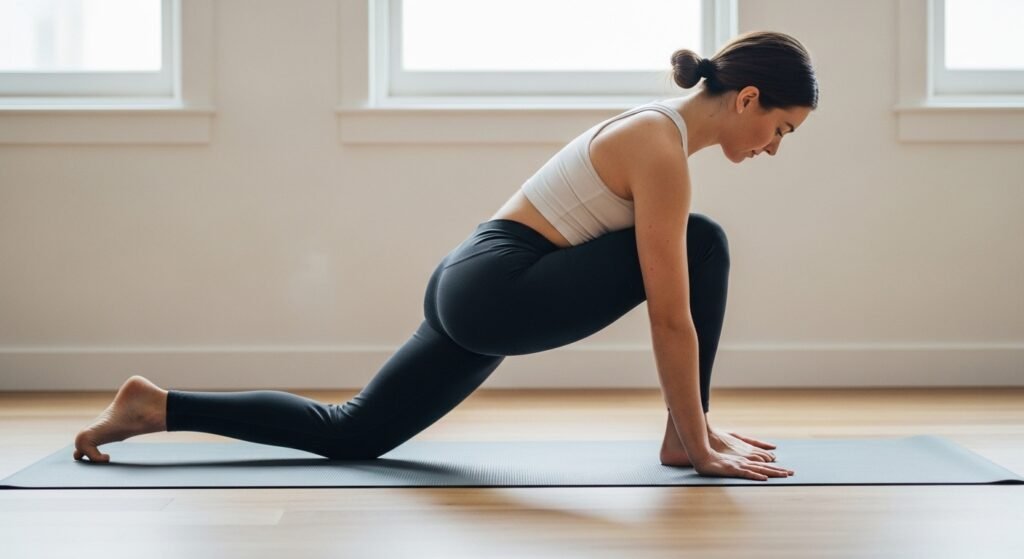
Low lunge variation targets hip flexors and anterior fascia. Back knee rests on padding, front foot steps forward with hands grounded. Weight distribution remains even. A two minute hold per side maintains balance within the session time frame.
Sphinx Pose Application
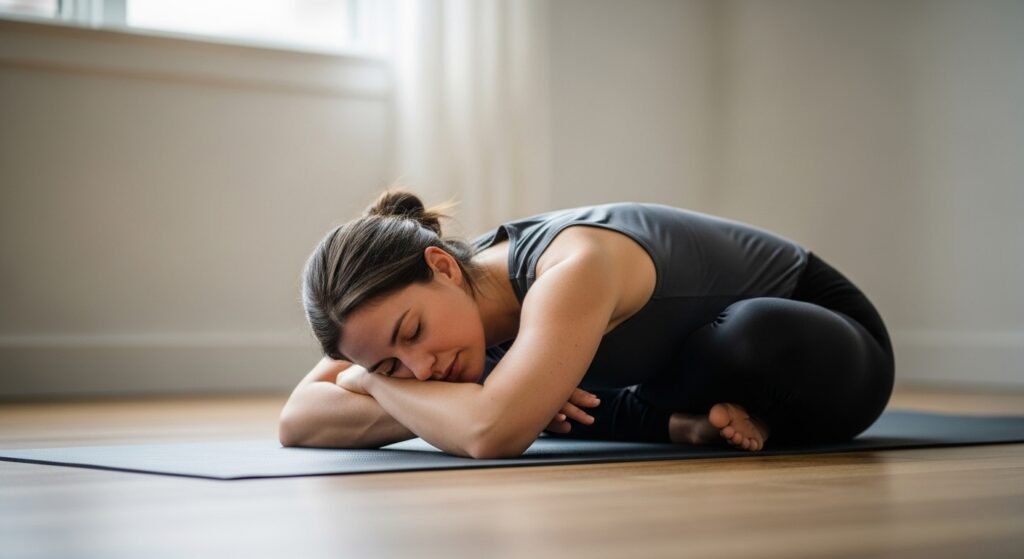
Prone sphinx emphasizes lumbar extension and abdominal fascia. Elbows align under shoulders, forearms press lightly. Pelvis stays grounded. A three minute hold encourages spinal decompression. Discomfort signals overextension, so lowering to forearms or chest support preserves safety.
Caterpillar Pose Mechanics
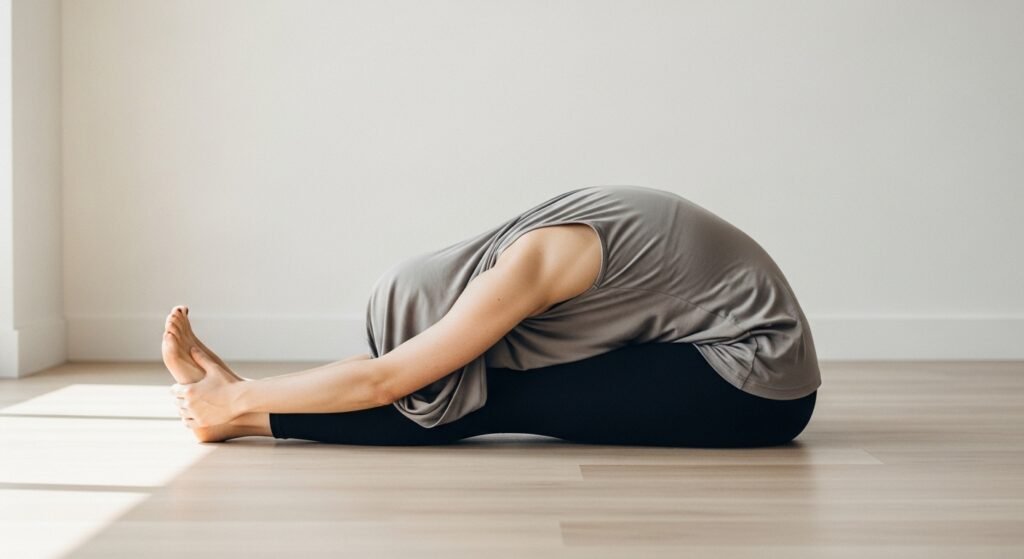
Seated forward fold with relaxed spine loads hamstrings and spinal ligaments. Legs extend, torso drapes without effort. Arms hang or rest on blocks. A four minute hold suits the mid session peak, supported by slow breathing and minimal movement.
Reclined Twist Sequence
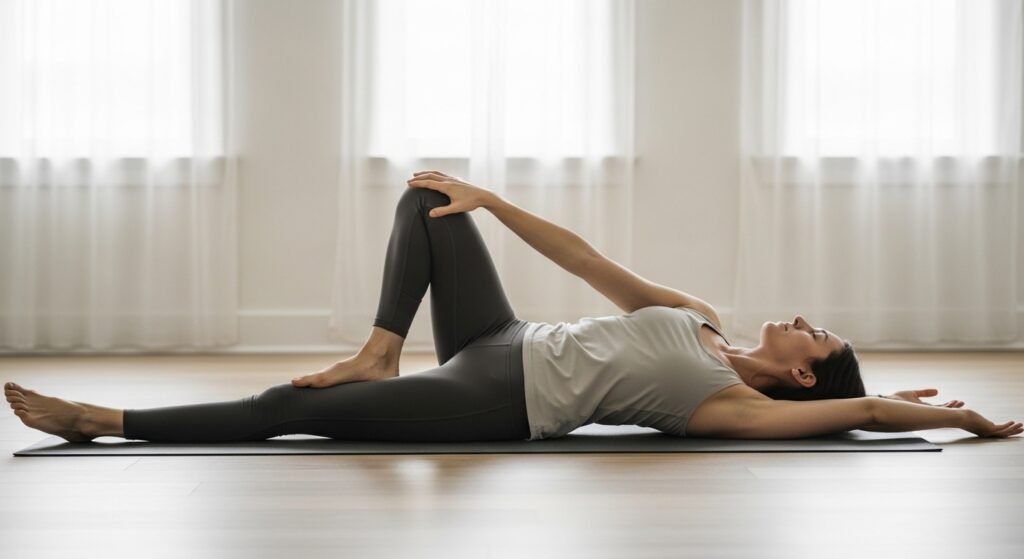
Supine twist addresses spinal rotation and lateral tissues. One knee crosses body, opposite shoulder settles toward floor. Arms spread for balance. Two minutes per side completes rotational work without fatigue. Support under knee maintains alignment.
Rest and Integration

Final rest lasts two minutes in supine stillness. Breath returns to natural pace. Nervous system settles after sustained holds. Practitioners note warmth, pulse changes, or ease of movement. Standing slowly prevents dizziness and preserves session effects.
