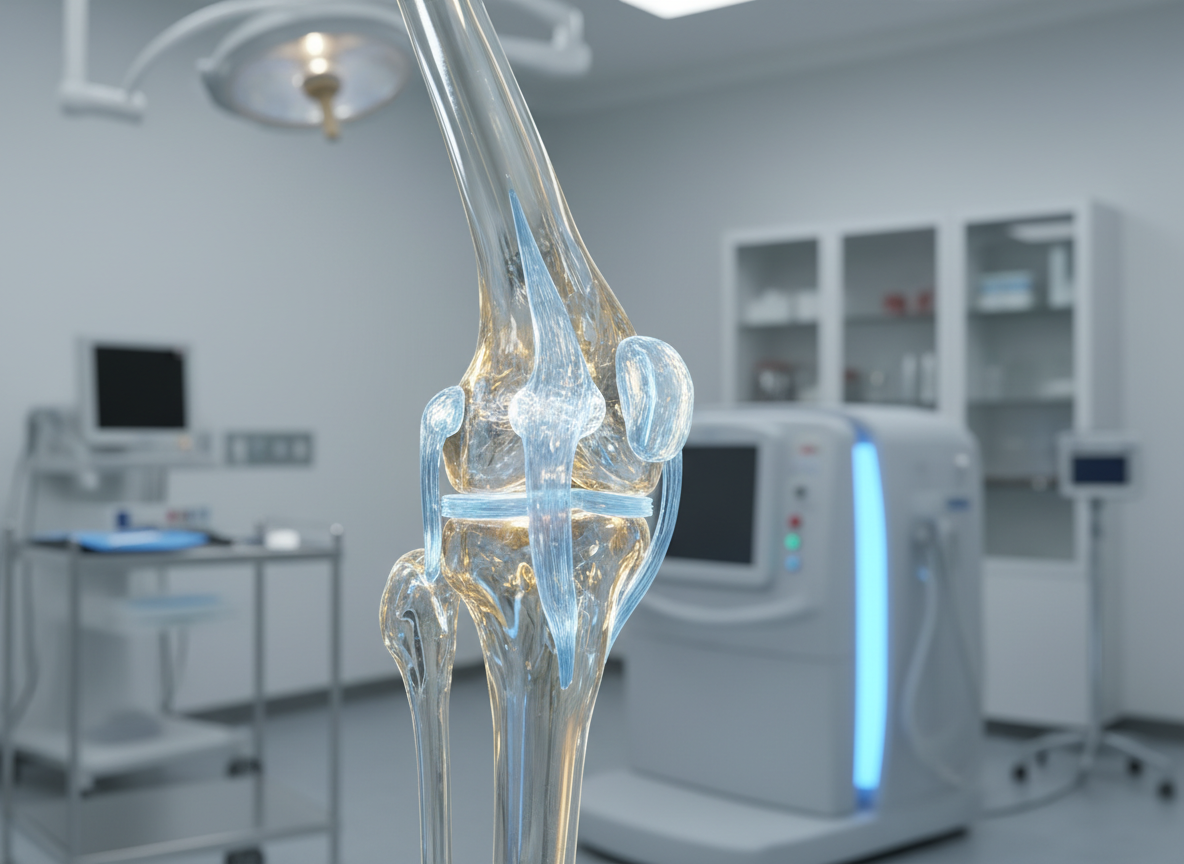
Knee strength helps in walking, sitting, lifting, and climbing the stairways. The muscles around the knee joint are weak hence straining the joint in the normal motion. The exercises are specifically focused on the calves, glutes, hamstring, and quadriceps. The repetitive clinical rehabilitation studies prove that strength training is useful in enhancing joint management and pain. The exercises that are developed will be of slow motion, proper alignment, and repetitive exercises that can be carried out regularly without any violent force.
Bodyweight Squats
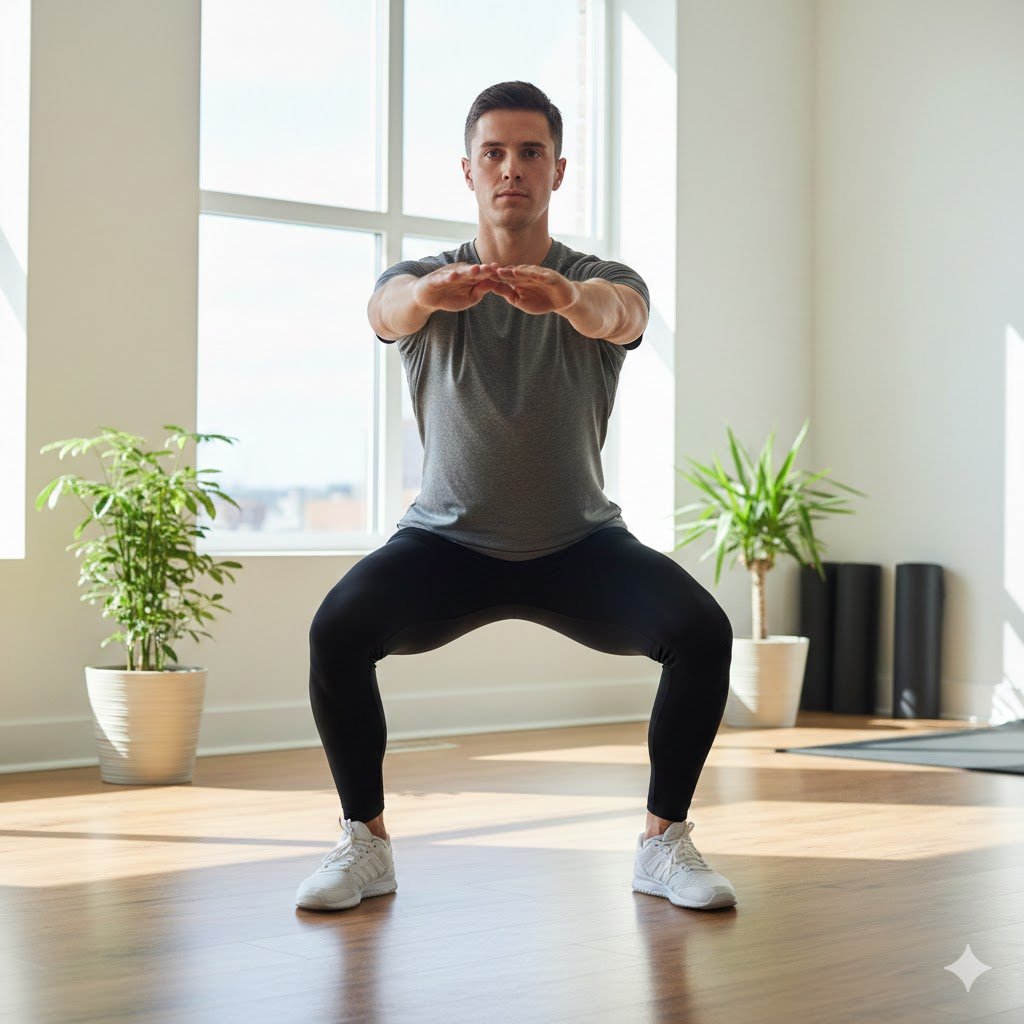
Squats on bodyweight are exercises that train hamstrings, glute muscles and quadriceps. Research on physical therapy has associated controlled squat exercises with enhanced knee tracking in everyday motion. Knees are bent forward, shoulders shoulder wide. A gradual decreasing period with a gradual increasing level elevates muscle activity but imposes a constraint on the strain it causes to joints.
Chair Squats
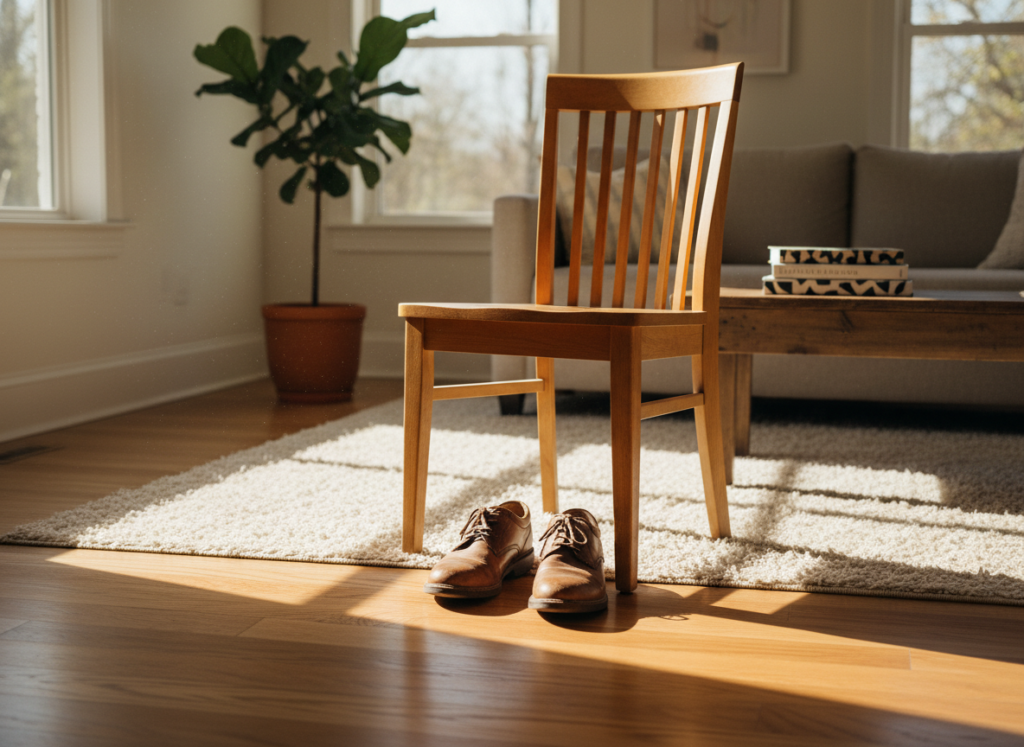
Chair squats support knee strength through guided depth control. Rehabilitation programs often include chair squats for early stage knee conditioning. A chair placed behind the body provides a depth reference. Repeated sit to stand motion improves quadriceps strength and supports safer transitions during everyday activities.
Step Ups

Step ups strengthen knees through single leg loading patterns. Sports rehabilitation data associates step ups with improved stair climbing control. One foot stays on a low step while the body rises upward through controlled effort. A slow descent trains muscle coordination and supports knee stability.
Wall Sits
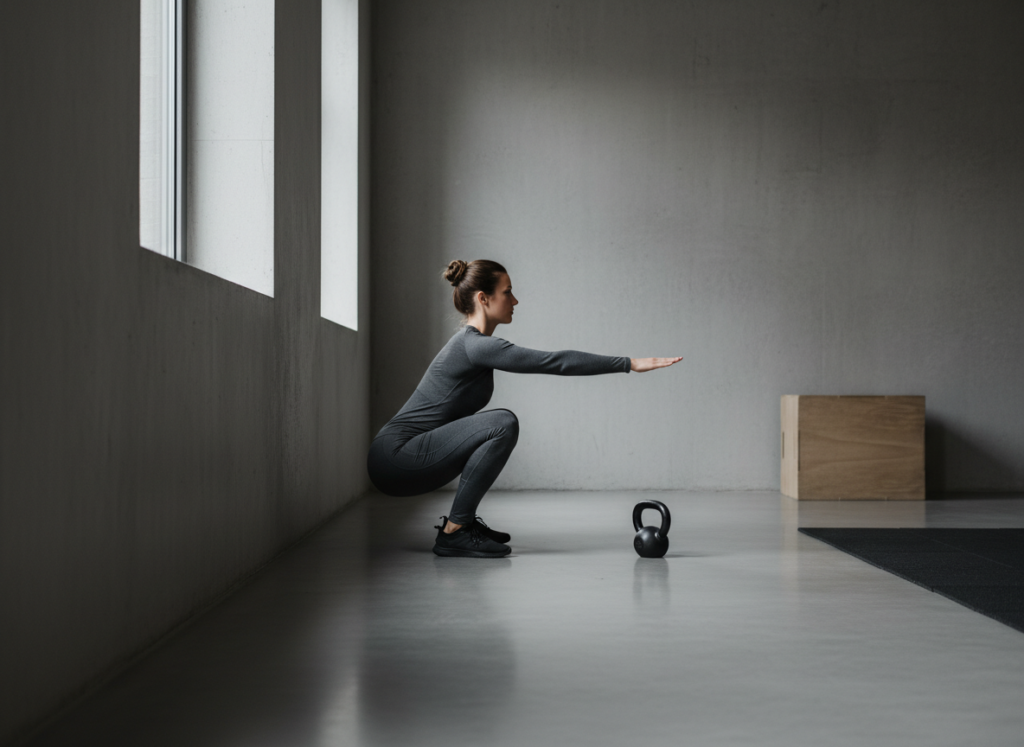
Wall sits build isometric strength around the knee joint. Orthopedic exercise studies show improved quadriceps endurance after regular wall sit practice. The back stays flat against a wall while knees bend to a moderate angle. Holding the position develops sustained muscle support without joint movement.
Straight Leg Raises

Straight leg raises focus on quadriceps activation without knee bending. Medical exercise protocols recommend this movement during knee strengthening phases. One leg lifts slowly from the floor while remaining straight. Controlled repetitions increase muscle strength around the knee while limiting compressive joint forces.
Hamstring Curls

Hamstring curls strengthen muscles behind the knee. Muscle balance research links stronger hamstrings with reduced knee loading during movement. Standing or lying positions allow heels to move toward the body in a slow pattern. Balanced strength improves joint control during walking and bending tasks.
Calf Raises
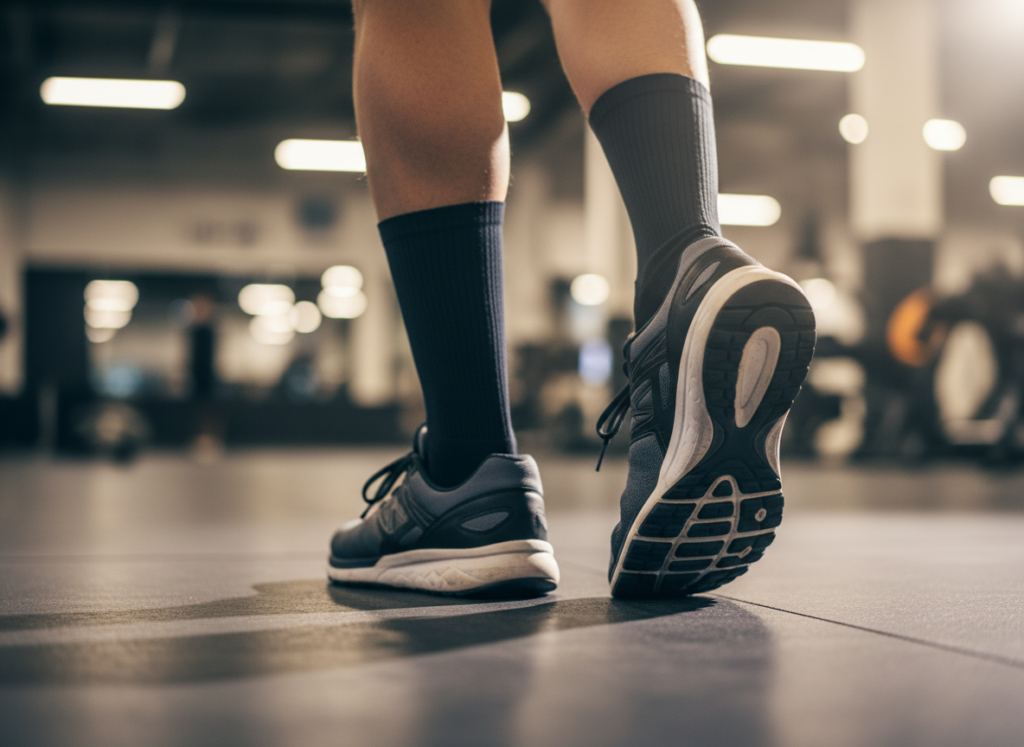
Calf raises support knee function through lower leg stability. Biomechanical studies show calf strength influences knee movement during walking. Rising onto the toes while maintaining balance strengthens supporting muscles. Slow lowering improves control across the ankle and knee during weight bearing activities.
Glute Bridges
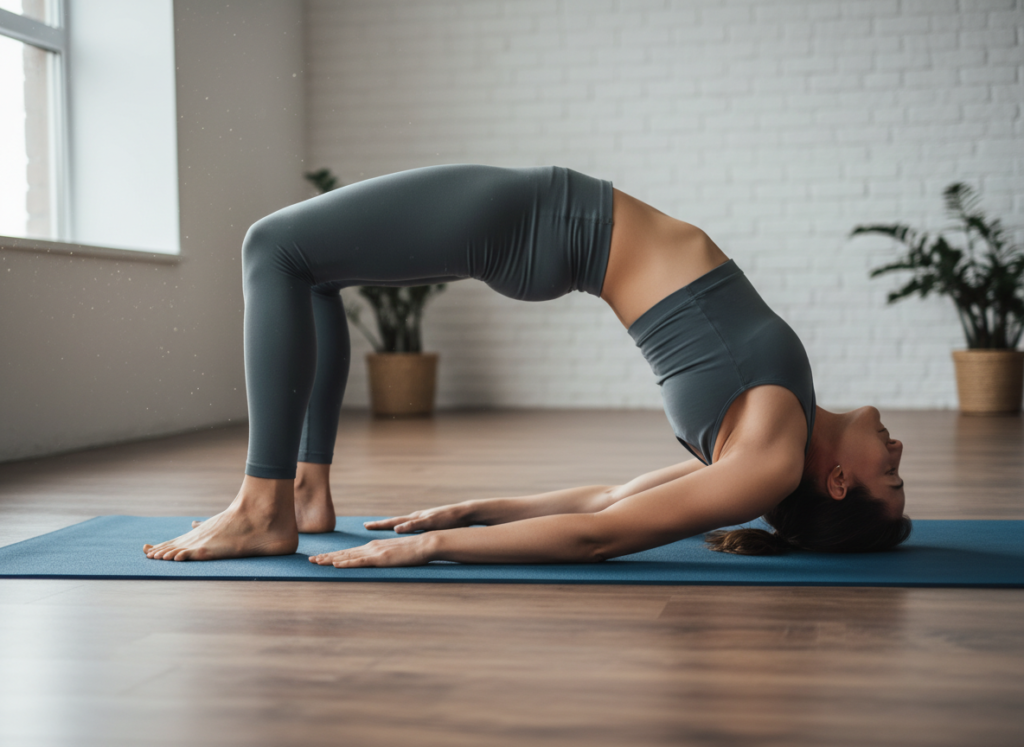
Glute bridges strengthen hip muscles affecting knee alignment. Movement analysis research connects hip strength with improved knee positioning during activity. Lying on the back with knees bent, hips lift upward with controlled effort. Strong hip support reduces unnecessary inward knee movement.
Reverse Lunges

Reverse lunges train knee strength with reduced forward joint stress. Exercise comparison studies associate reverse lunges with better knee comfort during training. Stepping backward shifts effort toward the hips. Upright posture and controlled motion support safer knee alignment through each repetition.
