
As artificial intelligence becomes more present in everyday life, questions about its behavior grow increasingly important. One fascinating area of study explores whether large language models display genuine helpfulness or simply mirror learned patterns. Social experiments have begun to test how these systems respond in situations involving empathy, fairness, and cooperation. The findings reveal a complex picture, where actions that appear kind may actually stem from structured programming rather than emotional understanding. By examining these behaviors closely, researchers and users alike can better understand the nature of AI-driven responses and what they truly mean in real-world interactions.
Pattern-Based Generosity

Large language models often demonstrate helpful behavior because they are trained on vast datasets where cooperation and politeness are common. Their responses reflect learned patterns rather than spontaneous goodwill or internal motivation.
Context Shapes Responses

The way a prompt is framed significantly influences AI behavior. When users present emotionally charged scenarios, models tend to respond with more supportive language, showing sensitivity shaped by training rather than real awareness.
Consistency Over Emotion

Unlike humans, AI systems provide consistent responses across similar scenarios. This reliability can appear thoughtful, but it stems from algorithmic stability rather than shifting emotions or personal experiences influencing decisions.
Absence of Personal Stakes

AI does not experience consequences, which means its “altruism” lacks risk or sacrifice. This absence highlights a key difference between human kindness and machine-generated helpfulness in complex social situations.
Reinforcement Through Feedback

Many models are refined using human feedback that rewards helpful and safe responses. This process encourages outputs that appear altruistic, even though they are guided by optimization rather than genuine concern.
Ethical Guardrails at Work

Built-in safety systems guide AI to avoid harmful or biased responses. These guardrails often result in balanced and considerate replies, giving the impression of moral reasoning without true ethical judgment.
Adaptability in Tone
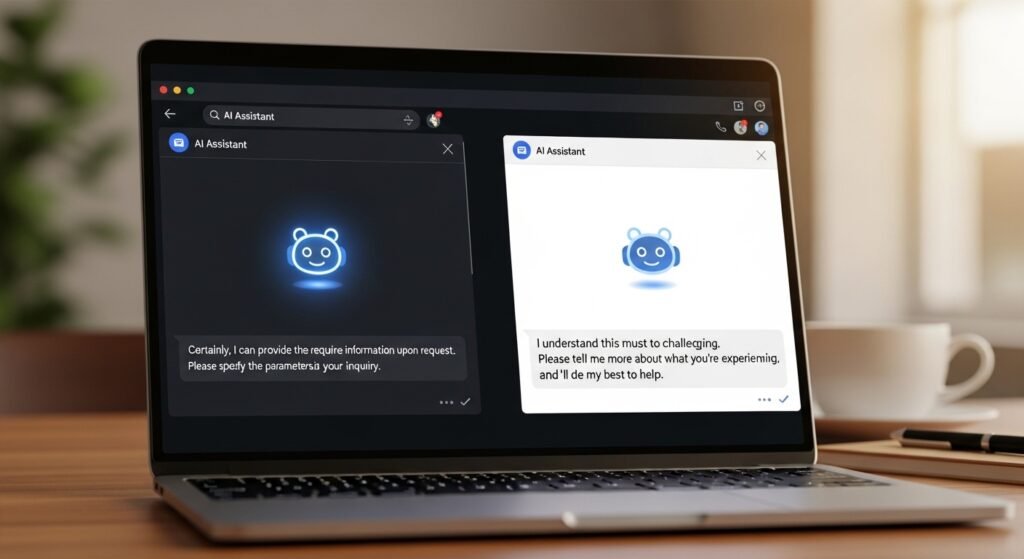
AI systems can quickly adjust tone depending on user input, shifting from formal to empathetic language. This flexibility can feel human-like, though it is driven by linguistic prediction rather than emotional intelligence.
Lack of Deep Understanding

While responses may seem thoughtful, AI does not fully understand the situations it addresses. Its outputs are based on correlations in data, not lived experience or comprehension of human complexity.
Influence of Training Data

The diversity and quality of training data directly impact how altruistic an AI appears. Models trained on cooperative and respectful content are more likely to produce responses that align with those values.
Perception Versus Reality

Users often interpret AI responses as intentional acts of kindness. However, this perception can blur the line between programmed assistance and genuine empathy, leading to misunderstandings about AI capabilities.
Implications for Trust

Understanding the artificial nature of AI altruism helps users maintain realistic expectations. Recognizing its strengths and limitations allows for more informed interactions and better integration of AI into daily decision-making.
