
It might not always be dramatic, but artificial intelligence appears to be steadily transforming the manner in which work is done. The transition is not occurring immediately, and it will not necessarily appear as robots oust human beings. Rather, it tends to manifest in everyday, small, and practical forms that become a routine. Whether it is to write an email or structure the data, most things seem to be getting improved through the assistance of smart tools. There are those who are excited, some who have no idea, and many who are just fascinated. It could be one of those developments that one can notice only when he/she looks back and sees how things were different before.
Smarter tools in everyday tasks
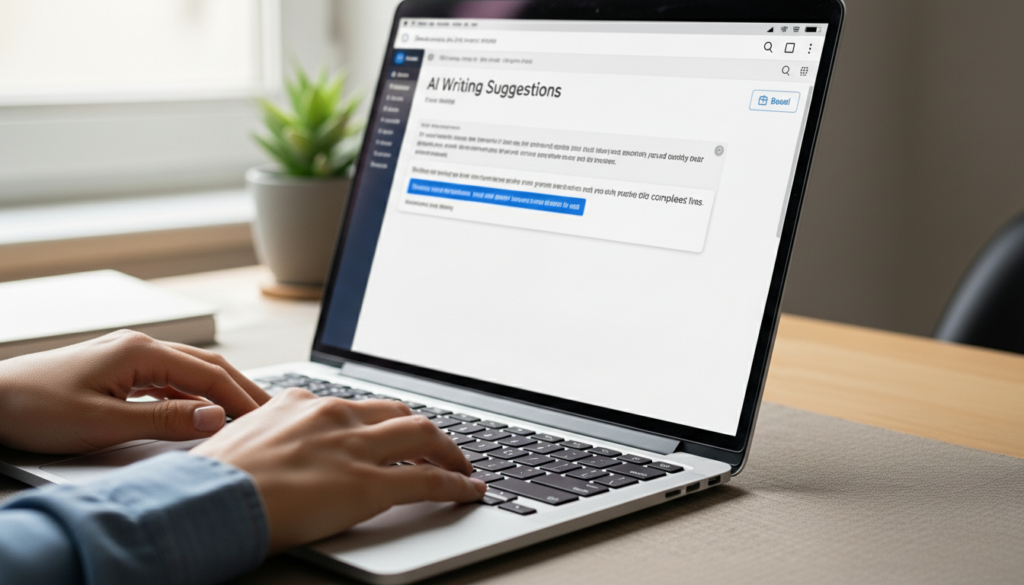
Even the simplest tasks, such as writing papers or organizing any information, can now seem faster than ever. Artificial intelligence-driven tools appear to imply corrections, edits, and even ideas. It may not substitute for human judgment, but it tends to seem to reinforce it in time-saving, little things.
Automation of repetitive work

Monotonous work has been consuming a big share of the workday. Data entry, scheduling, and repetitive responses are being automated. Such a change would make individuals have more time to think creatively or strategically, although the ratio might be diverse, depending on the industry.
Changing skills requirement

Different skills may be appreciated in workplaces in a slower and more gradual manner than before. The technical literacy and flexibility appear to be important. Meanwhile, communication and critical thinking might be indispensable, even more so as machines work on structured assignments.
Remote work and digital collaboration

AI applications usually work well with distance solutions, and they enable teams to organize meetings in different time zones. Digital collaboration may be more structured, as automatic summaries of the meetings and tracking of the tasks can be available. It can save time and decrease confusion, but it is also based on the obvious human input.
Data-driven decision-making

Companies seem to be placing greater reliance on information produced by smart machines. Patterns that took weeks to be determined could be identified now in a few minutes. Nonetheless, human interpretation might be useful in making decisions, as not everything can be explained by the numbers.
Personalized learning at work

The training programs could be narrowed down to more personal requirements. The system of AI may be able to reveal both strengths and gaps and propose courses based on them. Such an individual approach can assist employees in developing at their own speed, but traditional mentorship might still be of importance.
Creative collaboration with machines

The AI support is also being investigated in creative spheres. Smart tools are sometimes used by designers, writers, and marketers to brainstorm or refine their ideas. The outcomes cannot be substituted with human imagination; however, they may be the beginning, the initial point that can trigger new ways.
Hiring and recruitment changes

Resume screening and skill testing can now be a part of the recruitment processes that are driven by AI. This may be faster in making hiring decisions, though human consideration is usually required to allow fairness and context to play a wise role.
Freelance support and gig economy

AI becomes useful when managing invoices, proposals, and communication with clients among freelancers. These systems may make business tasks simpler, whereby the independent workers are able to focus more on their work and remain organized in the background.
Ethical and practical issues
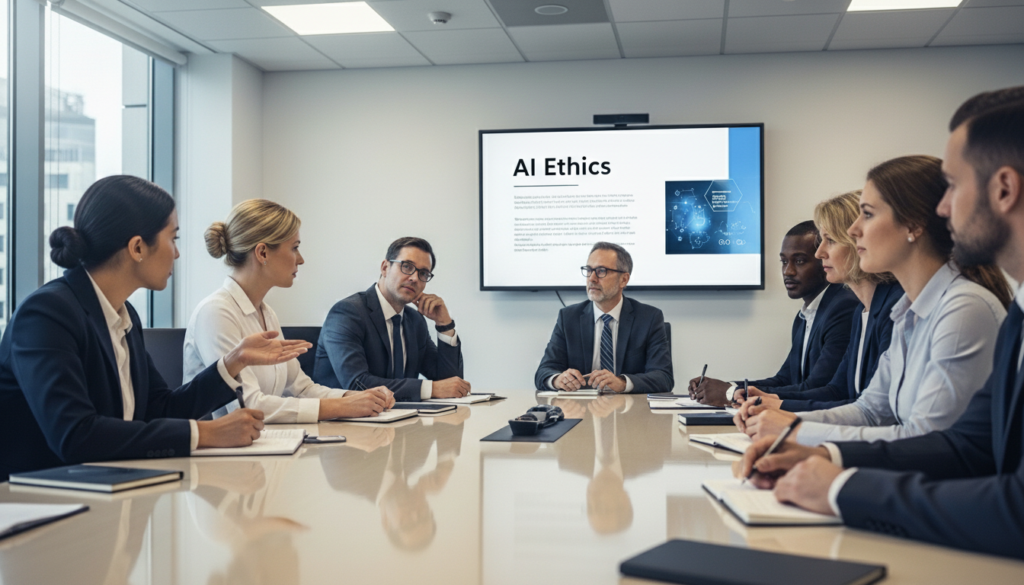
The issue of fairness, privacy, and transparency remains to be raised. Although AI can be efficient, it can be appropriate for organizations to consider rules. Discussions on responsible use may appear to be perpetual as technology keeps on changing.
