
It has been a tradition of physics to ask big questions and to keep the mind on the answers. Scientists seem to be on the verge of developing a perfect understanding of the process of how the universe operates, only to have something new come along. Something weird, an odd one-off discrepancy in figures, an unusual finding in the universe, can hint silently that the universe may be more complicated than we thought. This is not certainty but possibility, and that is exciting. The ensuing findings and concepts might not recalculate physics tomorrow, but they may lead to new insights. All of them give a hint that the universe may still be concealing something that may slightly contradict what is being taught in the textbooks.
Dark energy and cosmic expansion

There seems to be an acceleration of the universe. The unknown cause is known as dark energy by scientists. When scientists finally determine what is causing this acceleration, it may change the principles of cosmology and even possibly the behavior of space itself.
The mystery of quantum gravity
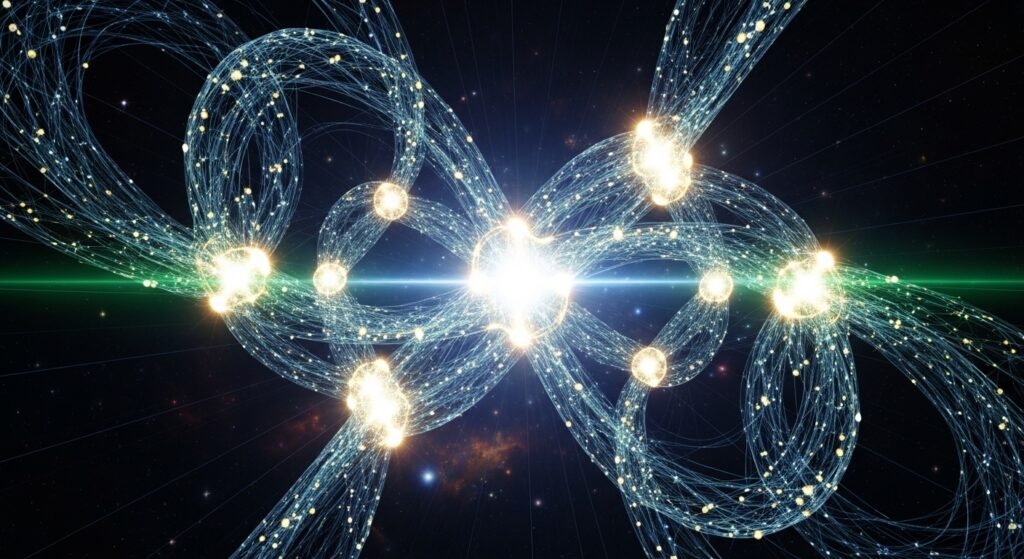
On a grand scale, there is the general relativity that describes the presence of gravity, whereas the small world is governed by quantum mechanics. These two structures are yet to agree with each other in totality. An effective theory of quantum gravity would be able to combine them and provide a more complete vision of the world.
Black hole information puzzle
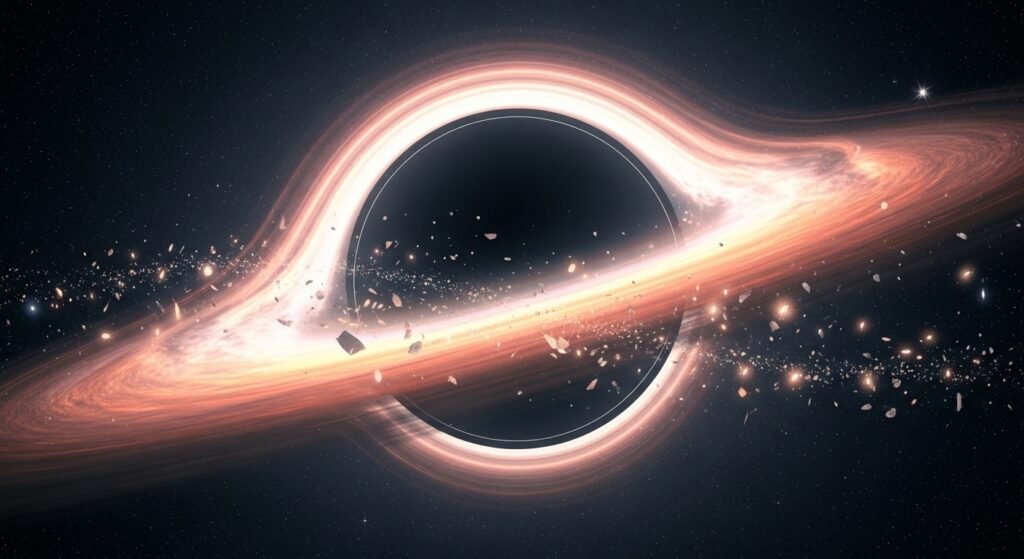
The black holes appear to consume information, but quantum theory is of the view that information cannot just disappear. Finding the answer to this puzzle could have an effect on the manner in which space, time, and the laws of nature are interrelated. It may even suggest that our knowledge of reality requires improvement.
The nature of time

Time is always constant and direct, but according to physics, there are extreme limits where it seems not to act as it does. Other theories have it that time may be a result of more fundamental processes. In that case, the manner in which things in the universe take place could be more stratified than presumed.
Extra dimensions

According to some theoretical models, there are additional dimensions beyond the three known to us, of space and one of time. These additional dimensions could be concealed at very minute scales in the event that they do exist. Finding some evidence of their existence would broaden the map of the very reality.
The multiverse hypothesis
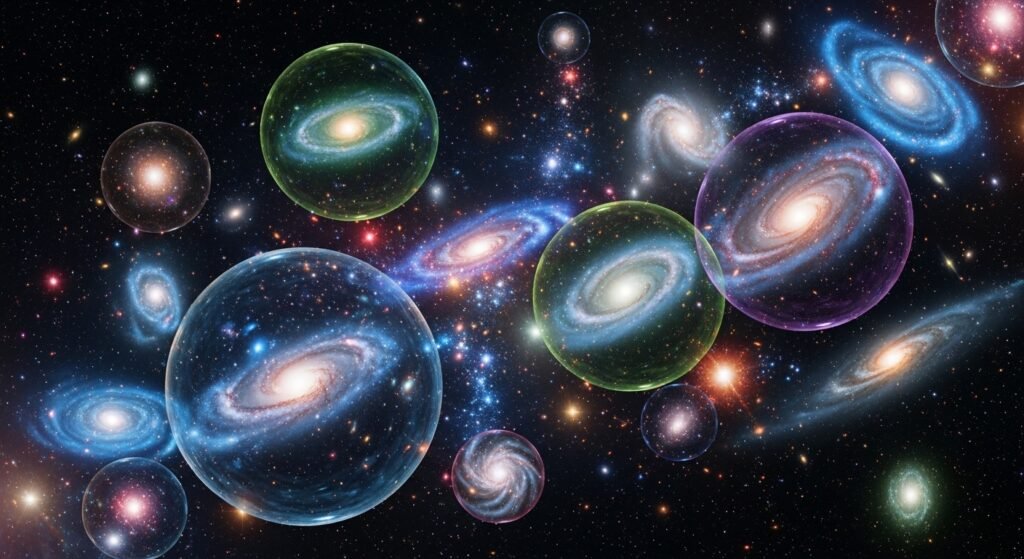
Cosmic inflation and quantum theory have been interpreted in some way to suggest that there are many universes. Though still hypothetical, a discovery of this kind would have profound effects on the definition of existence and the uniqueness of our cosmic conditions, perhaps actually.
Matter and antimatter imbalance
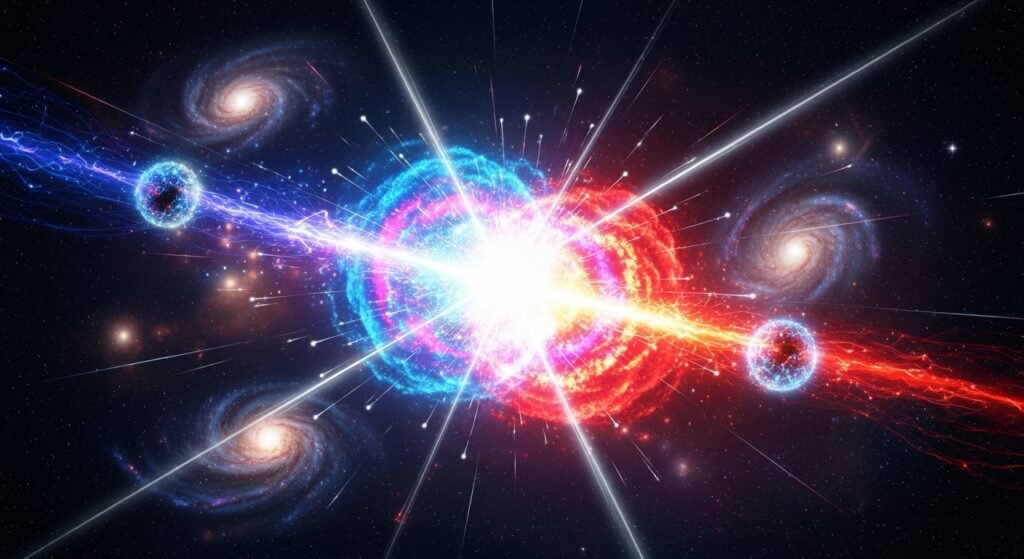
It seems that matter is the most dominant in the universe, yet it is proposed by theories that there was an equal quantity of matter and antimatter before. The explanation of the reason behind this imbalance can alter the way early cosmic evolution is explained.
The true nature of space
Space may not be empty at all. According to quantum fluctuations, even a vacuum is active. In case there is a structure or something behind the space, such a discovery could change the understanding of forces and particles.
Variation of fundamental constants

Some of the theories are looking into whether some of these constants, such as the speed of light, have always been permanent. When there was ever evidence to give reason to suspect slight variations through time or through space, it might lead to far-reaching reconsiderations of fixed physical laws.
The holographic principle

Other physicists have suggested that the universe could be something like a hologram, where what is in the universe is determined by data at a boundary. With more substantial support, this concept can lead to a redefinition of the perception of dimensions and information.
