
Recently NASA announced that there was some strange movement around comet 3I ATLAS. It has been observed that there is a speeding up trend that cannot be attributed to gravitational acceleration only. These discoveries are interesting since the orbital movement is typically predictable and based on the Newtonian physics. Whenever deviation is evidenced, scientists study several physical processes. The example of 3I ATLAS reveals the use of contemporary tools to monitor minor variations of the velocity over long distances. These types of measurements contribute to the further study of comet structure and composition.
Unexpected Acceleration Observed

NASA tracking data shows 3I ATLAS gaining slight additional speed as it travels through space. Orbital calculations predicted a stable gravitational trajectory. Updated measurements from telescopes revealed deviation from expected values. The acceleration remains small but statistically significant based on repeated positional observations over time.
Role of Solar Heating

Solar radiation affects comet surfaces as they approach the Sun. Ice within the nucleus heats and transitions into gas. This outgassing produces jets of material which create thrust. Even minor jets can alter velocity when sustained for weeks. Scientists consider this a leading explanation for the measured acceleration.
Outgassing as a Propulsion Effect

When gas escapes from one side of a comet, Newton third law applies. Material expelled outward generates reactive force in the opposite direction. Studies of comets such as 67P showed measurable changes in rotation and orbit due to this effect. 3I ATLAS likely experiences a similar physical process.
Data Collection Methods
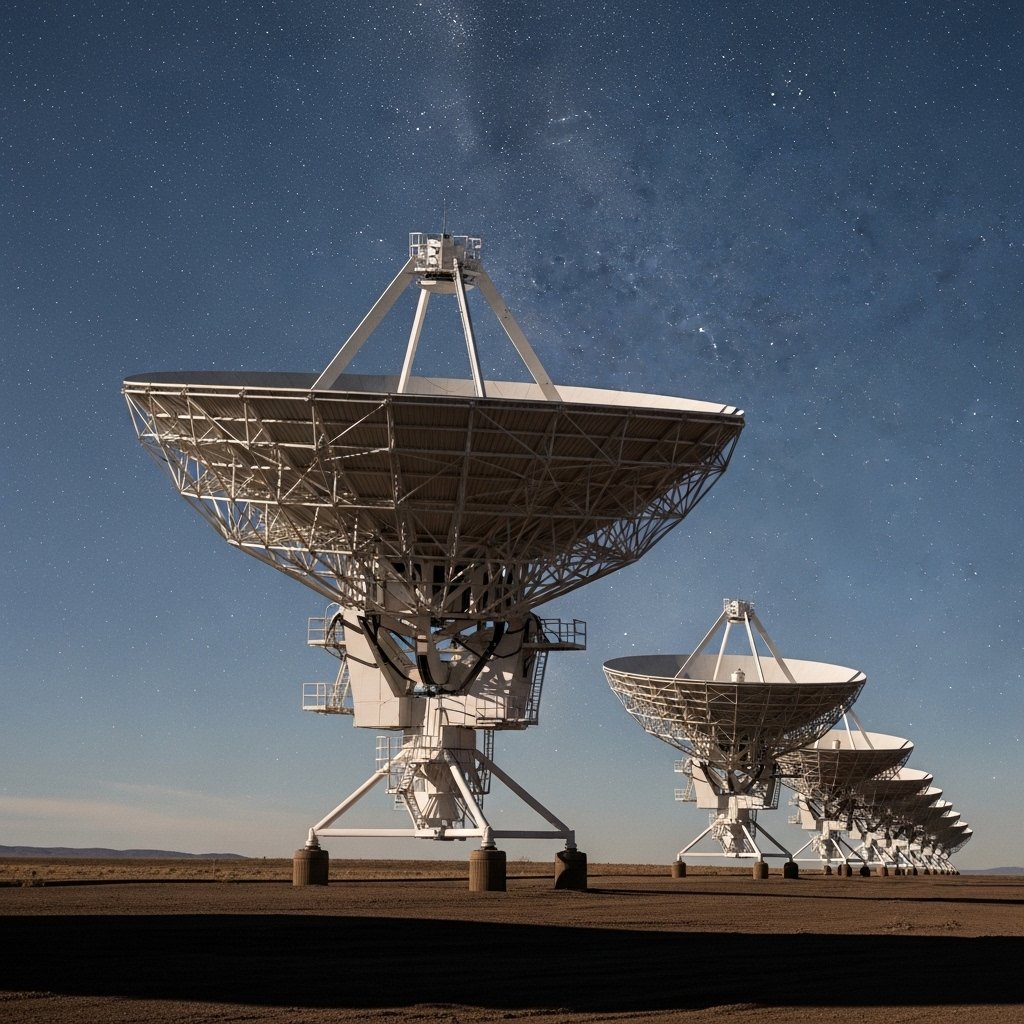
NASA combines optical telescope tracking with spectroscopic analysis. Instruments measure position against background stars to calculate velocity shifts. Radar observations refine distance estimates when available. Data across multiple observatories improves reliability and reduces observational error margins.
Comparison With Previous Comets

Non gravitational acceleration is not new. Comet 1P Halley displayed orbital deviations during its 1986 passage. Comet 2I Borisov, an interstellar visitor, also showed subtle acceleration changes linked to volatile release. These historical cases support the interpretation applied to 3I ATLAS.
Importance of Precision Modeling

Orbital prediction requires complex modeling. Scientists incorporate gravitational pull from the Sun and planets. When deviation appears, models expand to include mass loss and jet direction. Small miscalculations in early estimates become clearer as more data accumulates over months.
Implications for Composition Studies

Patterns of acceleration point to internal composition. The presence of stronger outgassing implies greater volatile content e.g. water ice or carbon monoxide. Gas signatures are detected by spectral data of NASA instruments. Joint movement and chemical information give an understanding of the structural density and thermal behavior.
Impact on Long Term Orbit

The future trajectory calculations are affected by sustained non gravitational forces. The smallest change in velocity of a few millimeters per second makes astronomical distances more complicated. Recent modeling is used to forecast the future relative position to the earth and other planets. The existing estimates do not indicate any risk of collision.
Why Gravity Alone Is Insufficient

Gravity explains the dominant portion of motion. Yet comets behave differently from inert rocky bodies. Their porous nuclei contain trapped gases. As heating increases, internal pressure drives material outward. This mechanism adds force beyond gravitational pull alone.
Continued Monitoring Plans

NASA plans ongoing observation of 3I ATLAS as it moves farther from the Sun. Reduced solar heating will likely decrease outgassing intensity. Tracking this transition helps confirm the acceleration mechanism. Extended datasets improve understanding of comet dynamics across different solar distances.
