Recent work in theoretical physics proposes a shift in how space and time receive description. The approach reframes familiar assumptions without dramatic claims or speculative language. Researchers focus on mathematical consistency and observable alignment. The proposal draws attention because traditional models treat space and time as fixed backdrops. This newer view treats both as outcomes of deeper physical rules, leading to measurable implications for cosmology and particle studies.
A shift from fixed backgrounds

Traditional physics models describe space and time as stable stages where events occur. The new theory treats space and time as dependent on underlying physical relations. Measurements arise from interactions rather than predefined coordinates. This change alters how distances and durations receive interpretation during extreme conditions such as early universe expansion.
Why current models face pressure

Standard frameworks perform well at everyday scales. Problems appear near black holes and during early cosmic phases. Equations lose predictive accuracy under such conditions. The new theory addresses these pressure points by redefining assumptions behind measurement, allowing calculations across a broader range of physical scenarios.
The role of mathematical structure

Mathematics guides the proposal rather than philosophical framing. Researchers rely on symmetry rules and constraint equations. These tools reduce inconsistencies found in older approaches. By focusing on relational quantities, the framework avoids contradictions linked to absolute reference frames in high energy environments.
Space as an outcome of relations
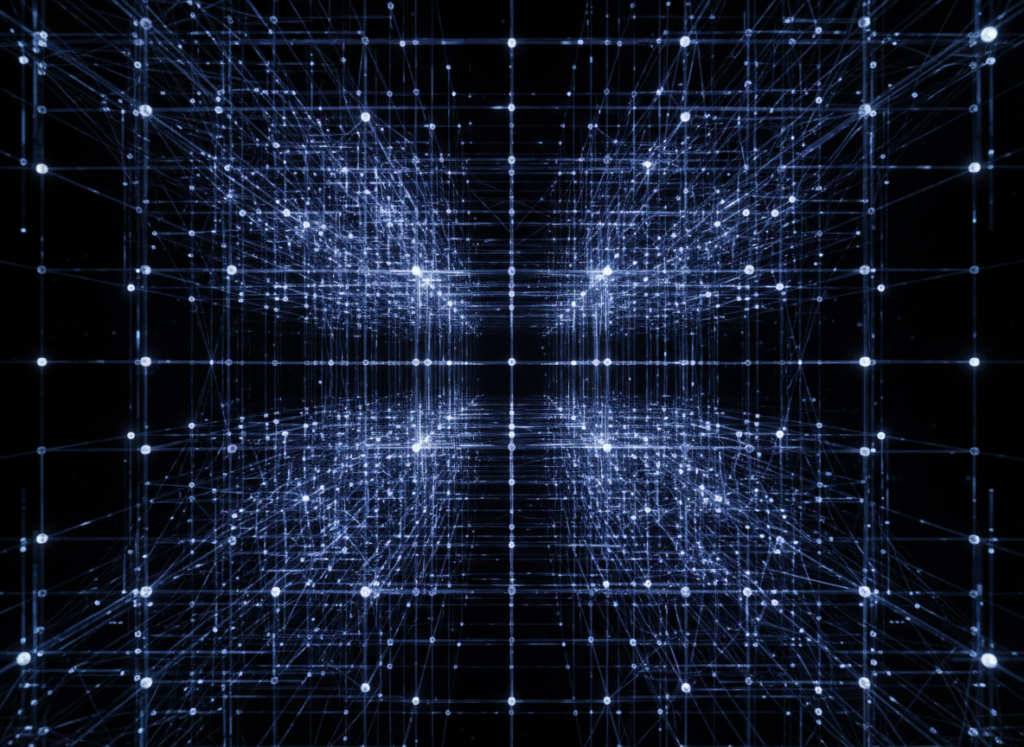
Under the theory, spatial dimensions emerge from connections among physical systems. Distance reflects interaction strength rather than empty separation. This view aligns with network based models used in quantum research. Calculations show stable spatial patterns appearing once interaction thresholds reach defined limits.
Time as a process measure

Time receives treatment as a sequence derived from change. Progress depends on physical transitions rather than an external clock. This approach supports consistent ordering of events even when gravitational effects grow strong. Observational alignment appears in simulations involving dense cosmic regions.
Implications for cosmology
Cosmic expansion receives reinterpretation through relational growth. Space expansion reflects changing interaction networks rather than stretching fabric imagery. Models using this approach match observed background radiation patterns within accepted error ranges. Such alignment suggests practical relevance for large scale universe studies.
Effects on particle physics
At microscopic scales, the theory adjusts how particle positions receive definition. Location depends on interaction context. This adjustment resolves conflicts between quantum behavior and gravitational influence. Calculations remain stable across energy scales used in accelerator experiments, supporting experimental compatibility.
Testing through observation
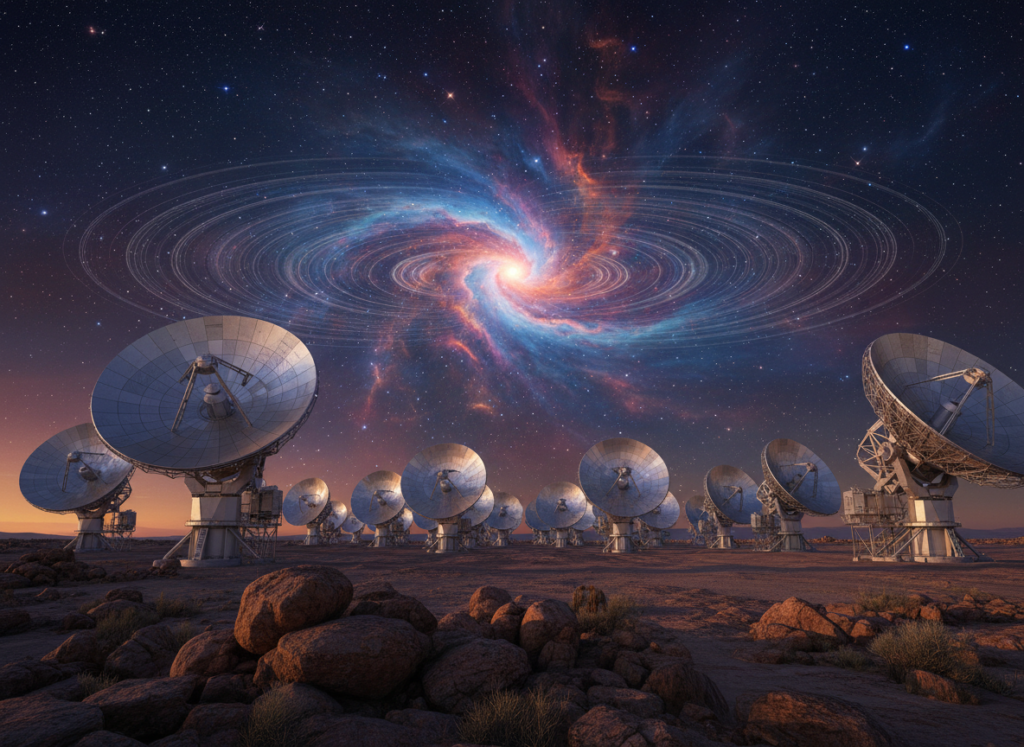
Researchers outline test paths using astronomical data and precision timing systems. Predictions differ subtly from existing models. Differences appear in gravitational wave timing and cosmic background fluctuations. Ongoing data collection offers opportunities for comparison without requiring new instruments.
Limits and open questions

The framework leaves open questions about unification scope. Some constants still require external input. Researchers acknowledge incomplete coverage across all forces. Ongoing refinement focuses on extending relational rules without adding complexity beyond observed necessity.
Why the theory draws attention

Interest stems from clarity rather than bold claims. The approach offers a coherent description where older models struggle. Practical alignment with observation strengthens credibility. Continued analysis determines long term value, with emphasis on measurable outcomes and internal consistency.
