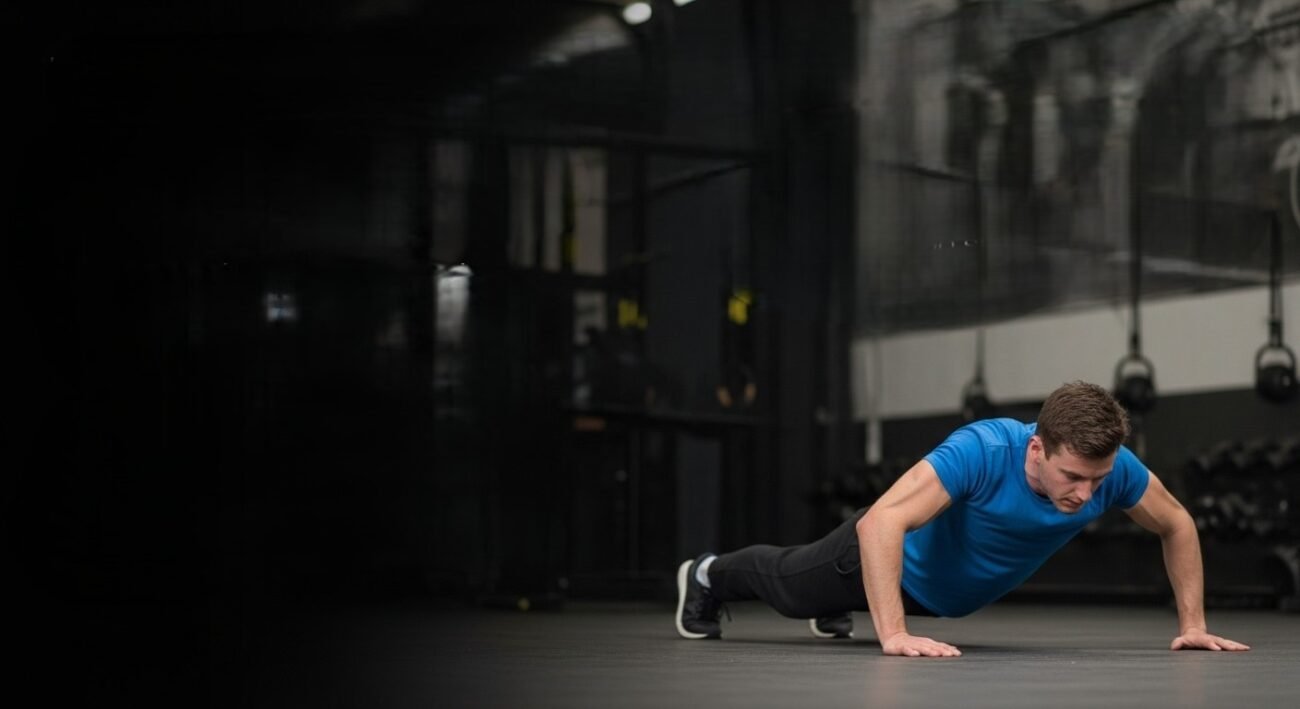
Push ups often receive attention for chest and shoulder training, while biceps work stays overlooked. Arm development benefits from bodyweight movements when angles and hand positions shift. Biceps activation rises during push ups involving narrow grips, forward lean, and elbow control. This article outlines ten push up variations designed to raise biceps involvement using simple adjustments and consistent execution. Each movement fits home or gym training without equipment.
Close Grip Push Up
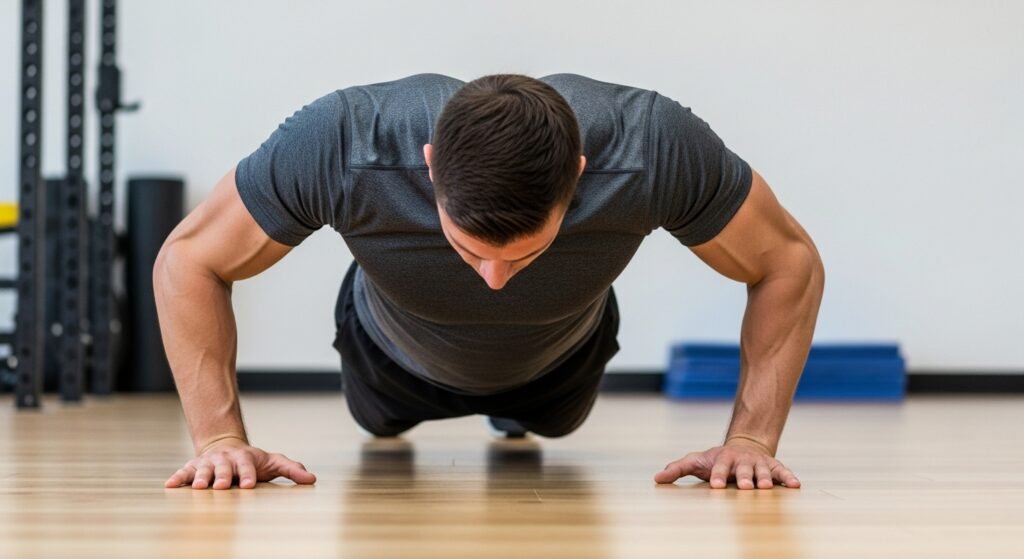
Hands stay close beneath the chest, reducing chest contribution and increasing elbow flexion demand. Biceps engagement rises as elbows track near the torso during each repetition. Slower lowering phases increase tension across the upper arm. Sets of controlled repetitions improve arm density when performed after compound pulling exercises.
Diamond Push Up
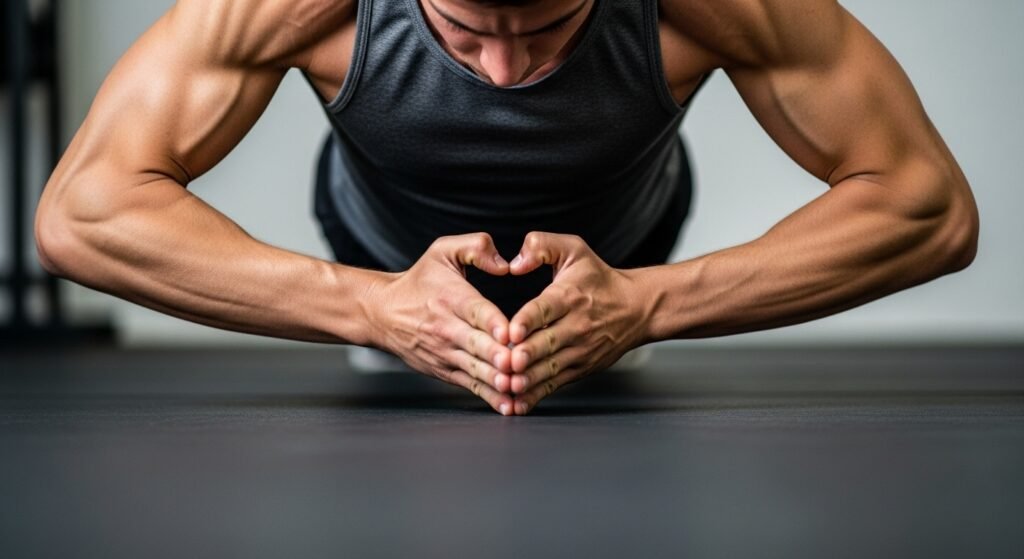
Thumbs and index fingers form a diamond beneath the sternum. This position shifts load toward triceps and biceps while limiting shoulder flare. Biceps assist elbow control throughout the descent. A steady tempo improves muscular involvement. Short rest intervals raise training density without added resistance.
Pseudo Planche Push Up
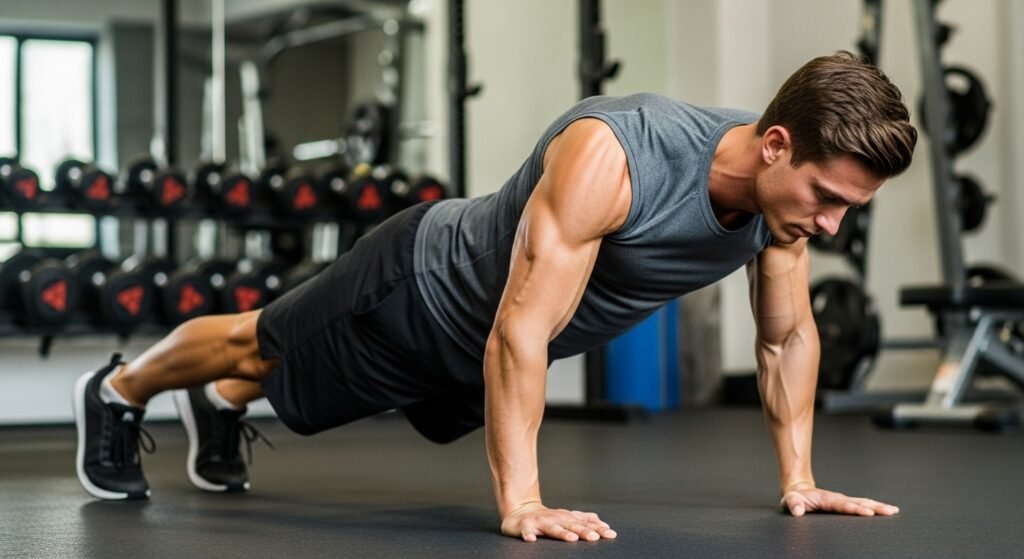
Hands position closer to hips while shoulders lean forward beyond wrists. Bodyweight shifts toward arms, raising demand on biceps and anterior shoulders. Elbows remain slightly bent at the top to preserve tension. Partial ranges suit beginners, while deeper ranges suit advanced trainees seeking higher arm strain.
Archer Push Up

One arm bends while the opposite arm extends laterally for balance. The working arm manages higher load, forcing biceps to stabilize and assist pressing. Alternating sides ensures balanced development. Controlled transitions between sides maintain joint alignment and muscle tension.
Uneven Push Up

One hand rests on an elevated surface while the other stays on the floor. The lower hand receives greater loading, increasing biceps involvement during elbow flexion. Height differences between hands adjust difficulty. Consistent form prevents shoulder drift during repetitions.
Reverse Grip Push Up
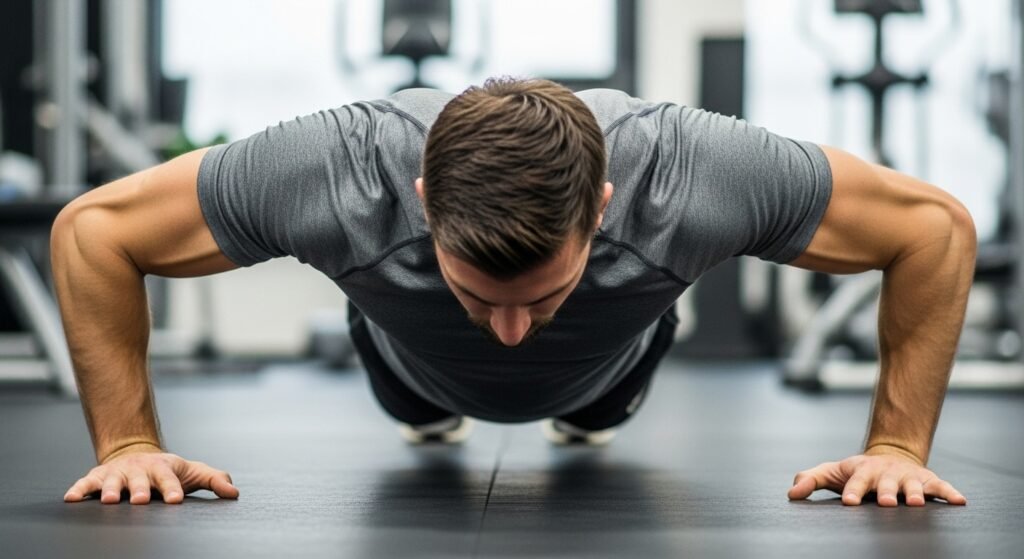
Hands rotate outward so fingers point toward feet. This uncommon angle shifts stress toward biceps and forearms during lowering phases. Range of motion stays shorter to protect wrists. Gradual adaptation suits trainees seeking variation without external load.
Pike Push Up With Narrow Hands
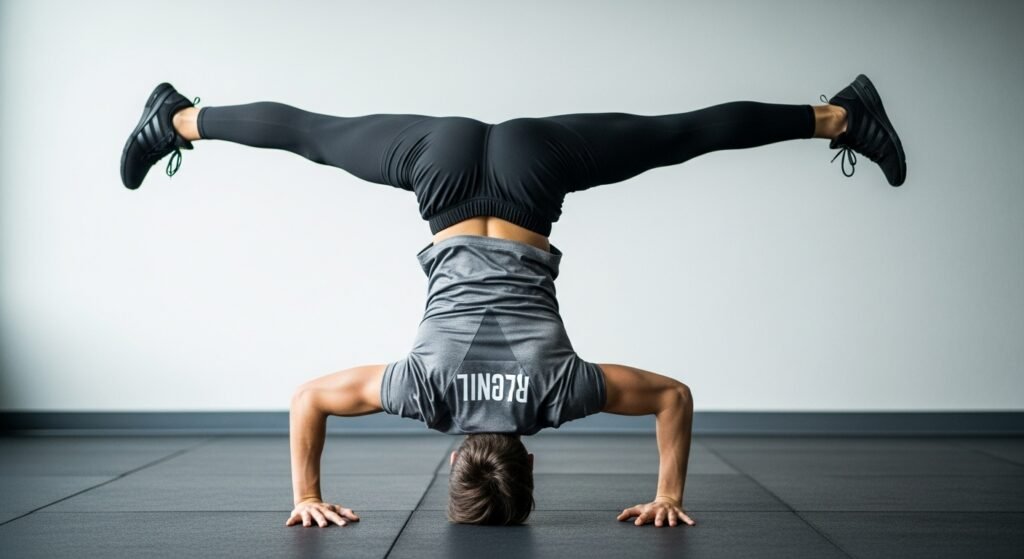
Hands remain close while hips lift into a pike position. Vertical pressing shifts work toward arms and shoulders. Biceps support elbow control under higher bodyweight percentage. Slow repetitions emphasize muscular tension over momentum.
Feet Elevated Close Push Up
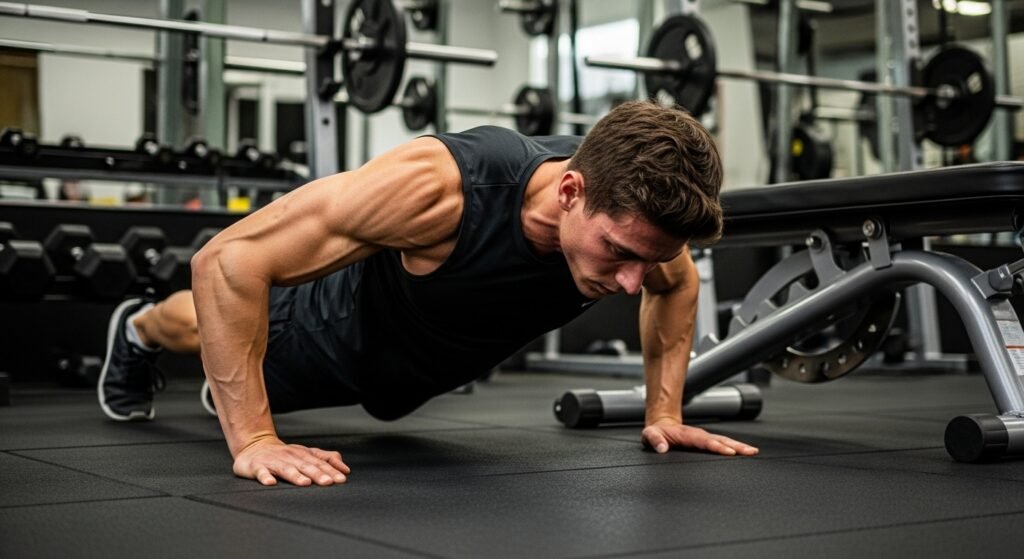
Feet rest on a bench or step while hands stay close together. Load shifts toward upper body, raising biceps involvement during controlled descent. Core stability supports arm mechanics. Fewer repetitions deliver sufficient stimulus due to higher intensity.
Eccentric Focus Push Up
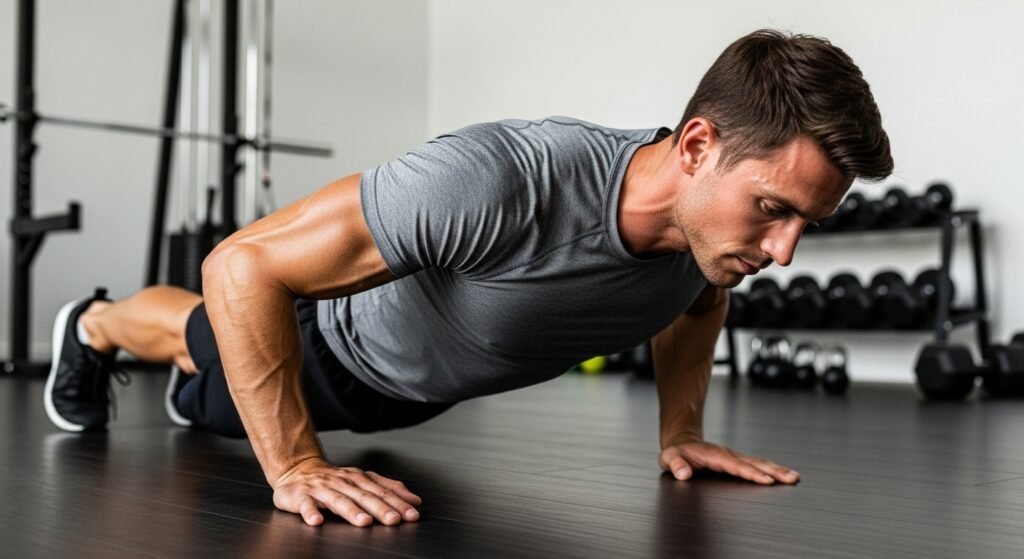
Lowering phase extends to five seconds while pressing phase stays controlled. Biceps assist elbow stability during prolonged tension. This method improves muscle control and time under tension. Limited sets reduce fatigue while preserving movement quality.
Isometric Bottom Hold Push Up

Body lowers to the deepest safe position and holds for ten to twenty seconds. Biceps work continuously to stabilize elbows. Short holds between repetitions maintain tension. This approach suits finisher work at the end of arm focused sessions.
