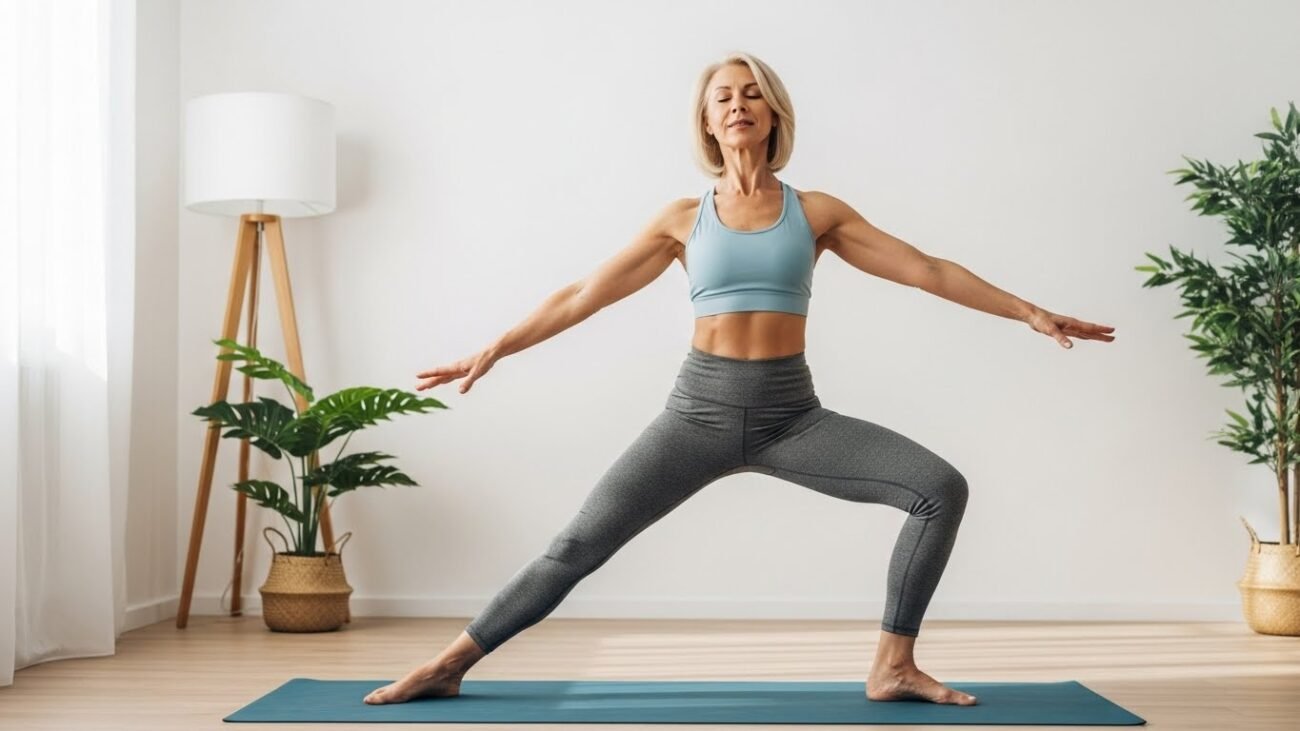
Strength of legs at age forty helps hold balance, comfort of joints, and day-to-day movement. The practice of a brief yoga session helps to involve muscles without protracted sessions and additional machines. This method is appropriate in rushed-off and sore joints. Both movements are directed at controlled tension, regular breathing and posture. Low load isometric hold research demonstrates enhanced muscle activity in a few minutes. It is the consistency that is important and not the duration. Five minutes of concentration daily helps in slowing down the strengthening process as well as lowering the stress levels associated with high impact training.
Mountain Pose With Active Grounding
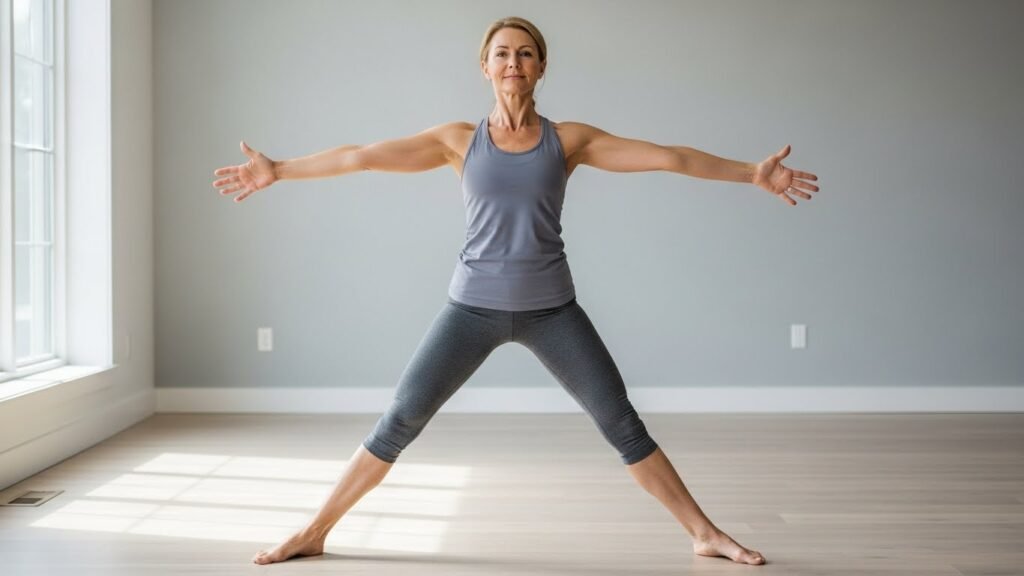
This pose builds leg strength through static engagement. Feet press evenly into the floor while thigh muscles tighten upward. The spine stays tall with slow nasal breathing. Electromyography studies show standing isometric holds activate quadriceps and calves. Thirty to forty seconds of focused grounding improves neuromuscular connection during short sessions.
Warrior One With Short Stance
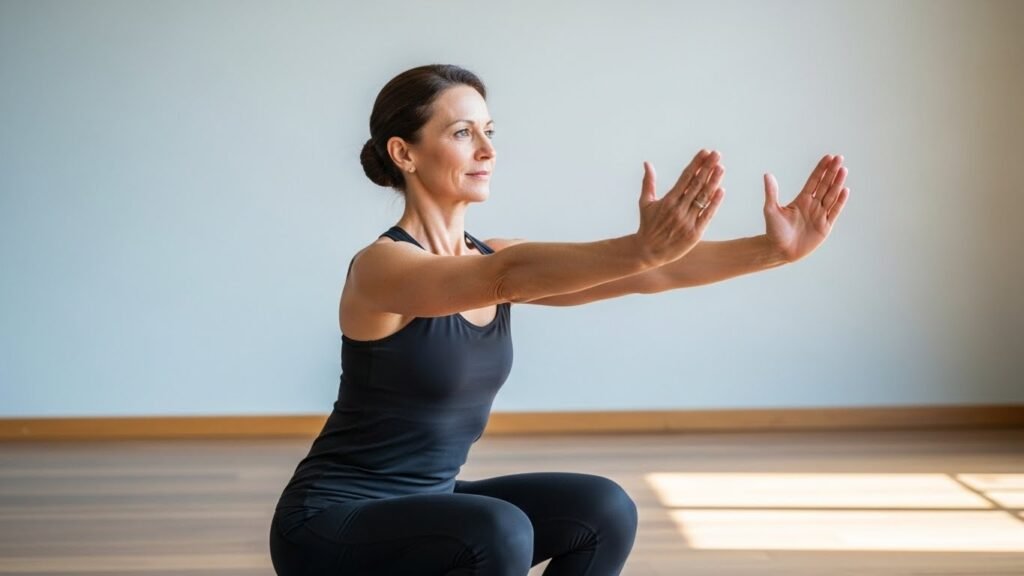
Warrior One strengthens front leg muscles through forward knee tracking. A shorter stance reduces hip strain while preserving load. The back heel presses firmly into the floor to engage calves. Studies on split stance positions show improved lower limb stability. Twenty five seconds per side supports symmetry.
Warrior Two With Static Hold
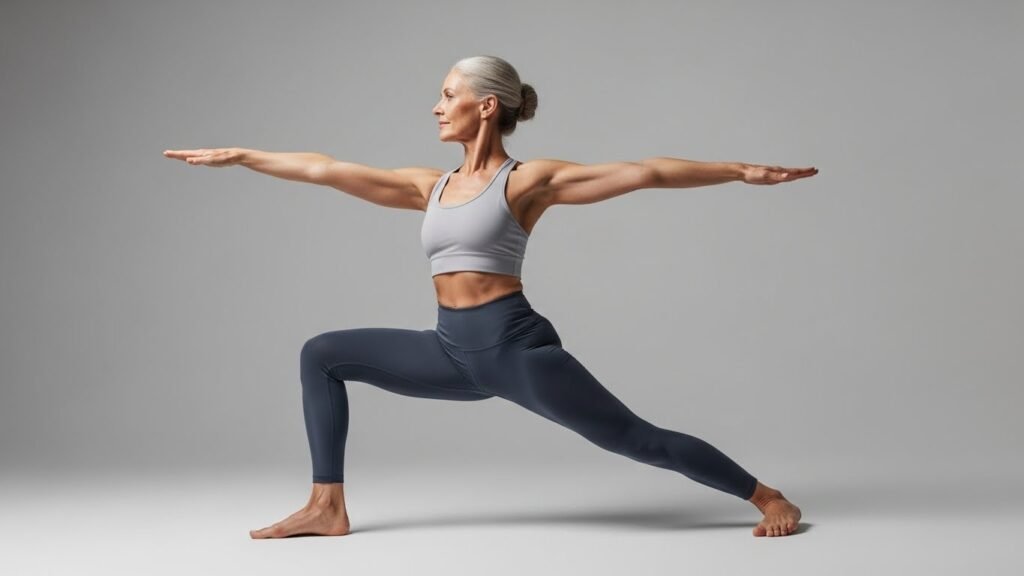
Warrior Two develops lateral leg strength. The front knee aligns over the ankle while the back leg stays straight. Arms extend outward for balance rather than intensity. Static holds increase muscle fiber recruitment. Thirty seconds per side supports endurance in thighs and hips.
Goddess Pose With Controlled Pulses
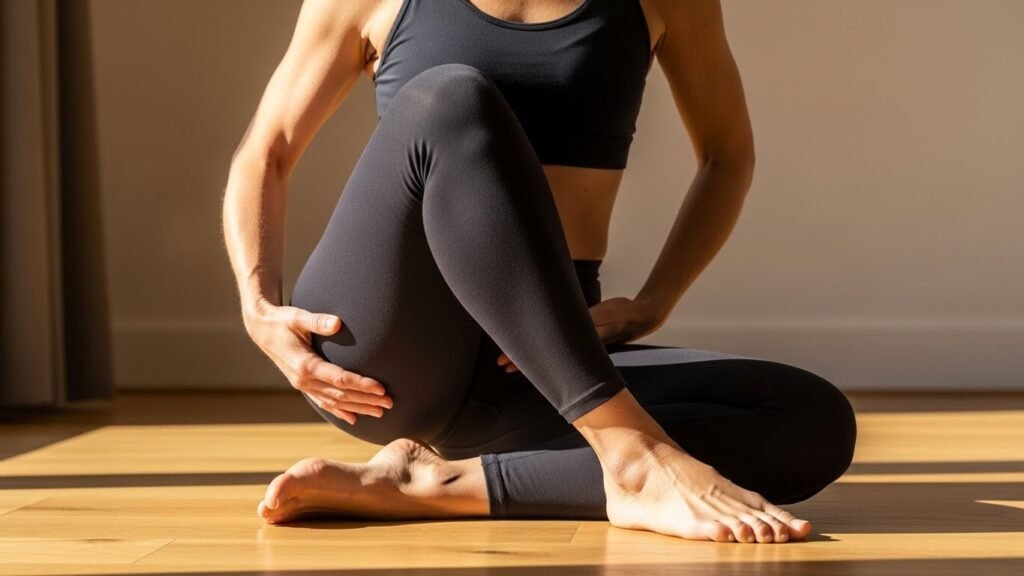
Goddess Pose engages inner thighs and glutes. Feet turn outward slightly while knees bend gently. Small controlled pulses maintain constant tension. Research on pulse training links short movements with improved muscle activation. Fifteen pulses over thirty seconds fit well inside a five minute routine.
Tree Pose With Soft Knee Bend
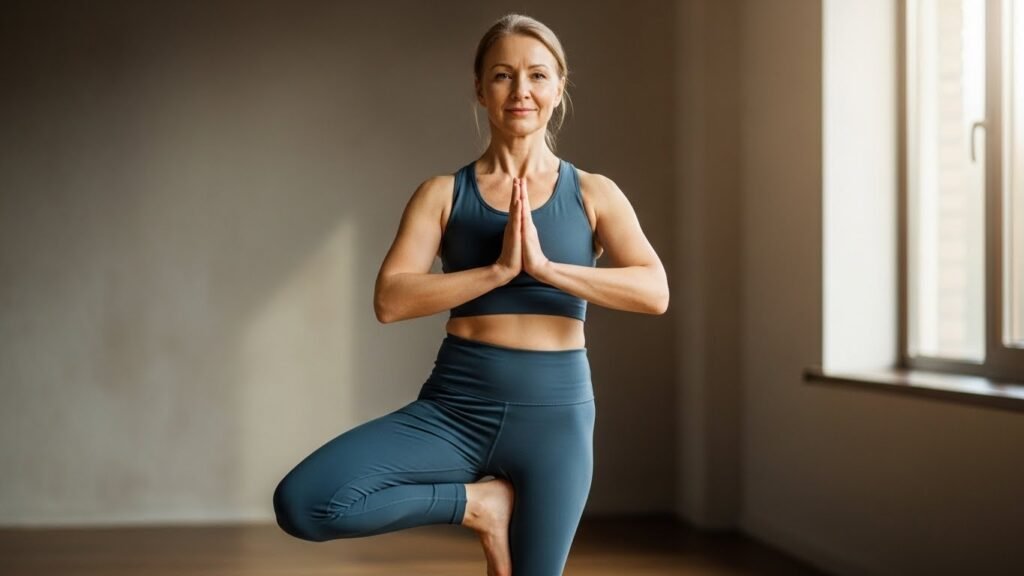
Tree Pose supports ankle and knee stability. A soft bend in the standing knee increases quadriceps engagement. The lifted foot presses into the calf rather than the knee joint. Balance training improves proprioception after forty. Twenty seconds per side strengthens supporting muscles.
Bridge Pose With Active Press
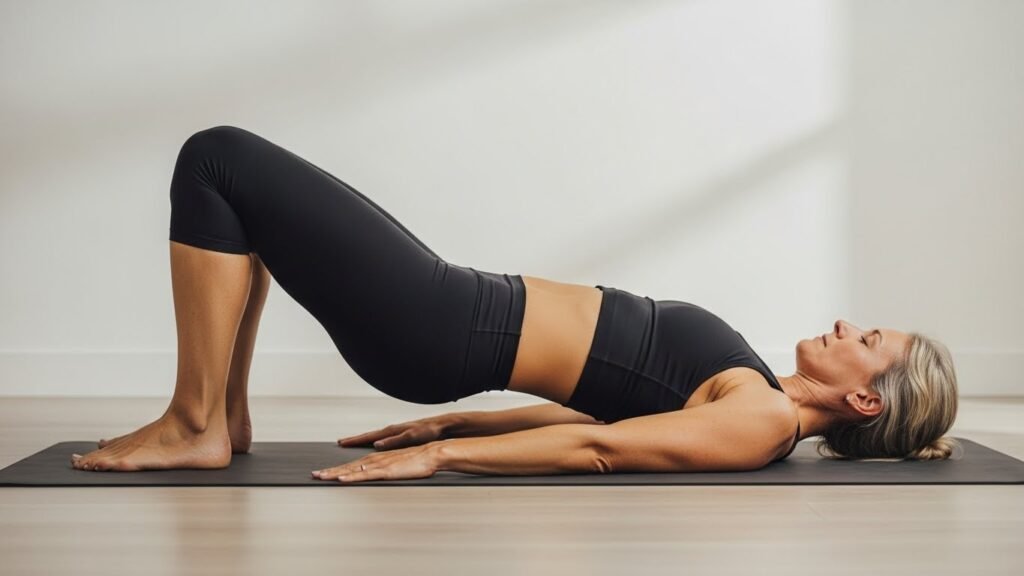
Bridge Pose strengthens hamstrings and glutes without spinal load. Feet press firmly into the mat while hips lift halfway. Glute engagement remains steady rather than maximal. Studies show partial bridges reduce lower back stress. Holding for thirty seconds builds posterior chain support.
Low Lunge With Upright Torso
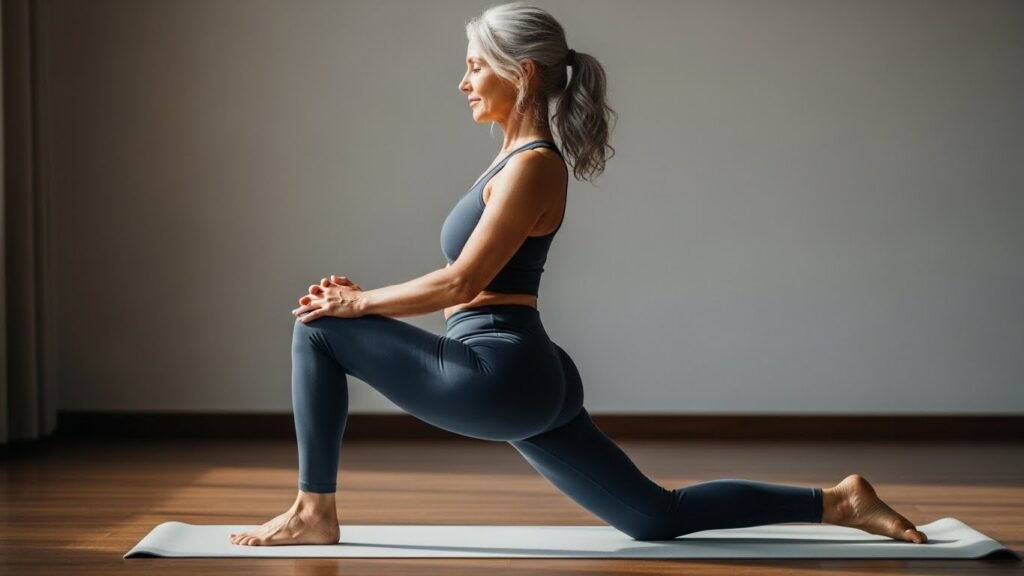
Low Lunge loads the front leg through controlled knee flexion. An upright torso keeps weight centered. Hands rest on thighs to reduce wrist strain. Static lunges increase leg strength through sustained contraction. Twenty seconds per side supports functional movement patterns.
Calf Raise In Standing Pose
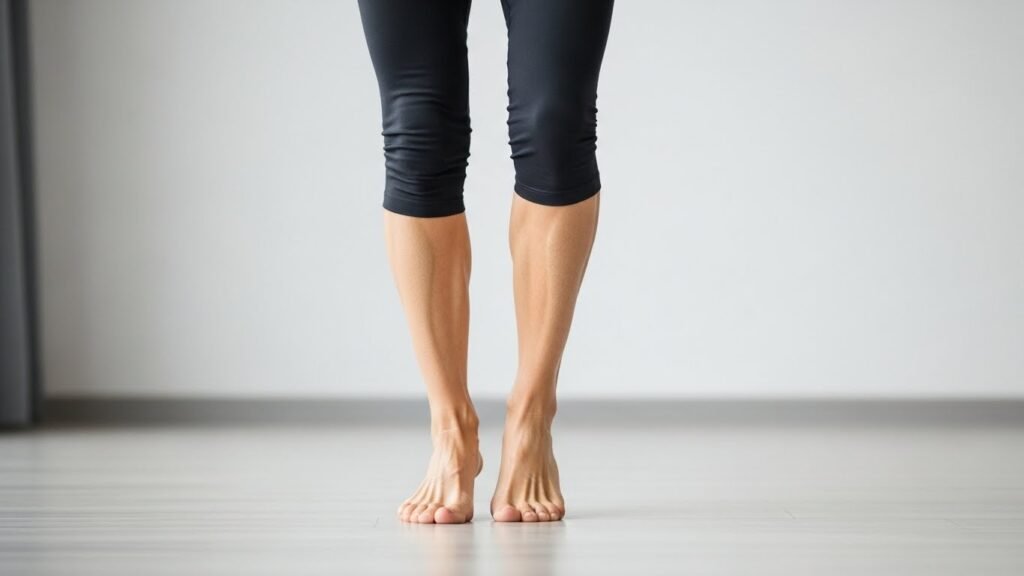
Standing calf raises strengthen lower legs and ankles. Heels lift slowly with controlled descent. Balance improves through single leg focus if stability allows. Research links calf strength with walking efficiency. Ten slow repetitions per side fit within short practice windows.
Seated Forward Fold With Active Legs
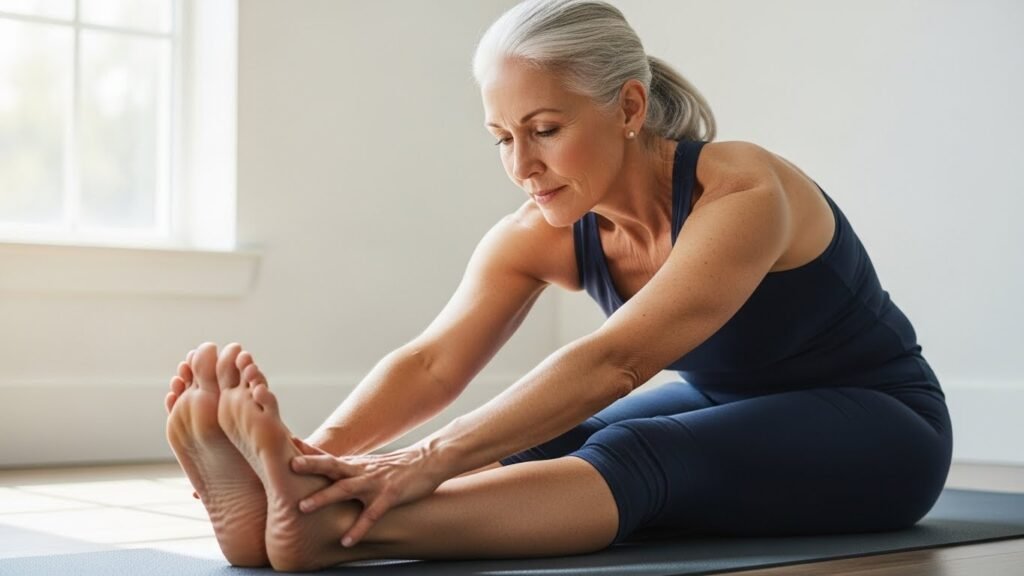
Seated Forward Fold supports hamstring strength through active engagement rather than deep stretch. Legs stay straight while thigh muscles tighten. The torso leans forward slightly with neutral spine. Active stretching improves muscle control. Thirty seconds reinforces leg awareness before ending the routine.
