
Muscle loss after 60 affects balance, glucose control, and independence. Traditional weight training often creates joint strain and extended recovery. Bed based exercises place muscles under controlled tension while joints stay supported. Research on low load resistance and isometric work shows high muscle fiber activation when movements stay slow and deliberate. This article outlines bed exercises focused on rebuilding lost muscle with reduced recovery cost and daily consistency.
Glute Bridge Holds
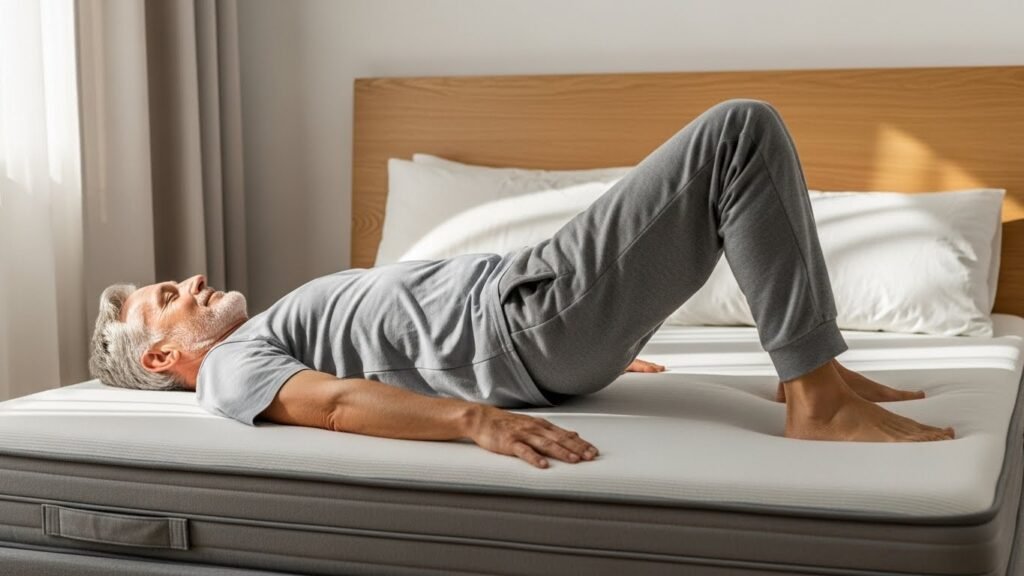
This exercise targets glute and hamstring groups which decline early with age. A bent knee bridge hold performed on a bed increases muscle activation through sustained tension. Studies on isometric loading show strong recruitment of fast twitch fibers when holds reach 20 to 40 seconds. Daily repetition supports strength return without joint compression.
Heel Press Leg Extensions
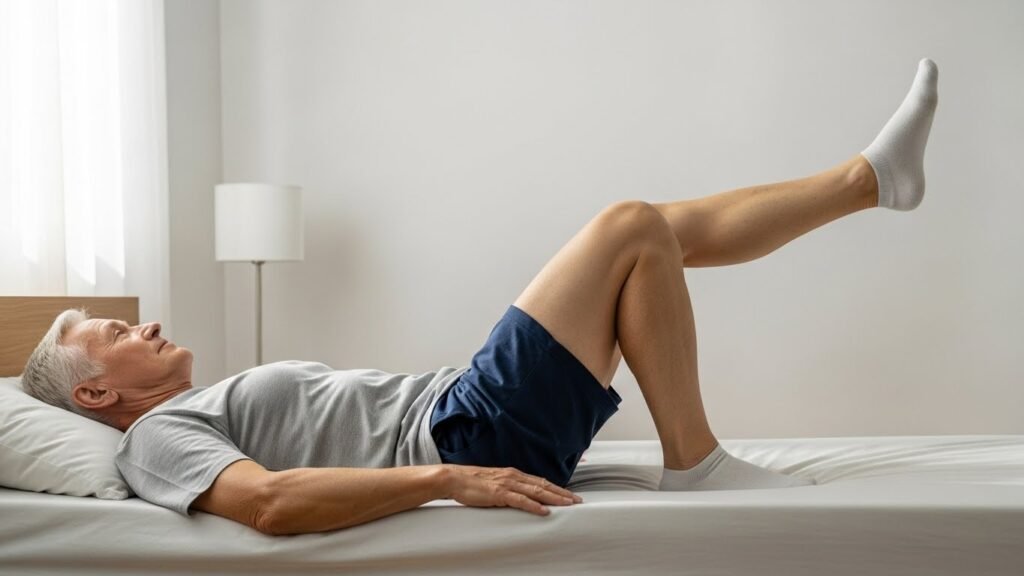
Heel presses activate quadriceps without knee shear. While lying flat, pressing heels into the mattress and extending one leg at a time creates resistance from bedding compression. EMG data from rehabilitation settings shows similar quad engagement compared with light leg press loads. Slow repetitions increase time under tension which supports muscle rebuilding.
Seated Bed March Holds

Hip flexors weaken with inactivity and reduce walking speed. Sitting upright on a bed and holding a raised knee for several seconds builds strength through static loading. Geriatric mobility studies link hip flexor strength with fall reduction. This movement reinforces postural control while avoiding balance risk.
Side Lying Leg Lifts
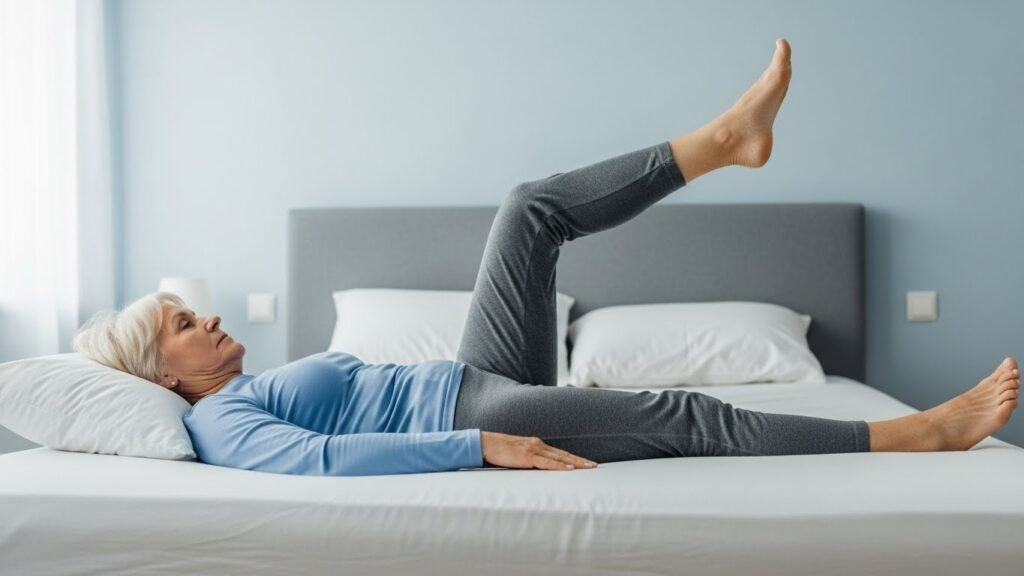
Side lying leg lifts train lateral hip muscles responsible for gait stability. Mattress support allows strict form without momentum. Clinical rehabilitation programs use this pattern after joint surgery due to reliable muscle engagement. Sets of controlled lifts performed daily support muscle retention and walking confidence.
Isometric Chest Press Against Mattress

Upper body strength declines faster than lower body strength after 60. Pressing palms into the mattress while lying supine creates chest and arm activation through isometric force. Research on isometric presses shows muscle fiber recruitment comparable to light resistance training. Short holds repeated through the day support upper body rebuilding.
Bent Arm Bed Push Press

This movement involves pressing elbows into the mattress while extending arms upward. Triceps and shoulder stabilizers receive constant load without joint strain. Physical therapy data supports bed based pushing patterns for restoring arm strength after inactivity. Controlled pacing reduces recovery demand.
Ankle Plantar Flexion Presses
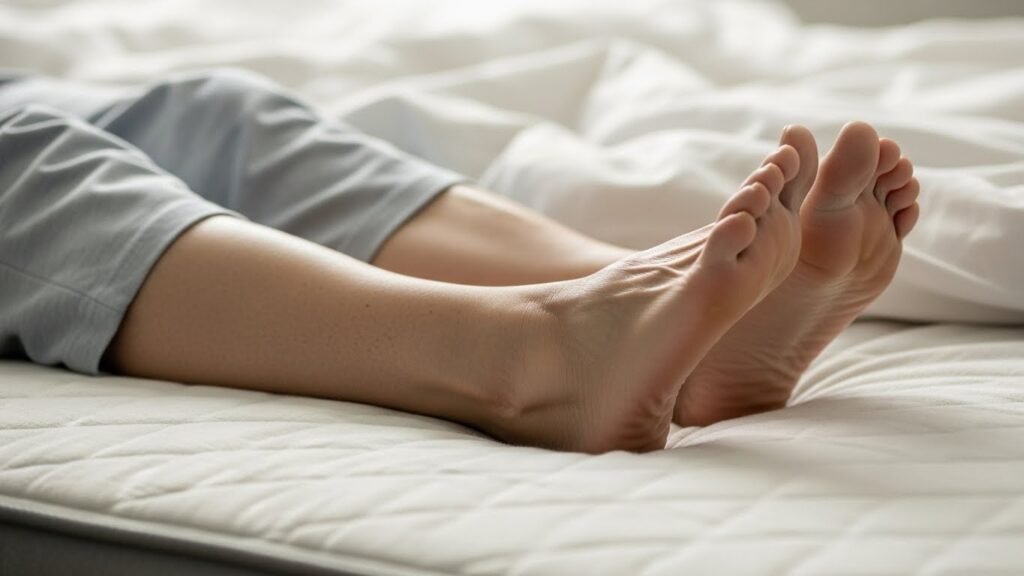
Calf muscles lose mass rapidly with reduced walking. Pressing toes into the mattress while extending ankles activates lower leg fibers. Studies associate calf strength with balance control and stair safety. Daily ankle presses support circulation and muscle maintenance.
Core Bracing Holds

Core muscles respond well to sustained tension. Lying on the back and tightening abdominal muscles without movement creates deep stabilizer engagement. Rehabilitation research highlights isometric core work for older adults due to low spinal load. Consistent bracing improves posture and transfer strength.
Hamstring Heel Slides
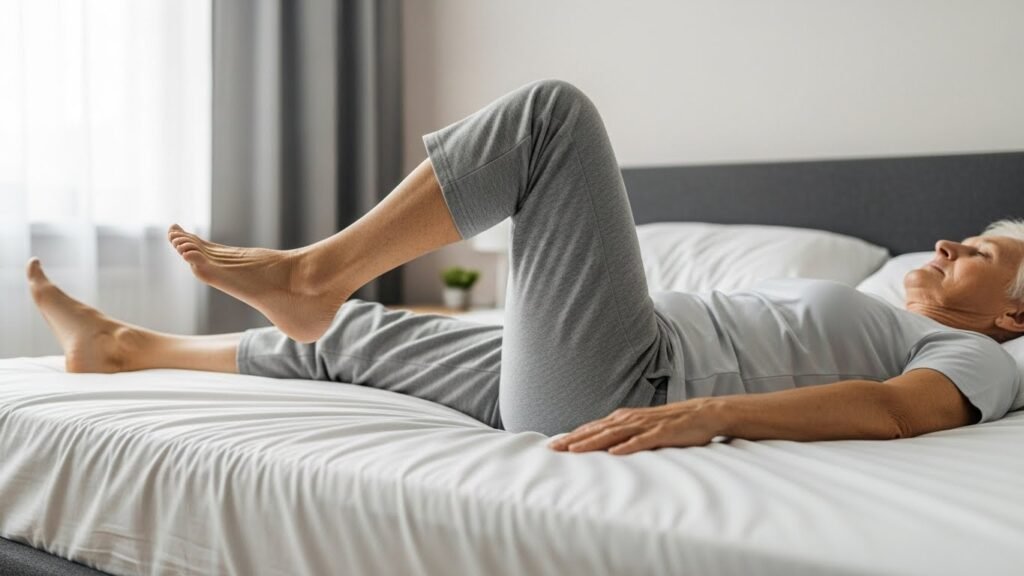
Heel slides performed slowly on bedding train hamstrings through full range control. Friction from sheets provides resistance without added load. Clinical recovery protocols show hamstring activation similar to machine curls at low intensity. Repetition supports muscle rebuilding while protecting joints.
Bed Assisted Full Body Tension Sets
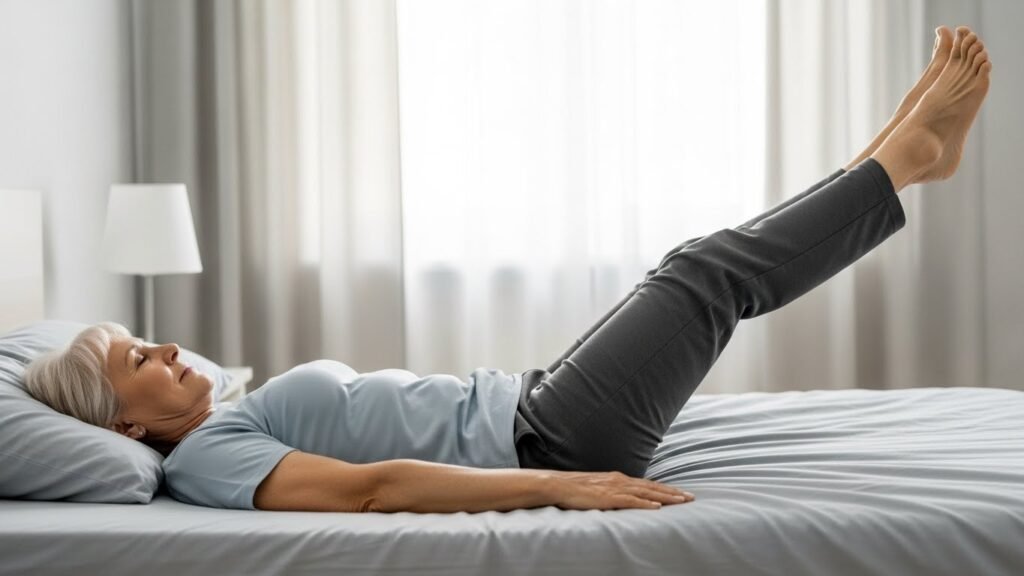
Full body tension involves tightening major muscle groups simultaneously for short intervals. This method mirrors whole body isometric training used in older populations. Research shows systemic muscle activation and metabolic response without heavy loading. Daily sets encourage strength recovery with minimal soreness.
